Genetics: Chromosome 4, HTT

Hutan

Moderator
Staff member
From a discussion on the Eccentric Medium Spiny Neurons thread:
DecodeME identified HTT as of interest.

HTT and spiny neurons seems maybe worthy of more investigation, they seem very interrelated. It’s not a gene I think we spent much time on but was one of the DecodeME candidates even if a bit below the threshold.

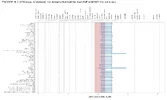
LocusZoom for HTT.

Agree, thanks for pointing this out!

To give a bit more background: HTT stands for Huntingtin, the gene behind the Huntington disease.

HTT is important for axonal transport and helps in regulating the expression of survival factors like BDNF (Brain-Derived Neurotrophic Factor). Medium spinal nerves (I suppose this includes the eccentric ones) are particularly dependent on HTT and thus the first to be affected in Huntington disease.

Despite the widespread expression of huntingtin, HD has long been considered primarily as a disease of the striatum. It is characterized by selective vulnerability with dysfunction followed by death of the medium size spiny neuron.


Huntington's Disease and the Striatal Medium Spiny Neuron: Cell-Autonomous and Non-Cell-Autonomous Mechanisms of Disease - ScienceDirect
 
Last edited:
It was also noted that it came up in a fibromyalgia GWAS

HTT was flagged in the fibromyalgia GWAS study preprint: "The strongest association was with a coding variant in HTT…"

We found a second association with a possible HD link: rs6657341-A (OR = 0.961, p = 7.1 × 10⁻⁹ ), an intronic variant in RABGAP1L, ~150 kilobases upstream of its second-nearest gene GPR52. RABGAP1L regulates RAB proteins, which direct intracellular trafficking, but has no clear link to fibromyalgia. Conversely, GPR52 is a brain-specific orphan G-protein coupled receptor being investigated as a drug target for HD as it regulates HTT levels.


RABGAP1L was a hit in DecodeME - thread here
GPR52 was also a hit in DecodeME
 
Last edited:
Had a a closer look at this region. It's just below the significance threshold (p = 8 × 10⁻⁷) in DecodeME.

SUSIE couldn't make a 95% credible set (it grew to too many SNPs), but there are 10 SNPs that hold about 75% of the probability. Most lie in the HHT gene. Interestingly, it includes an endframe deletion, so a change to the protein, the first time I found something like this in the DecodeME hits!

It explains why this variant is a bit less common than previous (8.5% in cases, 7.6% in controls). The deletion is 4:3228683:AGAG:A (rs149109767). So the codon GAG is removed, one amino acid (glutamate) is made but because it's exactly three letters, there's no shift in the rest of the code and the consequence is relatively harmless. This deletion is already known from Huntington's disease as Δ2642.

1794325064309.webp
 
FLAMES also picked HTT in this region but there's a small caveat. The interesting SNPs such as the deletion are located at the very edge of the HTT, quite far away from its transcription start site. The two are not in the same domain. But perhaps that doesn't matter much if we have evidence that the mutations causes a change in the HTT protein.

1794325239267.webp
 
Interesting! Do you think it could be possible that the reason there isn't such a clear linkage block like other loci and SUSIE can't find a credible set is because they are inside the gene's open reading frame and non synonymous?
 
The Fibromyalgia GWAS found a similar signal that colocalized, analysis here:

But in the phewas I found that there are multiple traits that share this locus. The signal is associated with higher body weight and body fat, higher blood sugar (HbA1c) and type 2 diabetes, a smaller thalamus and ventral diencephalon and weaker white-matter connections in brain scans, slower walking, an earlier first birth, more long-standing illness, falls and back pain.

So it's less specific that I had thought. Possibly because huntington has many functions across the body.

1794325695385.webp
 
The eQTL data also supports HTT being the causal gene:

Trait (gene)StudyPP.H4lead_prisk_allele
HTTINTERVAL_RNA | blood | naive | QTD0010000.972.2e-07lowers (z = -5.0)
HTTQuach_2016 | monocyte | R848_6h | QTD0004240.962.3e-13raises (z = 1.3)
HTT-AS1eQTLGen | blood | naive0.965.2e-183raises (z = 9.3)
HTT-ASIBDverse | memory B cell | naive | QTD0008320.951.4e-09raises (z = 0.9)
HTT-ASIBDverse | natural killer cell | naive | QTD0007750.941.7e-09raises (z = 1.6)
HTT-ASIBDverse | classical monocyte | naive | QTD0007730.942.4e-09raises (z = 2.6)
HTT-ASIBDverse | memory B cell | naive | QTD0008310.942.5e-08raises (z = 1.9)
HTT-ASGENCORD | LCL | naive | QTD0000950.936.5e-08raises (z = 0.1)
HTT-ASIBDverse | naive B cell | naive | QTD0008340.931.3e-24raises (z = 3.2)
HTT-ASOneK1K_reannotated | NK cell | naive | QTD0008810.911.5e-08raises (z = 2.4)
HTT-ASGENCORD | T cell | naive | QTD0001050.914.8e-12lowers (z = -0.0)
HTT-ASIBDverse | central memory CD4-positive, alpha-beta T cell | naive | QTD0007690.912.7e-09raises (z = 1.4)
HTT-ASIBDverse | conventional dendritic cell | naive | QTD0008400.914.8e-10raises (z = 2.0)
HTTQuach_2016 | monocyte | LPS_6h | QTD0004140.908.8e-11raises (z = 2.5)
HTTQuach_2016 | monocyte | Influenza_6h | QTD0004290.901.7e-22raises (z = 2.5)
HTTPerez_2022_reannotated | classical monocyte | naive | QTD0008660.881.2e-10raises (z = 1.2)
HTT-ASIBDverse | central memory CD4-positive, alpha-beta T cell | naive | QTD0007700.888.5e-08raises (z = 2.9)
RGS12GTEx_v10 | adipose (visceral) | naive | QTD0001210.863.4e-07raises (z = 4.6)
HTTOneK1K_reannotated | naive B cell | naive | QTD0008870.866.3e-08lowers (z = -0.0)
HTT-ASIBDverse | gamma-delta T cell | naive | QTD0008380.823.3e-12raises (z = 3.8)
 
Do you think it could be possible that the reason there isn't such a clear linkage block like other loci and SUSIE can't find a credible set is because they are inside the gene's open reading frame and non synonymous?
Hmm not sure, for SUSIE this shouldn't matter I think as it only looks as the LD patterns regardless of functional consequences or location but perhaps I'm misunderstanding something in your question (feel free to say so!).
 
Hmm not sure, for SUSIE this shouldn't matter I think as it only looks as the LD patterns regardless of functional consequences or location but perhaps I'm misunderstanding something in your question (feel free to say so!).

I suppose I'm wondering, that because protein coding region sequences are more likely to be conserved, if there are fewer common snps in protein coding regions that vary enough that they could be dragged along with the causal variant in a way that differ from the control population - leaving you with a sparser looking set of snps in LD. I haven't thought this through in any great detail maybe it doesn't work like that at all.
 
A protein coding hit is really exciting!

A clarification on some earlier conversation, since I've been spending (probably too much) time in Huntington's literature as of late:

Agree, thanks for pointing this out!

To give a bit more background: HTT stands for Huntingtin, the gene behind the Huntington disease.

HTT is important for axonal transport and helps in regulating the expression of survival factors like BDNF (Brain-Derived Neurotrophic Factor). Medium spinal nerves (I suppose this includes the eccentric ones) are particularly dependent on HTT and thus the first to be affected in Huntington disease.

Huntington's Disease and the Striatal Medium Spiny Neuron: Cell-Autonomous and Non-Cell-Autonomous Mechanisms of Disease - ScienceDirect
The paper doesn't seem to present good evidence that medium spiny neurons are particularly dependent on HTT. It's moreso that MSNs seem more vulnerable to dying under whatever kind of stress mutant HTT induces over decades over life, and the current literature has presented multiple lines of (sometimes contradictory) evidence for why that might be. For example, the claim that mHTT affects striatal neurons through BDNF depletions seems counteracted by this evidence:
Remarkably, bdnf heterozygous mice did not show differences with respect to wt mice, indicating that the decrease of BDNF per se does not produce motor disturbances.
There seems to be a lot of confusion in general on why MSNs are particularly affected by mutant HTT. I'll note for context that the mutation at hand is a number of CAG repeats (encoding the amino acid glutamine) at the beginning of the protein (not where these ME/CFS-associated mutations are). You can have between 6-35 repeats without disease, though it starts to show up beyond 35. People have hypothesized that the long repeat sequence causes the protein to aggregate, which is true, but that doesn't seem to explain why MSNs are vulnerable because those inclusion aggregates show up in other parts of the brain earlier and in higher numbers. The HTT protein itself is not most highly expressed in MSNs. The paper does speculate that MSNs might not have a certain protection mechanism that other parts of the brain do, though doesn't seem to have leads for what that mechanism might be. The mutated region seems to bind to a lot of different proteins, probably contributing to the confusion.
 
Last edited:
Interestingly, that GAG deletion does overlap a Spi1 binding motif, although it's not in one of the cCREs. But Spi1 is very important in myeloid and lymphocyte differentiation (one of my previous mentors identified it as a "master regulator" for macrophages), which may explain why the eQTL links all seem to point there

1794332133101.webp
 
The eQTL data also supports HTT being the causal gene:

Trait (gene)StudyPP.H4lead_prisk_allele
HTTINTERVAL_RNA | blood | naive | QTD0010000.972.2e-07lowers (z = -5.0)
HTTQuach_2016 | monocyte | R848_6h | QTD0004240.962.3e-13raises (z = 1.3)
HTT-AS1eQTLGen | blood | naive0.965.2e-183raises (z = 9.3)
HTT-ASIBDverse | memory B cell | naive | QTD0008320.951.4e-09raises (z = 0.9)
HTT-ASIBDverse | natural killer cell | naive | QTD0007750.941.7e-09raises (z = 1.6)
HTT-ASIBDverse | classical monocyte | naive | QTD0007730.942.4e-09raises (z = 2.6)
HTT-ASIBDverse | memory B cell | naive | QTD0008310.942.5e-08raises (z = 1.9)
HTT-ASGENCORD | LCL | naive | QTD0000950.936.5e-08raises (z = 0.1)
HTT-ASIBDverse | naive B cell | naive | QTD0008340.931.3e-24raises (z = 3.2)
HTT-ASOneK1K_reannotated | NK cell | naive | QTD0008810.911.5e-08raises (z = 2.4)
HTT-ASGENCORD | T cell | naive | QTD0001050.914.8e-12lowers (z = -0.0)
HTT-ASIBDverse | central memory CD4-positive, alpha-beta T cell | naive | QTD0007690.912.7e-09raises (z = 1.4)
HTT-ASIBDverse | conventional dendritic cell | naive | QTD0008400.914.8e-10raises (z = 2.0)
HTTQuach_2016 | monocyte | LPS_6h | QTD0004140.908.8e-11raises (z = 2.5)
HTTQuach_2016 | monocyte | Influenza_6h | QTD0004290.901.7e-22raises (z = 2.5)
HTTPerez_2022_reannotated | classical monocyte | naive | QTD0008660.881.2e-10raises (z = 1.2)
HTT-ASIBDverse | central memory CD4-positive, alpha-beta T cell | naive | QTD0007700.888.5e-08raises (z = 2.9)
RGS12GTEx_v10 | adipose (visceral) | naive | QTD0001210.863.4e-07raises (z = 4.6)
HTTOneK1K_reannotated | naive B cell | naive | QTD0008870.866.3e-08lowers (z = -0.0)
HTT-ASIBDverse | gamma-delta T cell | naive | QTD0008380.823.3e-12raises (z = 3.8)
There are a lot of immune cells in this table! Could someone explain to me how to interpret this?

It seems like the second hit is monocytes, and NK cells near the top too. Gamma Delta T but thats at the bottom.

Are these other traits of the gene that are known in other conditions or just generally and how similar they are to the GWAS hit?

Are we thinking this gene in involved in ongoing pathology or just initial trigger?
 
Doesn't that study support the HTT - BDNF - striatum connection? I thought the sentence you quoted was only about low BDNF without HTT problems.
It only supports the idea that mutant HTT in the brain lowers overall BDNF, which was already known from human samples. But the effect of mHTT on the striatum doesn't seem to be mediated by BDNF suppression. They used the low BDNF model to try to isolate whether that's the downstream effect of mHTT that causes striatal degeneration. If that hypothesis was true they should be able to recapitulate the effects of mHTT with just a low BDNF model. There were no motor differences, and also no changes in striatal volume (5C). There was a lower level of total striatal neurons in the low BDNF + mHTT model compared to just the mHTT model, but [edit: the changes in the cortex with that combo] just suggests that knocking out BDNF and introducing mutant HTT together does a number all across the brain.
1794339937983.webp
[Edit: also it’s a bad mouse model because the mHTT mouse didnt have lower BDNF, even though they’re claiming that’s the causal link. It’s a weird experimental design] I think these papers unfortunately have a fair bit of spin and don't provide much useful mechanistic insight.
 
Last edited:
The review authors also wrote:
Huntington's Disease and the Striatal Medium Spiny Neuron: Cell-Autonomous and Non-Cell-Autonomous Mechanisms of Disease
The decrease of BDNF may represent a loss of normal htt function, as wtHtt augments transcription of the BDNF gene [60]. The amount of BDNF reaching the striatum is further reduced secondary to axonal transport deficits [61]. We, along with others, have demonstrated the important role for BDNF in the maturation of the MSN, and there is also a requirement for BDNF in the maintenance of adult striatum. Contrary to what is frequently written, MSNs probably do not require BDNF for survival [107, 108].
 
Back
Top Bottom