Genetics: locus 20: 33,363,039 - genes CDK5RAP1, SNTA1, etc.

ME/CFS Science Blog

Senior Member (Voting Rights)
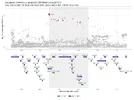
Another locus that was just below the significance threshold (p = 5.4 × 10⁻⁷) in DecodeME but unfortunately, it's hard to determine which gene it points to.

There are lots of genes in this region and the credible set is very spread out. Many of the SNPs are inside SNTA1 and CBFA2T2 so they are candidates to consider.
1794250494799.webp

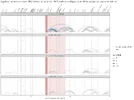
In neurons there were also some Hi-C data pointing to other genes such as NECAB3, C20orf144, ACTL10, CBFA2T2, etc.
1794250583370.webp
 
The eqtl data didn't show much but the phewas showed that many traits share this signal including medication use, protein levels and mean corpuscular volume.

(Many of the studies and traits below probably overlap in dataset - I didn't take the effort to filter them out).
TraitPP.H4lead_pstudy_IDSource
Medication use (HMG CoA reductase inhibitors)0.992.2e-09ebi-a-GCST90018989OpenGWAS
Hyperplasia of prostate0.997.2e-08finn-b-N14_PROSTHYPERPLAOpenGWAS
Total protein0.992.9e-09ukb-d-30860_rawOpenGWAS
red cell diameter width (RDW, minimum, inv-norm transformed)0.992.0e-13GCST90476365Open Targets
Mean corpuscular volume0.991.6e-10ebi-a-GCST90018966OpenGWAS
Mean corpuscular volume (UKB data field 30040)0.999.1e-14GCST90474481Open Targets
Total protein0.993.9e-09ukb-d-30860_irntOpenGWAS
Serum total protein levels0.983.1e-10GCST90319650Open Targets
Total protein levels0.981.3e-11GCST90691582Open Targets
Mean corpuscular volume0.987.5e-14ebi-a-GCST90002334OpenGWAS
Total protein levels (UKB data field 30860)0.985.7e-09GCST90310183Open Targets
Pan cancer0.981.1e-09ieu-b-4964OpenGWAS
Mean corpuscular haemoglobin levels (UKB data field 30050)0.983.6e-15GCST90474486Open Targets
Mean corpuscular volume (UKB data field 30040)0.971.7e-12ebi-a-GCST90013979OpenGWAS
Mean corpuscular volume0.979.1e-13ebi-a-GCST90002392OpenGWAS
Mean corpuscular hemoglobin0.973.2e-10ebi-a-GCST90018964OpenGWAS
Diseases of male genital organs0.977.9e-07finn-b-N14_MALEGENOpenGWAS
Red blood cell (erythrocyte) count (UKB data field 30010)0.973.8e-09GCST90691810Open Targets
Mean corpuscular hemoglobin0.968.9e-18ebi-a-GCST90028995OpenGWAS
Mean corpuscular hemoglobin0.963.0e-13ebi-a-GCST90002322OpenGWAS
 
So probably not a region to read to much into, but posting it anyway in case the situation changes in the future when we have more data.

SNTA1 encodes alpha-1-syntrophin, a cytoplasmic peripheral membrane scaffold protein that organizes signaling complexes in muscle and cardiac cells. It is a member of the syntrophin family and the most common syntrophin isoform found in cardiac tissues. In these settings, SNTA1 contributes to the dystrophin-associated protein complex and is positioned at the neuromuscular junction, sarcolemma, anchoring junction, and cytoskeleton.

The protein’s PDZ domain binds the C-terminus of SCN5A, linking it to the cardiac sodium channel Nav1.5, and it also associates cardiac sodium channels with the nitric oxide synthase-PMCA4b complex in cardiomyocytes. Through these interactions, SNTA1 participates in regulation of sodium ion transmembrane transport, ventricular cardiac muscle cell membrane repolarization, heart rate, synaptic signaling, and muscle contraction. Expression is high in the brain, respiratory system, and proximal digestive tract, with strong abundance in cardiovascular system and muscle tissue.

Pathogenic variants in SNTA1 are reported in long QT syndrome and atrial fibrillation, and the gene is a susceptibility locus for long QT syndrome 1, 4, and 12. These associations place SNTA1 in disorders affecting cardiac rhythm and sudden arrhythmic death risk, and it has also been linked to sudden infant death syndrome.
SNTA1 Gene - GeneCards
 
Thanks goodness, my input channel is getting a bit full!! :)
Sorry about that! I'm posting these systematically for all regions that had a signal < 10^-6 in DecodeME, not just the ones I find interesting or valuable. So feel free to ignore these.

I plan to provide an overview afterwards of the genes that we have some confidence in as being linked to ME/CFS. This one probably won't make the cut because there are far too many candidate genes. The multiple traits that colocalize so strongly, also makes me think that this might be a locus driven by selection bias.
 
I plan to provide an overview afterwards of the genes that we have some confidence in as being linked to ME/CFS. This one probably won't make the cut because there are far too many candidate genes. The multiple traits that colocalize so strongly, also makes me think that this might be a locus driven by selection bias.
I’m really excited for this overview! You’ve been doing lots of impressive work.
 
Back
Top Bottom