Metabolic adaptation and fragility in healthy 3-D in vitro skeletal muscle tissues exposed to [CFS] and Long COVID-19 sera, 2025, Mughal+

I'm just jumping ahead to Methods to check that the cohorts are not wildly different on confounders.

Age, sex (all female) and BMI matched.
ME/CFS - ICC, specialist confirmed diagnosis
LC - confirmed Covid-19 infection, also ICC with PEM, at least 3 months after the acute infection
Sedentary donors

That's all sounding fine.

For construct treatment experiments, serum biosamples were randomly assigned to the control or treatment groups. Investigators performing data analysis were blinded to the study hypotheses.
I think that means that the various serum samples were allocated randomly to the fabricated muscle. They don't say that the investigators were blinded to which cohort a sample came from, so it doesn't sound as though the assessment was really blinded. They didn't know which cohort was meant to perform worse, but I don't think it would have been hard to make a guess about that.
 
What was the sample size here, out of curiosity?
Note that cohort size is small - 4 controls, 4 CFS, 5 Long Covid.
My impression so far is that there wasn't replication of the samples, so just one fabricated muscle with one serum sample from participant A; one fabricated muscle with one serum sample from participant B.
Edit - as per jnmaciuch's comment, the legend of Figure 1 tells us that there were 3 to 7 replicates of each serum sample. The figures have white dots presumably showing the replicates, and so the coloured dot must be the mean result for each participant donor.

Of course it would have been nicer with more muscle tissue replicates for each participant, and complete blinding of the samples. But, I've no doubt that this was quite a bit of work as it was. Just a bit more blinding would have been great, e.g. to really ensure that the best looking muscle tissue wasn't assigned to the healthy controls.
 
Last edited:
How difficult would it be to get an estimate of the size of the serum factors responsible for these effects?

How would a researcher try to find out what in the serum is causing the effects?

Is it possible that the effects are due to something important missing, rather than something harmful being present?

If we had an idea of the type of serum factor(s), would that help significantly in figuring out which cells might be making these serum factor(s)?
 
Last edited:
My impression so far is that there wasn't replication of the samples, so just one fabricated muscle with one serum sample from participant A; one fabricated muscle with one serum sample from participant B.

Of course it would have been nicer with more muscle tissue replicates for each participant, and complete blinding of the samples. But, I've no doubt that this was quite a bit of work as it was. Just a bit more blinding would have been great, e.g. to really ensure that the best looking muscle tissue wasn't assigned to the healthy controls.
The specific figure legends list multiple serum replicates per sample--and many of the figures show (hard to see) white dots which I'm assuming corresponds to the individual replicate values. So I'm guessing that the colored dots are meant to be the mean for replicates from the same sample

I also wonder how this relates to the study by @chillier which found no difference in oxygen consumption rate when ME/CFS serum was added to myoblasts. Do these studies contradict each other?
Perhaps. Like others have already noted, it's a very small sample size, so I'm going to take everything with a grain of salt compared to the Ryback study. The protocols also have differences between this study, the Ryback study, and the original Fluge study--different serum concentrations, incubation conditions, length of time spent exposed to serum, etc. I can't speak to exactly how much any of those factors could be expected to alter the results but they should be kept in mind.
 
The specific figure legends list multiple serum replicates per sample--and many of the figures show (hard to see) white dots which I'm assuming corresponds to the individual replicate values. So I'm guessing that the colored dots are meant to be the mean for replicates from the same sample
Thanks jnmaciuch. I've amended my post above. 3 to 7 replicates for each participant's serum, and with the individual results of each replicate shown on the charts still showing good clustering - that makes the findings quite a lot more robust.
 
Last edited:
2.2. Transcriptomics reveal Metabolic Plasticity, drop in Mitochondrial Fission and altered calcium homeostasis at short exposure.

To investigate the underlying mechanistic changes in diseased tissues that caused contractile impairment, transcriptomic analyses of the short exposure tissue samples was performed using total RNA Sequencing. Interestingly, the Multidimensional Scaling (MDS) analyses indicated that both ME/CFS and LC-19 treatments clustered together with no significant Differentially Expressed Genes (DEGs) (Figure 2A). There were, however, several DEGs when ME/CFS and LC-19 tissues were compared to Controls (Figure 2B, C). We further performed Gene Ontology (GO) Enrichment Analyses between both patient groups and controls, to identify dysregulated pathways and Gene Set Enrichment Anlaysis (GSEA) between ME/CFS and LC-19 to identify any underlying differential biological tendencies

They say 'short exposure', but these are the samples exposed to teh serum for 48 hours I think, the ones that showed the decrease in the muscle tissue's ability to contract. They didn't find differentially expressed genes when comparing the ME/CFS and LC serum treated samples. They did find some differences between the ME/CFS and LC samples compared to the controls.

It looks as though they compared the ME/CFS samples against the controls, and the LC samples against the controls, and got a similar amount of difference. Again, the charts look convincing.

There's basically no difference between the ME/CFS and LC samples - the difference between that comparison and the comparisons between each of the disease samples and the controls is astonishing. ('Astonishing' usually makes me suspicious, especially in small cohorts. It would be so good if this study actually holds up.)

Screenshot 2025-08-02 at 7.49.07 am.png
 
Figure 3 gives the GO enrichment analyses - so the pathways that the differentially expressed genes relate to.

ME/CFS versus controls
According to this GO profile, in ME/CFS skeletal muscle samples there is an upregulation of genes involved in protein translation, extracellular matrix, and developmental processes, while genes involved in basic metabolic, transcriptional, and organelle functions are generally downregulated. This could indicate an environment characterized by chronic stress, impaired metabolic activity, and ongoing or maladaptive tissue remodeling.

LC versus controls
Similar to ME/CFS vs Control comparison, a broad downregulation was observed for genes associated with cellular and nuclear functions
These findings indicate a pronounced shift in LC-19 tissue toward enhanced mitochondrial fatty acid metabolism, electron transport, and protein synthesis processes

Mitochondrial complexes and dynamics
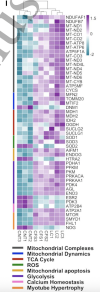
Gene expression data from RNA Sequencing indicated that transcript levels corresponding to Mitochondrial Respiratory Chain complexes were dysregulated in diseased groups, highlighting a compensatory response (Figure 4I).
The upregulation was comparatively more for the LC-19 samples compared to ME/CFS. The same trend was observed for mitochondria encoded genes and those encoded in the nuclear genome. Mitochondrial Dynamin Related Protein 1 (DNM1L) transcript levels were downregulated indicating a drop in mitochondrial fission (Figure 3I). This observation in conjunction with the upregulation of Mitofusin- 2 (MFN2) and SMYD1 signposts towards adaptive changes in mitochondrial performance in favor of mitochondrial network fusion. Furthermore, upregulation in TCA cycle and Glycolytic gene expression for ME/CFS and LC-19 compared to controls indicates cellular adaptation against increased energy demands.
]
In the RNA Sequencing analysis, we also observed indication of mitochondrial apoptosis through the upregulated expression of AIFM1 (Apoptosis-Inducing Factor, Mitochondria Associated 1) and ENDOG (Endonuclease G). AIFM1 is involved in caspase-independent apoptosis and translocated from the mitochondria to the nucleus upon apoptotic stimulation. It has also been implicated in maintaining mitochondrial OXPHOS (25). Similar to AIFM1, ENDOG is also a pro-apoptotic mitochondrial protein. We also observed a downregulation in HTRA2 (High Temperature Requirement A2) which suggested compromised mitochondrial protein quality control and accumulation of damaged or misfolded proteins (26).


Validation of differentially expressed genes
It's worth noting that there looks to be only three participants per cohort. It's possible that some results for other participants were left out. But even so, there are some clear differences.

Screenshot 2025-08-02 at 8.15.03 am.png
SMYD1
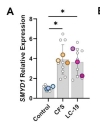
A lysine methyl transferase specific for striated muscles, SET and MYND Domain Containing 1 (SMYD1) plays an important role in muscle differentiation and mitochondrial bioenergetics including stabilization of respiratory complexes and cristae formation (27, 28). It was found to be upregulated in ME/CFS and LC-19 tissues compared to the controls (Figure 4A,I). SMYD1 gain-of-function has been previously associated with upregulation of mitochondrial respiration as a protective mechanism against injury (27).

ATP2A1
Screenshot 2025-08-02 at 8.29.09 am.png

Furthermore, the levels of ATP2A1 which codes for SERCA1 Ca2+-ATPase were also upregulated (Figure 4B, I). Predominantly present in type II fast twitch muscle fibers, this pump is a key regulator of relaxation dynamics of a striated muscle. Found in the sarcoplasmic reticulum (SR) of muscle cells it pumps the calcium ions from the cytoplasm into the SR, allowing muscle relaxation post contraction and restocking ions for the next contraction (29).

Downregulation in ATP2B4 (calcium ATPase isoform 4) observed in RNA-Seq, (responsible for removing intracellular calcium ions against the large gradients), indicates high calcium sequestering (Figure 10I). Coupled with an upregulation in ATP2A1 levels, this indicates a disturbance in calcium homeostasis. Increase of calcium sequestering by ATP2A1 in the sarcoplasmic reticulum has been related to a disturbance in mitochondrial function and an inducer of fatigue. Increased mitochondrial calcium can trigger the production of ROS through the Electron Transport Chain, particularly the levels of superoxide radicals (30, 31).


Figure 4l
Screenshot 2025-08-02 at 8.39.34 am.png

There's a lot here.

SOD2
Downregulation of SOD2 (superoxide dismutase 2) was observed in diseased tissues, confirming the previously reported data (8). Coupled with an increase in calcium sequestering, a decrease in SOD2 levels could signal oxidative stress (Figure 4I).

FHL1
Screenshot 2025-08-02 at 8.33.51 am.png
Four and-a-half LIM protein 1 (FHL1) has been implicated in inducing myotube hypertrophy (32). It was found to be overexpressed in the diseased tissues (Figure 4C, I).
 
Thanks for your detailed analysis as always @Hutan. I agree the ME/CFS vs. C-19 volcano plot in Fig 2 is striking compared to the others. My instinct tells me that you should be seeing more low p-value genes than that just by chance—though I can’t say for sure without running a simulation on their data. The other two plots in that figure looks like what I would expect from a small cohort in terms of distribution and the amount of genes that pass the p-value and logFC cutoffs.

The RT-PCR validation for gene expression is a strong point of the paper, and necessary in my opinion for this small of a sample size.

I’d be really interested to get access to the whole data set if that’s going to be released with publication—I’m sure there were some other potentially interesting top hits that weren’t explored because they were outside the scope of the paper.
 
I also wonder how this relates to the study by @chillier which found no difference in oxygen consumption rate when ME/CFS serum was added to myoblasts. Do these studies contradict each other?
Could the difference be that this is investigating a muscle tissue preparation (with a longer setup time) which could then include secreted extracellular matrix components, vs multiple but independent and disorganised muscle cells in a well? Abnormal signalling and pathological cell effects might require ECM components.

This paper said:
Briefly, for encapsulation, the human muscle precursor cells were trypsinized and resuspended in skeletal muscle growth medium. The cells were encapsulated at a density of 2.5×10⁷ cells mL −1 in 30% v/v Matrigel Growth Factor Reduced (GFR) Basement Membrane Matrix (Corning), 2 U mL −1 thrombin from human plasma (Sigma-Aldrich) and 4 mg mL−1 fibrinogen from human plasma (Sigma-Aldrich). During hydrogel casting, care was taken to avoid bubbles and cold plasticware was used to prevent polymerization of Matrigel. The mixture was spread as homogenously as possible between the pillars without grazing the surface. After hydrogel introduction all tissues were incubated at 37°C for 30 min to allow for matrix compaction before adding skeletal muscle growth medium supplemented with 1 mg mL −1 of 6-amino-caproic acid (ACA, SigmaAldrich). The hence formed tissues were allowed to grow for 2 days after which differentiation was initiated for another 6 days by replacing growth medium with differentiation medium (DM) supplemented with 1 mg mL −1 ACA (DM/ACA). Subsequently, half of the DM/ACA was replenished every 2 days to maintain tissue survival.

Indistinguishable mitochondrial phenotypes after exposure of healthy myoblasts to myalgic encephalomyelitis or control serum (2025) —

Human skeletal muscle myoblasts were obtained from Lonza (#CC-2580, lot number 21TL138913). Cell culture was commenced and maintained according to the manufacturer’s protocols using SkGM-2 Medium (CC-3244) (bioscience.lonza.com/lonza_bs/GB/en/download/product/asset/29428). Myoblasts were kept below passage number 10 for all experiments, as reported in Fluge et al (2016).

HSMM were seeded at 8,000 cells per well and kept in a 37°C incubator with 5% CO2 overnight. The following day, cells were washed once with PBS and media changed to serum-free HSMM media supplemented with 20% serum from either a pwME or a healthy control, with media and serum refreshed on day 3. Detailed protocols can be found in the pre-registration (https://osf.io/qwp4v, 02/08/2024). On day 6, myoblasts underwent a mitochondrial stress test, performed as per the manufacturer’s protocols.
 
Looking at the researchers:

Authors: Sheeza Mughal1,8*, Félix Andújar-Sánchez2,3,4, Maria Sabater-Arcis1 , Glória Garrabou2,3,4 , Joaquim Fernández-Solà3 , Jose Alegre-Martin5,6, Ramon Sanmartin-Sentañes5,6 Jesús Castro-Marrero6 , Anna EsteveCodina7,8 , Eloi Casals7,8 , Juan M. Fernández-Costa1*, and Javier Ramón-Azcón1,9*

Affiliations:

1Institute for Bioengineering of Catalonia (IBEC), Barcelona Institute of Science and Technology (BIST); Barcelona

2Inherited Metabolic Disorders and Muscular Diseases Research Group, Institutd’Investigacions Biomèdiques August Pi i Sunyer (IDIBAPS) and Faculty of Medicine and Health Sciences, University of Barcelona, 08036 Barcelona

3Department of Internal Medicine, Hospital Clinic of Barcelona, 08036 Barcelona

4CIBERER—Spanish Biomedical Research Centre in Rare Diseases, 28029 Madrid

5Division of Rheumatology, Vall d'Hebron University Hospital, Universitat Autònoma deBarcelona, 08035 Barcelona

6Unit of Research in ME/CFSyalgic Encephalomyelitis/Chronic Fatigue Syndrome and Long COVID, Division of Rheumatology Research, Vall d'Hebron Research Institute, Universitat Autònoma de Barcelona, 08035 Barcelona

7Centro Nacional de Análisis Genomico (CNAG), Baldiri Reixac 4, 08028 Barcelona

8Universitat de Barcelona (UB), Barcelona, Spain

9ICREA-Institució Catalana de Recerca i Estudis Avançats; Barcelona, Spain

Acknowledgements
We extend gratitude to Dr Benedicte Chazaud from the Institut NeuroMyoGène, Lyon, France, for providing us the human immortalized muscle precursor cells and to the MicroFabSpace and Microscopy Characterization Facility, Unit 7 of Unique Scientific and Technical Infrastructures (ICTS) ‘NANBIOSIS’ from Networking Biomedical Research Centre-Bioengineering, Biomaterials and Nanomedicine (CIBER-BBN) at the Institute for Bioengineering of Catalonia (IBEC) for their technical support.

We would also like to acknowledge the thorough critique and suggestions on this manuscript presented by Dr. Adolfo López de Munain Arregui from the Clinical Neurosciences Unit of Policlínica Gipuzkoa, San Sebastian, Spain and Professor Dr. Karl Morten, University of Oxford John Radcliff Hospital, The United Kingdom. Finally, we would also like to express our appreciation to the entire team of Biosensors for Bioengineering group at IBEC for their valuable
feedback during the manuscript preparation process.

It's good to hear @DMissa's comments about the primary author. Here's an article about her. She's had experience with engineered muscle tissue experiments before.

The senior author is at ICREA and looks to have been working with engineered tissue for a long time. He has a number of publications about muscle diseases, muscle dystrophy. The researcher we know interested in FSHD genetics might know something about this team.

Seeing Jesus Castro-Marrero on the author list rang a few alarm bells, as we have seen some less than great research from him, with some concerns about management of conflicts of interest in relation to supplement manufacturers. But here, it looks as though he was not involved in the analysis. It's possible that he was brought in as the ME/CFS expert and didn't have much involvement.

I like the background of some of the authors, in rare diseases and inherited metabolic disorders and muscular diseases. The funding sources looked fine. Some of the work associated with Professor Morten hasn't had quite the level of rigour that I would have liked to have seen. I guess though, the number of academics I'd like to see as reviewers of ME/CFS research is unfortunately very small.

It would be great if our Spanish members or others who know this team could give us some more background. Even better if the researchers would like to come to the forum to talk about their work. I hope that they won't be put off by the scrutiny, it's a protective mechanism, we don't want to get too excited. We are looking for the problems.

If replicated, these findings could be very important. It would be wonderful to have validation for the odd feeling of intermittent loss of power in muscles.

I wonder what the researchers are planning to do next.
 
Last edited:
There are quite a few questionable statements about peripheral things and hypotheses in the Introduction.
Agree. It would be better if authors, here as in most other studies, just skipped the whole general background stuff which a) almost always consists of a mix of poorly evidenced received wisdom and the patently obvious e.g. ME is nasty to have, and b) is unnecessary. Why not just limit the background to what’s relevant to the study at hand. In this case something like:

PwME report rapid fatiguability of muscles. The reason for this remains to be elucidated. Previous studies on muscle have used x and y methods and found... Nobody has tried (our) method z before so we’re doing it here. Here are our results...
But, I'm keen to get on to the good stuff.
The study itself is over my head but we seem to be back at the possibility of ‘something in (or missing from) the blood’?

More questions arising:

If both this study and the Ryback study are correct, do Ryback’s negative findings narrow down the possibilities of what could be causing the changes seen in the present study?

If this study is correct, would we expect to see observable changes in mitochondria and/or in muscle tissue? If so, have we already seen them in past studies, maybe without recognising them for what they were? Or would we need to be looking via different methods?

What is the significance of the short-term 48h findings given that our own muscles are exposed to our serum all the time?

Upstream vs downstream: the muscle changes seen here may or may not contribute to some of our symptoms and if they do would be a potential target for symptom relief treatments, but the real question has to be how to reverse engineer our way back upstream to whatever is different in our blood in the first place, and why – have I got that right?
 
Could the difference be that this is investigating a muscle tissue preparation (with a longer setup time) which could then include secreted extracellular matrix components, vs multiple but independent and disorganised muscle cells in a well? Abnormal signalling and pathological cell effects might require ECM components.
That was my first thought as well, but the methods state that the experiments measuring oxygen consumption rate were done on seeded myoblasts, not on the differentiated myotubes like the rest of the experiments.

What I can’t figure out is what would make this study resemble the Fluge et al. results when the Ryback study tried to mimic the Fluge study’s protocol as much as possible. The best idea I have so far is that this study and the Fluge study included participants in active PEM, but no way to really assess that.
 
Carrying on with the reading, nearly at the end of the results now.

2.3. Structural Analyses indicates Hypertrophy, Mitochondrial Hyperfusion and elevated Oxygen Consumption Capacity

So, their earlier findings led them to think that muscle cells and mitochondria are not functioning well and are being damaged.


***** Myotube hypertrophy
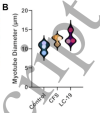
Quantification of myotube diameter was performed by calculating Feret’s diameter for individual, transversely cut tubes. The diameter appeared to be enlarged compared to the controls indicating hypertrophic tendencies in diseased ME/CFS and LC-19 tissues (Figure 5A, B).
Figure 5B does show the myotube diameter is higher in the diseased groups, albeit, still really small samples. The authors suggest that this is hypertrophy in response to stress. Is it reasonable to think that there would be something like a 20% increase in myotube diameter just from the application of diseased serum for 48 hours?

Screenshot 2025-08-02 at 3.21.09 pm.png

It seems a bit unlikely to me. Have I got something wrong? Possibly. I need to check the methods. I also wonder if there were checks on the consistency of the engineered muscle tissue before the different serum samples were applied. I wonder if, rather than actually growing larger, there is effectively swelling some problem in fluid homeostasis?

There is some staining of the myotubes with markers of sarcomeric actinic, F-actin and nuclei (Fig 5A) I'm not sure what to make of those results.


***** Mitochondrial fusion
Moreover, quantification of mitochondrial networks showed hyperfusion evidenced by increased mitochondrial branching and mean branch length (Figures 3C-E).
I think they mean to refer to Figures 5C-E there. Charts 5C and 5D do indeed show increased 'mitochondrial branching' and 'branch length' in the diseased samples. In 5E, I'm assuming the blue blobs are the nucleus. It's hard to see the mitochondria, branched or not.

Screenshot 2025-08-02 at 3.52.13 pm.png

Mitochondria had a high aspect ratio and appeared to be hyperbranched in the cytoplasmic space across the length of a myotube as well as close to the nuclei (Figure 5E). Fusion has been considered to be a positive response related to mitochondrial health, but evidence suggests that above control levels, excess fusion equates to an increased stress response (42–44).


********Oxygen consumption rate (on the next post)
 
Last edited:
I think they mean to refer to Figures 5C-E there. Charts 5C and 5D do indeed show increased 'mitochondrial branching' and 'branch length' in the diseased samples. I don't know what they mean by branching though, or how to interpret 5E. 5E shows mitochondrial that are quite oval, in the myoblast cells, they are not elongated, certainly not branched. It's not making much sense to me yet.
DAPI is a nuclear stain, TOMM20 (the grayish [edit: pinkish? color—I have my blue light filter and brightness low so having trouble seeing the exact color]) is what’s staining the outer membrane of the mitochondria.

The images are looking at branching of the mitochondrial networks rather than the mitochondria themselves—usually in muscle cells mitochondria will organize themselves in lines arranged end to end. Perpendicular “branching” is therefore usually an indication of hyper fusion. So the representative images are trying to show that the TOMM20 staining follows parallel lines more in controls than in the ME/CFS sample.

It probably should have been explained better in the legend but unfortunately most researchers will just assume that DAPI is common knowledge.
 
Last edited:
********Oxygen consumption rate

We were further intrigued to check mitochondrial functional capacity by the MitoStress Test and observed an increase in the overall oxygen consumption rate (OCR) by the diseased cells compared to the controls (Figure 5F). The Extracellular Acidification Rate (ECAR) measures the glycolytic process in the cells as a response to treatments. Both the OCR and the EACR were the highest in ME/CFS patients compared to the other two groups (Figure 5G).

Here is the method. As @jnmaciuch says, the tests were not done on the myotubes, but rather cells seeded into the Seahorse wells.
Immortalized human muscle progenitor cells were seeded at a density of 4000 cells per well in Seahorse XF HS Mini cell culture plates. Cells were allowed to proliferate until the formation of a uniform monolayer with little to no empty spaces. Once confluent, the growth medium was replaced with differentiation medium for 6 days after which 5% serum treated was initiated for 48 hours. Once the 48 h treatment was completed, the media was removed, and cells were washed with PBS thrice. The standard assay media was prepared by supplementing Seahorse XF DMEM Media with 10 mM Glucose, 1 mM pyruvate and 2 mM L-Glutamine. Subsequent analyses and treatment steps were followed from the Seahorse XF Cell Mito Stress Test Kit user guide.
It sounds as though a set number of myoblast cells were seeded, but then they were allowed to proliferate to create 'a uniform monolayer with little to no empty spaces'. Then the cells were given a different medium, a 'differentiation medium' for 6 days. And then 5% serum for 48 hours.

So, the number of cells in the wells probably varied. I haven't seen anything about making sure the number of cells was standardised. Daniel, I think it was you that said that that could that be a problem? I know Charlie has been tagged already; it would be great to get some thoughts from him and Audrey.

And, I don't know what the differentiation medium was doing, but perhaps they weren't just myoblasts, maybe they were actually differentiated myotubes by the time they were tested? Also, there might be differences in the serum concentration and the time the serum was applied for.

There is quite a lot of variation in the oxygen consumption rate within a group.

And, I'm not sure that the story is hanging together particularly well in terms of explaining the differences between the ME/CFS and LC groups. I think we have to keep in mind that large variation between seahorse assays even with the same samples, no matter how carefully done, and also the very small sample sizes in this experiment.

To check the dynamics within each treatment we normalized the rates of all mitochondrial processes to basal respirations and confirmed that in LC-19 samples, nonmitochondrial respiration is consuming most of the oxygen (Figure S4F). However, for ME/CFS samples all processes appear to be upregulated signaling not only a heavy energy burden but also perhaps an attempt to maintain muscle contractile force.
 
Last edited:
Here is the method. As @jnmaciuch says, the tests were not done on the myotubes, but rather cells seeded into the Seahorse wells.
Ah it seems I missed the detail about the differentiation medium. The myoblasts would have become myotubes after that. But to @SNT Gatchaman ‘s earlier point, it looks like it was still a monolayer rather than the 3D architecture from the other experiments. And it seems like differentiation medium wasn’t used in the Ryback or Fluge studies [edit: despite the Fluge study’s results resembling this study’s short-term OCR increase]
 
Last edited:
DAPI is a nuclear stain, TOMM20 (the grayish color) is what’s staining the outer membrane of the mitochondria.

The images are looking at branching of the mitochondrial networks rather than the mitochondria themselves—usually in muscle cells mitochondria will organize themselves in lines arranged end to end. Perpendicular “branching” is therefore usually an indication of hyper fusion. So the representative images are trying to show that the TOMM20 staining follows parallel lines more in controls than in the ME/CFS sample.

It probably should have been explained better in the legend but unfortunately most researchers will just assume that DAPI is common knowledge.
Thanks jnmaciuch. I did eventually twig that the big blue lumps were nuclei, not mitochondria, and changed my post.

Your explanation helps me understand what I should be looking for, but I'm still not really seeing it.
Mitochondria had a high aspect ratio and appeared to be hyperbranched in the cytoplasmic space across the length of a myotube as well as close to the nuclei (Figure 5E).
If I had to pick an image that matched that description, I'd choose the control image.
 
Back
Top Bottom