

Chandelier
Senior Member (Voting Rights)
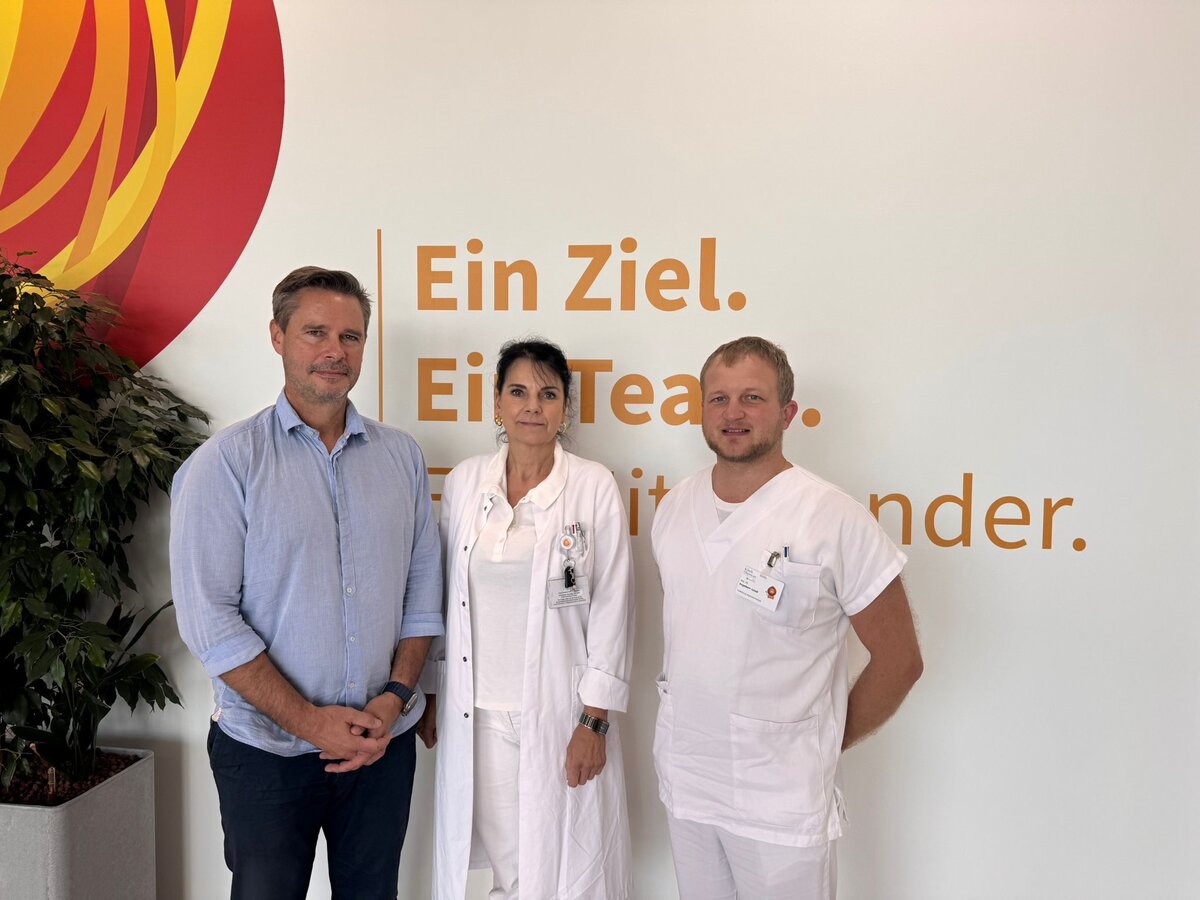
Neue ME/CFS-Ambulanz für Klinik Oberwart
LH Doskozil: Eigene Ambulanz und Therapieprogramm für ME/CFS-Betroffene starten im Oktober 2026
 www.burgenland.at
A new „ME/CFS“ clinic in Austria, sigh.
This sounds like straight out of a horror movie:
One of the requirements, for example, is that patients must be able to move around independently.
Each treatment cycle lasts six weeks.
The programme focuses on a multidisciplinary and holistic approach.
A team of doctors, psychologists and physiotherapists addresses the individual needs of those affected.
The individually tailored treatment plan includes, among other things, orthomolecular supplementation therapies (including antioxidants), talking therapies, physiotherapy and cold applications.
“Particularly important is involving and educating family members,” says Dr Veronika Matzi.
The plan is therefore to integrate relatives into the treatment programme.
…
A considerable number of people affected withdraw completely from social life.
“We want to help these people gradually return to normal life — that is our mission.
The new outpatient clinic and inpatient treatment programme are important first steps towards achieving this,” Dr Veronika Matzi concludes.
New ME/CFS Outpatient Clinic at Oberwart Hospital
Registration is now open.
“ME/CFS is no longer a marginal issue, but a serious healthcare challenge.
People affected by the condition need reliable care that takes their illness seriously and addresses their specific needs.
As promised, we have created the structures necessary to ensure that this care is provided on a long-term basis,” emphasises Hans Peter Doskozil, Governor of Burgenland and member of the Burgenland Provincial Government responsible for health.
As announced by Governor Hans Peter Doskozil, a dedicated ME/CFS outpatient clinic will be established for people affected by the condition.
It is scheduled to begin operating at Oberwart Hospital in early October under the direction of Dr Engelbert Jeindl.
At the same time, a multi-week inpatient treatment programme for people with ME/CFS will be launched at the Reduce Health Resort in Bad Tatzmannsdorf.
An initial internal pilot group has already successfully completed the programme.
Further details about the new services will be presented by Governor Hans Peter Doskozil and his deputy, Anja Haider-Wallner, during the government retreat on 5–6 October.
Andreas Leitner, Managing Director of the Reduce Health Resort, explains: “As part of our Long/Post-COVID regeneration programme, we have gained very positive experience.
We have now developed a specialised treatment programme specifically tailored to the symptoms and needs of people with ME/CFS, in cooperation with Oberwart Hospital.
The programme was initially tested with an internal pilot group, which provided numerous positive responses.”
“We are pursuing a new approach in which orthomolecular supplementation therapy, combined with individualised exercise therapy, plays a key role.
The experience we have gained with this approach is very promising,” emphasises Dr Veronika Matzi, Medical Director of Oberwart Hospital.
The Path to the Treatment Programme
From October onwards, a dedicated ME/CFS outpatient clinic will operate at Oberwart Hospital. It will be open once a week, every Tuesday afternoon from 2 p.m. to 6 p.m., by telephone appointment only.People affected by ME/CFS can arrange an appointment immediately by calling 05 7979 37170 or by email at kontakt.mecfs(at)gesundheit-burgenland.at.
The treating physicians will also determine which patients are suitable for participation in the treatment programme in Bad Tatzmannsdorf.
One of the requirements, for example, is that patients must be able to move around independently.
Each treatment cycle lasts six weeks.
The programme focuses on a multidisciplinary and holistic approach.
A team of doctors, psychologists and physiotherapists addresses the individual needs of those affected.
The individually tailored treatment plan includes, among other things, orthomolecular supplementation therapies (including antioxidants), talking therapies, physiotherapy and cold applications.
“Particularly important is involving and educating family members,” says Dr Veronika Matzi.
The plan is therefore to integrate relatives into the treatment programme.
Around 80,000 People Affected in Austria
According to estimates, around 80,000 people in Austria suffer from ME/CFS.The actual number is likely to be considerably higher.
ME (myalgic encephalomyelitis) and CFS (chronic fatigue syndrome) were first described several decades ago.
Since the outbreak of COVID-19, the condition has increasingly come into the focus of public attention.
ME/CFS can be triggered by severe viral infections, although not exclusively by the coronavirus.
It is a clinical diagnosis based on the characteristic constellation of symptoms and made after other conditions have been ruled out.
To date, there is no single laboratory value or biomarker that can reliably confirm the diagnosis.
Symptoms range from severe, persistent fatigue and significantly reduced physical and cognitive capacity to muscle pain, dizziness and shortness of breath.
A considerable number of people affected withdraw completely from social life.
“We want to help these people gradually return to normal life — that is our mission. The new outpatient clinic and inpatient treatment programme are important first steps towards achieving this,” Dr Veronika Matzi concludes.
