
You are using an out of date browser. It may not display this or other websites correctly.
You should upgrade or use an alternative browser.
You should upgrade or use an alternative browser.
The buspirone challenge test clearly distinguishes ME/CFS patients from healthy controls: why is it not being developed and deployed?
- Thread starter Hip
- Start date


Kitty
Senior Member (Voting Rights)
The contrast with depression is particularly striking.
Yep. And that PET scan study on 5-HT binding potential—comparing ME/CFS with healthy controls rather than depression—did find a marked reduction in the hippocampus. Another very small group though, and I've only seen extracts from the paper.

Jonathan Edwards
Senior Member (Voting Rights)
Maybe we have thought enough about the hippocampus.
It is most often talked of in relation to memory.
However, it is clearly involved in interpreting sensory data, as in computing what 'place' you are in from input from vision.
It is quite close to hypothalamus in centimetres but people may tend to think of it as the 'far end' of the temporal lobe and thus rather distant functionally. I suspect one should not get too bothered either way.
Some of the risk genes were expressed in hippocampus i think.
It is most often talked of in relation to memory.
However, it is clearly involved in interpreting sensory data, as in computing what 'place' you are in from input from vision.
It is quite close to hypothalamus in centimetres but people may tend to think of it as the 'far end' of the temporal lobe and thus rather distant functionally. I suspect one should not get too bothered either way.
Some of the risk genes were expressed in hippocampus i think.
Jonathan Edwards
Senior Member (Voting Rights)
There are studies that claim abnormally high prolactin release in response to buspirone also occurs in some types of migraine, and in panic disorder and generalized anxiety disorder.
I don't think it matters if the response is not specific to ME/CFS. A high ESR is not specific to rheumatoid arthritis but it tells us something important over and above clinical assessment.

jnmaciuch
Senior Member (Voting Rights)
No, not necessarily. Less than a dozen CYP enzymes are responsible for metabolizing something like 90% of all small drug molecules, and things like cytokines each affect multiple CYP enzymes.The last study posted above, Cleare et al, 1995, got the same result with a different serotonin agonist, d-fenfluramine, so maybe that makes it less likely to be about drug metabolism?
Last edited:
jnmaciuch
Senior Member (Voting Rights)
It would encourage us to look at signaling that affects the liver. One thing drug companies have gotten very good about is keeping very detailed logs of specific factors that affect specific liver enzymes. So if we can figure out the specific enzymes affected, you might be able to deduce the upstream factor that’s most consistent with that pattern.What would that difference in drug metabolism suggest?

V.R.T.
Senior Member (Voting Rights)
Didn't liver come up in a study by Ponting's team?It would encourage us to look at signaling that affects the liver. One thing drug companies have gotten very good about is keeping very detailed logs of specific factors that affect specific liver enzymes. So if we can figure out the specific enzymes affected, you might be able to deduce the upstream factor that’s most consistent with that pattern.
Am I reading it right that some of these things tried were 5-ht basically?There are studies that claim abnormally high prolactin release in response to buspirone also occurs in some types of migraine, and in panic disorder and generalized anxiety disorder.
If so I’m also thinking that the relationship between serotonin and feeling happy/excited etc is bidirectional too
Which could explain a bind where the better you feel /if you feel too good one day it triggers something else that makes you ill. Even without the ‘because of the exertion to do with excitement’ or ‘probably did more due to feeling so upbeat’ etc.
Jonathan Edwards
Senior Member (Voting Rights)
I think jnmaciuch's point about metabolism is very pertinent. My gut feeling is that it probably isn't the answer because 1. The profile of prolactin for ME/CFS does not look like just an amplified response due to poor clearance of drug to me. The shape is different at an early stage - even before the plasma peak and certainly before half-life. The caveat is that the profiles are a bit different for each study and it would be good to have better data. 2. The cytokines I know of that alter liver metabolism tend to tickle up C-reactive protein, which isn't tickled up in ME/CFS.
We need to think of someone who could do a study.
We need to think of someone who could do a study.

I sent emails to 11 of the authors of the linked papers - the ones I could find an email address for. I asked if there is anything they can recollect about this line of research, such as why it was not pursued further.I can try to send an email later after an appointment, if someone else hasn't already.

ScoutB
Senior Member (Voting Rights)
Thanks so much for doing that @forestglip.
Well done!I sent emails to 11 of the authors of the linked papers - the ones I could find an email address for. I asked if there is anything they can recollect about this line of research, such as why it was not pursued further.

ChronicallyOverIt
Senior Member (Voting Rights)
@forestglip thinking of metabolism and liver and your genetic analysis wizardry in the DecodeME data is there any overlap with Gilbert’s syndrome genes?
I hadn't heard of Gilbert's syndrome, but Wikipedia says it's caused by a single gene. It doesn't look like anything is significant in the immediate vicinity of that gene, UGT1A1, in DecodeME.@forestglip thinking of metabolism and liver and your genetic analysis wizardry in the DecodeME data is there any overlap with Gilbert’s syndrome genes?
jnmaciuch
Senior Member (Voting Rights)
You think so? [Edit: Tmax seems to be pretty rapid (1 hr), pharmacological CYP3A4 inhibitors increased Cmax 5 and 16 fold (2 different drugs) and did not change half life]. That seems consistent with the graphs to me but I'll defer to youMy gut feeling is that it probably isn't the answer because 1. The profile of prolactin for ME/CFS does not look like just an amplified response due to poor clearance of drug to me. The shape is different at an early stage - even before the plasma peak and certainly before half-life. The caveat is that the profiles are a bit different for each study and it would be good to have better data.
[Edit: my guess is it has less to do with clearance and more to do with cycling between various active and inactive forms before being excreted]

Clinical Pharmacokinetics and Pharmacodynamics of Buspirone, an Anxiolytic Drug - Clinical Pharmacokinetics
Buspirone is an anxiolytic drug given at a dosage of 15 mg/day. The mechanism of action of the drug is not well characterised, but it may exert its effect by acting on the dopaminergic system in the central nervous system or by binding to serotonin (5-hydroxytryptamine) receptors. Following a...
 link.springer.com
Some of them would but definitely not all. IFN probably wouldn't. Some of CCLs would notThe cytokines I know of that alter liver metabolism tend to tickle up C-reactive protein, which isn't tickled up in ME/CFS.
Last edited:

Jesse
Senior Member (Voting Rights)
Maybe not the fastest option but in The Netherlands there is still an ongoing research programme. The recent round of grants for drug repurposing trials got zero applications (because they excluded all drugs still under a patent..). I have no idea when there will be a new round of grants and what theme. Nor do I know if there are suitable research groups. But the money / infra should be there.. there's still like €15-20 million that has to be spent through 2031 as far as I know.We need to think of someone who could do a study.
Last I heard Germany also has made quite a lot of money available for future research. It would be REALLY nice if we could get researchers from those two countries on this forum to increase the chances they will work on research that's actually novel and of interest..
Not sure where to go from here but maybe something to think about.
Kitty
Senior Member (Voting Rights)
We need to think of someone who could do a study.
I don't know about personnel, but the low cost of the drug and the fact that it can be taken at home might make put a trial at the sort of the scale the MEA could fund?
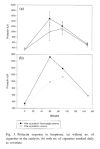
A 2003 study on fibromyalgia also found increased prolactin response, but not altered growth hormone response, after buspirone challenge. They say this may suggest increased sensitivity or density of dopamine D2 receptors.
22 fibromyalgia, 14 controls. All premenopausal females in follicular phase.
Smoking appeared to also alter prolactin response, so they controlled for number of cigarettes smoked daily.
-----
Altered dopamine D2 receptor function in fibromyalgia patients: a neuroendocrine study with buspirone in women with fibromyalgia compared to female population based controls
Malt, Eva Albertsen; Olafsson, Snorri; Aakvaag, Asbjoern; Lund, Anders; Ursin, Holger
Web | DOI | Journal of Affective Disorders | Paywall | 2003
22 fibromyalgia, 14 controls. All premenopausal females in follicular phase.
Smoking appeared to also alter prolactin response, so they controlled for number of cigarettes smoked daily.
-----
Altered dopamine D2 receptor function in fibromyalgia patients: a neuroendocrine study with buspirone in women with fibromyalgia compared to female population based controls
Malt, Eva Albertsen; Olafsson, Snorri; Aakvaag, Asbjoern; Lund, Anders; Ursin, Holger
Background
To what extent fibromyalgia belongs to affective spectrum disorders or anxiety spectrum disorders remains disputed. Buspirone induces a hypothermic response, which most likely is due to 5-HT1A autoreceptor stimulation, and growth hormone (GH) release, which probably is related to postsynaptic 5-HT1A receptor stimulation. The prolactin response to buspirone has been suggested to be mediated through dopamine (DA) antagonistic effects.
Objectives
Based on the assumption that fibromyalgia is more strongly related to stress and anxiety than affective spectrum disorders, we hypothesized that compared to population controls, fibromyalgia patients should demonstrate an increased prolactin response (DA sensitivity) to buspirone challenge test, but no difference in hypothermic response or GH release (5HT sensitivity).
Method
A 60-mg dose of buspirone was given orally to 22 premenopausal women with fibromyalgia and 14 age and sex matched healthy control subjects. Core body temperature, growth hormone and prolactin levels were analyzed at baseline and after 60, 90, and 150 min.
Results
Fibromyalgia patients showed an augmented prolactin response to buspirone compared to controls. Temperature and growth hormone responses did not differ from controls.
Conclusions
Dopaminergic rather than serotonergic neurotransmission is altered in fibromyalgia, suggesting increased sensitivity or density of dopamine D2 receptors in fibromyalgia patients. Stress and anxiety is an important modulator of dopaminergic neurotransmission. Our results suggest that fibromyalgia is related to anxiety and associated with disturbance in the stress response systems.
To what extent fibromyalgia belongs to affective spectrum disorders or anxiety spectrum disorders remains disputed. Buspirone induces a hypothermic response, which most likely is due to 5-HT1A autoreceptor stimulation, and growth hormone (GH) release, which probably is related to postsynaptic 5-HT1A receptor stimulation. The prolactin response to buspirone has been suggested to be mediated through dopamine (DA) antagonistic effects.
Objectives
Based on the assumption that fibromyalgia is more strongly related to stress and anxiety than affective spectrum disorders, we hypothesized that compared to population controls, fibromyalgia patients should demonstrate an increased prolactin response (DA sensitivity) to buspirone challenge test, but no difference in hypothermic response or GH release (5HT sensitivity).
Method
A 60-mg dose of buspirone was given orally to 22 premenopausal women with fibromyalgia and 14 age and sex matched healthy control subjects. Core body temperature, growth hormone and prolactin levels were analyzed at baseline and after 60, 90, and 150 min.
Results
Fibromyalgia patients showed an augmented prolactin response to buspirone compared to controls. Temperature and growth hormone responses did not differ from controls.
Conclusions
Dopaminergic rather than serotonergic neurotransmission is altered in fibromyalgia, suggesting increased sensitivity or density of dopamine D2 receptors in fibromyalgia patients. Stress and anxiety is an important modulator of dopaminergic neurotransmission. Our results suggest that fibromyalgia is related to anxiety and associated with disturbance in the stress response systems.
“No significant group differences were found in baseline prolactin. A significant interaction was found between number of cigarettes smoked daily and prolactin response (F = 5.23, df 3, P = 0.002), and this variable was entered as covariate in the repeated measure ANOVA analysis. Buspirone produced a general increase in prolactin with a significant main effect of time (F= 21.33, df 3, P < 0.001) and number of cigarettes smoked daily (F = 5.03, df 1, P < 0.033), no main effect of diagnosis (F = 1.84, df 1, P = 0.19), but a significant interaction between time and diagnosis (F = 4.30, df 1, P = 0.047) with an increased prolactin response in fibromyalgia patients compared to controls”

Nightsong
Senior Member (Voting Rights)
In other conditions, with a mixture of results, limiting to buspirone challenge only -
Buspirone/prolactin response in post head injury depression
A Preliminary Neuroendocrine Study with Buspirone in Major Depression
A preliminary study of buspirone stimulated prolactin release in generalised social phobia: evidence for enhanced serotonergic responsivity?
Differing central amine receptor sensitivity in different migraine subtypes? A neuroendocrine study using buspirone
Tardive Dyskinesia Predicts Prolactin Response to Buspirone Challenge in People With Schizophrenia
Serotonergic Responsivity in Male Young Adults With Autistic Disorder
A more critical review of the fenfluramine challenge test was published in 1998:
Evaluation of central serotonergic function in affective and related disorders by the fenfluramine challenge test: a critical review
Interest in these methods seems to have waned by the late 1990s. I suspect they just didn't produce reliable results or that there were significant confounders.
Buspirone/prolactin response in post head injury depression
A Preliminary Neuroendocrine Study with Buspirone in Major Depression
A preliminary study of buspirone stimulated prolactin release in generalised social phobia: evidence for enhanced serotonergic responsivity?
Differing central amine receptor sensitivity in different migraine subtypes? A neuroendocrine study using buspirone
Tardive Dyskinesia Predicts Prolactin Response to Buspirone Challenge in People With Schizophrenia
Serotonergic Responsivity in Male Young Adults With Autistic Disorder
A more critical review of the fenfluramine challenge test was published in 1998:
Evaluation of central serotonergic function in affective and related disorders by the fenfluramine challenge test: a critical review
Interest in these methods seems to have waned by the late 1990s. I suspect they just didn't produce reliable results or that there were significant confounders.