We also need to make them aware of the severity of disability in ME/CFS and the numbers affected, a picture which is almost certainly not captured via GP records. Studies like this have detailed questionnaires where participants are likely to be able to report it in their own terms.
There's also the fact that eventually the study hopes to offer individual feedback to people whose genetic screening reveals things they might need to know or act on, if they want to know. Among other things that should reveal what genetic conditions causing treatable disease or preventable deaths are least likely to be picked up until very late in the day, which is really important for future preventive screening programmes.
Studies like this are always a two-edged sword and I'd look into it in more detail before deciding to take part, but at first sight it looks if there are good arguments for doing so.
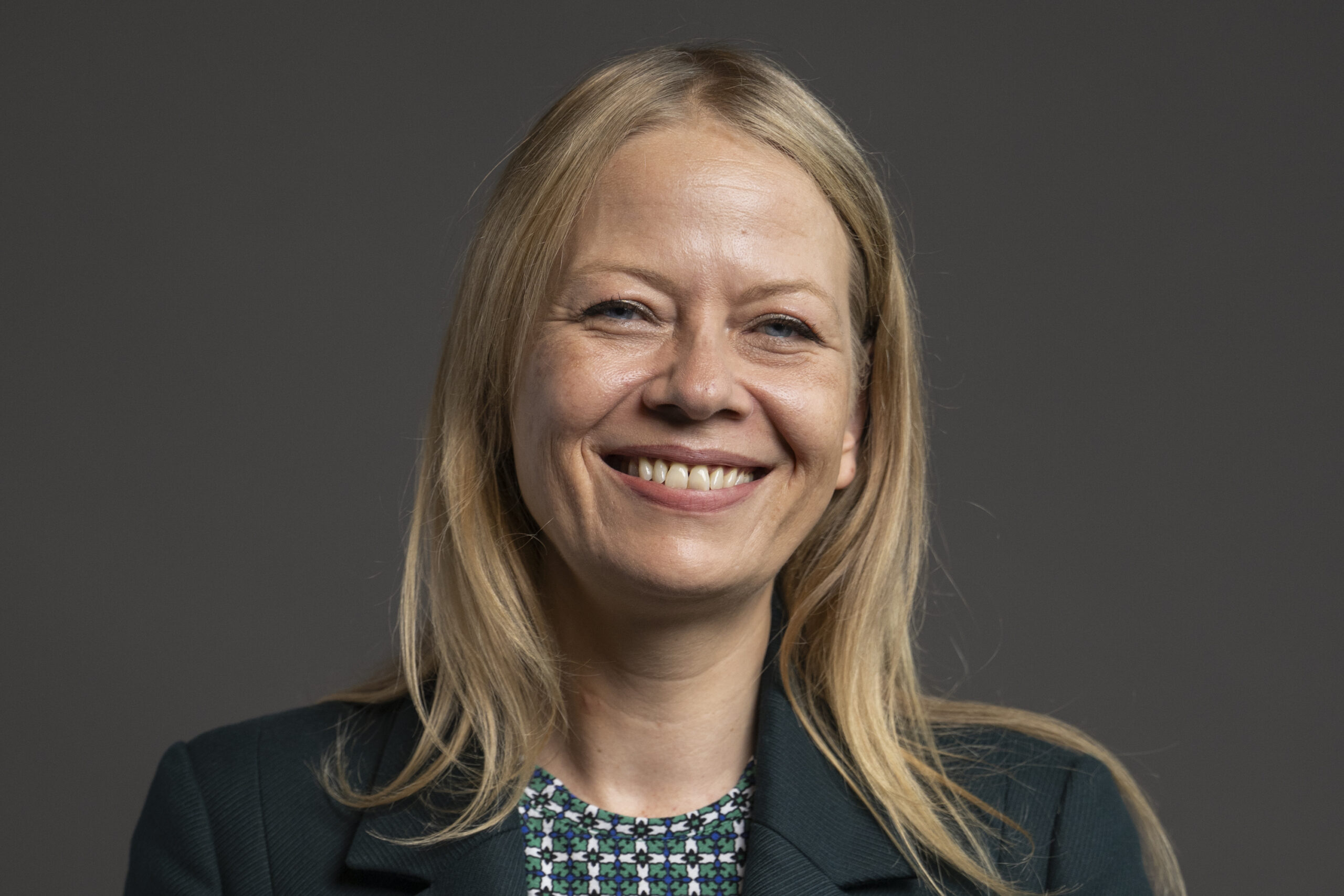
Action for ME's most recent Parliamentary Champion (Green MP Sian Berry) asked the Secretary of State for Health (on the 20th October):
''To ask the Secretary of State for Health and Social Care, if he will hold discussions with the British Association of Clinicians in ME/CFS (BACME) on the geographical availability of regional specialist services for ME/CFS; and if he will undertake a mapping exercise to list the areas that (a) are and (b) are not covered.'
Siân Berry Green, Brighton Pavilion
To ask the Secretary of State for Health and Social Care, pursuant to the Answer of 28 March 2025 to Question 40020 on Chronic Fatigue Syndrome: Health Services, whether he has had discussions with the British Association of Clinicians in ME/CFS on the myalgic encephalomyelitis/chronic fatigue syndrome delivery plan; and whether that plan will establish more NHS specialist ME/CFS services.
We don't know who briefed Sian Berry on that Parliamentary Question. But AFME must clarify what their official charity position is re BACME and it's involvement in the NHS clinics and what services they promote.
Siân Berry MP joins Action for ME as a Parliamentary Champion, highlighting the need for policies that reflect the realities of ME and support those affected.
I'm not sure that's the best idea they've ever had. All it's likely to do is dilute messages, and align AfME with people whose output might undermine their credibility.
The recording from the LOCOME Research Project webinar is now available!
A collaboration between PrecisionLife, Action for ME and the University of Edinburgh, the LOCOME Project aimed to improve understanding of the biological mechanisms that underpin ME/CFS and long Covid.
Using DecodeME and other datasets, LOCOME has identified a number of genetic signals and biological pathways that may be involved in ME.
The webinar, which took place on December 5, shared the project findings and discussed the next steps.
You can learn more about these findings, alongside watch presentations and discussions from PrecisionLife, Action for ME and PPI representatives, by watching the recording on our YouTube channel
New self-advocacy resource now available: Impact Statement Template.
This new resource, developed by our Adults Advocacy Service in collaboration with their steering group, aims to support people with ME to communicate how ME impacts them and what adjustments would best support them.
The Impact Statement Template includes instructions on how to complete it, as well as examples that you can edit.
New self-advocacy resource now available: Impact Statement Template.
This new resource, developed by our Adults Advocacy Service in collaboration with their steering group, aims to support people with ME to communicate how ME impacts them and what adjustments would best support them.
The Impact Statement Template includes instructions on how to complete it, as well as examples that you can edit.
We're pleased to welcome Gregory Stafford MP as our newest Parliamentary Champion and member of the APPG on ME!
Following our meeting, and speaking on the announcement, Greg said:
"I am pleased to become a Parliamentary Champion for Action for ME and to support efforts to strengthen the UK’s response to this complex and often misunderstood illness.
The UK has a strong reputation for medical research and innovation. However, at a time when biomedical and genetic research is opening up new avenues of understanding, it is important that the UK actively contributes and maintains ambition in this field. Building research capacity and encouraging collaboration across institutions will be essential to ensure the UK keeps pace with developments internationally.
The Delivery Plan published last year represents a step forward, but its impact will depend on effective implementation. I look forward to working with Action for ME and colleagues across Parliament to help ensure that its commitments are delivered fully and in a timely manner."
We'd like to thank Greg for his ongoing commitment to the ME community and for already working with us to table some written questions, highlighting the urgent need for improved care and support for those with severe and very severe ME
The Delivery Plan published last year represents a step forward, but its impact will depend on effective implementation. I look forward to working with Action for ME and colleagues across Parliament to help ensure that its commitments are delivered fully and in a timely manner.
This makes me wonder if Mr Stafford actually has much idea about the delivery plan and the fact that so far it seems to have delivered nothing and promises more of the same. This sounds awfully like a minister's response to a parliamentary question.
The champions might go into back-rooms to ask confidentially what is happening with the 5 research hubs revealed by the Senned motion, as ME Research UK explained here:
develop a strategic approach to research by supporting Wales to host one of the five proposed UK hubs
for collaborative translational research into pathological mechanisms that cause ME, long COVID and related post-acute infection conditions.”
What is striking is the proposed 5 hubs proposal which appears new. It was not in the action points of the ME/CFS Delivery Plan. Is this movement to recogise the call by researchers, patients and charities (including ME Research UK) for a new co-ordinated and better funded research landscape?
I’ve asked my officials to reach out to our research partners in the UK to better understand what the specific proposals are for funding and establishing the UK hubs that have been referred to.
- and if it is still under wraps, then obtain the redacted version so no more people fret and fritter away their efforts, unnecessarily, in the belief there is no such thing in the pipeline.
That puts a champion in the typical, invidious position under a gob-smacking obligation to stride across divisions keeping secrets from people they speak with and speak for who depend on them.
An independent, trusted enquirer might better examine - confidentially - the danger of exposing half-baked works in progress. Who could Sonya C ask to enquire?
Ps I was sure it said seven hubs, but currently only five.
Edit: pps I am not clear what Professor David Price does. The Minister was succinct enough to clearly differentiate him from Adam Price.
This comprehensive resource has been designed to support teachers and support staff and contains everything schools need to know about how to support a child or young person with ME/CFS.
Download and read our ‘Guide for Educators’ resource on our website
· Explaining post-exertional malaise (PEM), what causes ME/CFS, symptoms and pacing
· Explaining ME/CFS – written by young people with ME/CFS
· Wellbeing for children and young people with ME/CFS
· Barriers faced by young people and support in practise
· Educators mind map and key principles in supporting a pupil with ME/CFS
· IHCP/EHCP information
· Legal information and responsibilities
· Practical steps you can take as a school/teacher
· Useful resources
To complement the resource, our Family Services Coordinator, Keely, offers 30 minute Q&A sessions with educators to answer any questions they have about supporting pupils with ME/CFS.
I have just dipped in to this. It worries me that it starts off with:
ME/CFS is a complex, chronic disabling medical condition, affecting multiple body systems (immune and nervous systems predominately) that has no cure.
Is this supposed to be 'supportive'? I agree in presenting the situation honestly, but this is a garbled mixture of things taken out of context that will surely just terrify people?
The text continues with a lot of what is essentially ME/CFS folklore rather than medical information.
Who writes stuff this way? Why is it always the same half-baked memes?
People who want to sound as if they know what they're talking about always do it. They never read it back and think, what do I actually mean?
Maybe we should come up with an accurate, straightforward opening paragraph for this kind of document. People have borrowed the complex, multi-system yada yada yada from elsewhere, so they'd probably seize on it gratefully.
This comprehensive resource has been designed to support teachers and support staff and contains everything schools need to know about how to support a child or young person with ME/CFS.
Download and read our ‘Guide for Educators’ resource on our website
· Explaining post-exertional malaise (PEM), what causes ME/CFS, symptoms and pacing
· Explaining ME/CFS – written by young people with ME/CFS
· Wellbeing for children and young people with ME/CFS
· Barriers faced by young people and support in practise
· Educators mind map and key principles in supporting a pupil with ME/CFS
· IHCP/EHCP information
· Legal information and responsibilities
· Practical steps you can take as a school/teacher
· Useful resources
To complement the resource, our Family Services Coordinator, Keely, offers 30 minute Q&A sessions with educators to answer any questions they have about supporting pupils with ME/CFS.
This seems a rework of info deriving from a project done in Scotland pre COVID. I took part in this to address lack of understanding and the real risk of FII resulting from non attendance . Unless a member of staff has experience of ME/CFS there is not a clue , and a very real risk of becoming worse.
Whether long COVID has altered this to much extent, I don't know , but suspect not , hence the rework.
A lot of this is basic common sense for any chronic illness , not just ME/ CFS .PEM adds a critical filter . Sadly charities are all prone to the condition description quoted in introductions .
The original project had positive effects in supporting pupils and educators , but worked most effectively where a learning seminar to educators was delivered . This involved a spoon theory exercise - seemingly this is when the " penny drop " moment happened for most.
I arranged two sessions locally but did not attend . One was via a neighbour who was a guidance teacher , and their session involved pupils as well.
It was as important for the pupils , most reframed opinions.
It looks very close to the first sentence I have seen in the NHS e-learning module which may not be a coincidence
ME/CFS is a complex, multi-system, chronic disease which can affect many systems of the body (such as the immune, central nervous and autonomic nervous system).
This site uses cookies to help personalise content, tailor your experience and to keep you logged in if you register.
By continuing to use this site, you are consenting to our use of cookies.