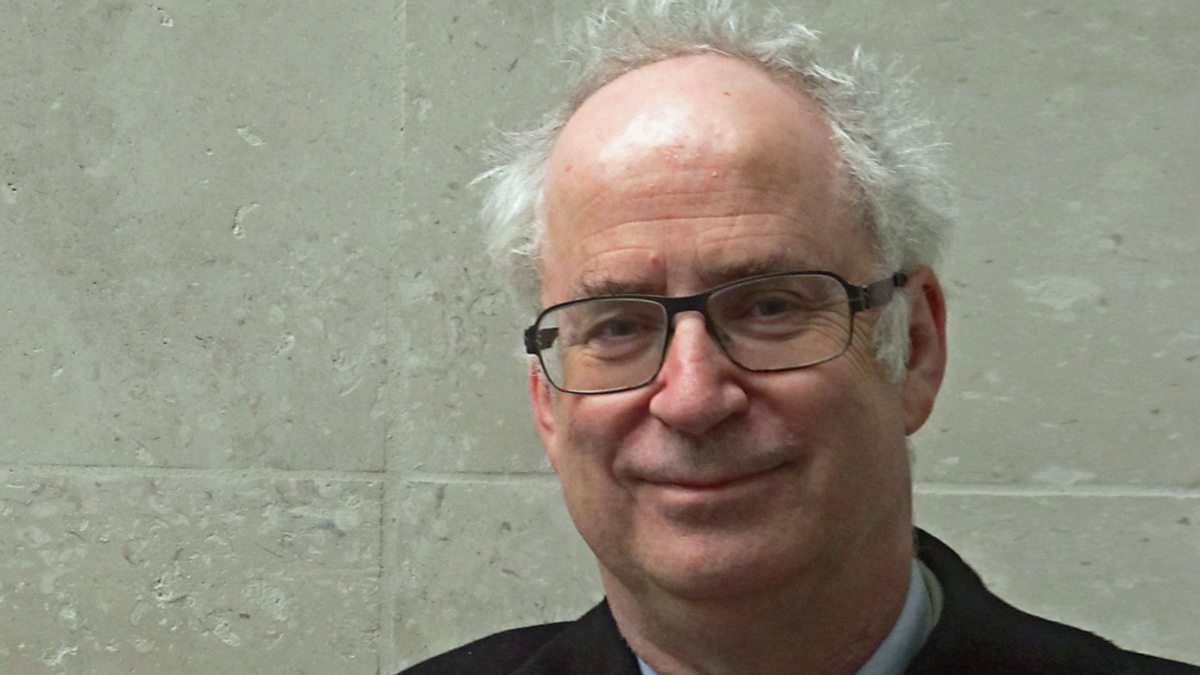
Bettelheim was a prominent proponent of a psychogenic account of autism, which held that autism had origins in early childhood events or trauma acting on the child from the outside. For Bettelheim, the idea that outside forces cause individual behavior issues can be traced back to his earliest prominent article on the psychology of imprisoned persons.[67]Bettelheim believed that autism resulted when mothers withheld appropriate affection from their children and failed to make a good connection with them. Bettelheim popularized the
Leo Kanner's term "refrigerator mother" to describe such allegedly distant mothers. Bettelheim also blamed absent or weak fathers.[
citation needed]
Jordynn Jack writes that Bettelheim's ideas gained currency and became popular in large part because society already tended to blame a mother first and foremost for her child's difficulties.[68] As Lisa D. Benaron describes in her book Autism, "Although it now seems beyond comprehension that anyone would believe that autism is caused by deep-seated issues arising in early childhood relationships, virtually every psychiatric condition was attributed to parent-child relationships in the 1940s and 1950s, when Freudian psychoanalytic theory was in its heyday."[69]
Bettelheim adapted and transformed the
Orthogenic School at the
University of Chicagoas a residential treatment
milieu for such children, who he felt would benefit from a "
parentectomy". This marked the apex of autism viewed as a disorder of parenting.[66][70]
One of his most famous books,
The Empty Fortress (1967), contains a complex and detailed explanation of this dynamic in psychoanalytical and psychological terms. These views were disputed at the time by mothers of autistic children and by researchers.[71] He derived his thinking from the qualitative investigation of clinical cases.[
citation needed] He also related the world of autistic children to conditions in concentration camps.[
citation needed]
Beginning in the 1960s and into the 1970s, "biogenesis", the idea that such conditions had an inner-organic or biological basis overtook psychogenesis,[72] and currently, Bettelheim's theories in which he attributes
autism spectrum conditions to parenting style have been largely discredited, and his reporting rates of cure have been questioned, with critics stating that his patients were not actually autistic.[33][7][73] [
Source]