Closed Mind Body Intervention for Long COVID-19 [Massachusetts, USA]

forestglip

Moderator
Staff member
Official Title
Mind Body Intervention for Long COVID-19

Brief Summary
The goal of this study is to determine if a mind-body intervention can help people suffering from symptoms associated with Long COVID.The study is a randomized trial examining the effectiveness of a mind body intervention in reducing somatic symptoms from Long COVID in participants as compared to usual care and an active control (second mind body intervention).The investigators will secondarily investigate whether the intervention alleviates individual somatic complaints and improves daily functioning, relative to usual care and the active control

Enrollment
180

Inclusion Criteria
  1. Adult (≥ 18 years of age)
  2. Infection with Sars-COV2 (i.e., positive antibody, antigen, or PCR testing)
  3. Symptoms attributed only to COVID-19 and not to known comorbid disease (e.g., other infections, cancer, etc)
  4. A somatic symptom score ≥ 10 on the SSS-8 questionnaire with involvement of at least 3 domains
  5. Symptoms present at least 3 day a week for a minimum of 3 months
  6. Willingness to engage in a Mind-Body intervention
Exclusion Criteria
  1. Clear diagnosis of physical disease (e.g.lung fibrosis, myocarditis) not inclusive of non-specific findings such as mild arthritis
  2. Hospitalization in an intensive care unit for acute COVID-19 infections
  3. Age greater than 65 years
  4. Diagnosis of dementia or similar cognitive impairment
  5. Active addiction disorder (e.g.cocaine) that would interfere with study participation
  6. Major psychiatric comorbidity (e.g., schizophrenia).Mild to moderate anxiety and depression are not considered in this category
Arms and Interventions
Participant Group/ArmIntervention/Treatment
Experimental: Mind Body Intervention #1Behavioral: Mind Body Intervention #1
  • The mind-body intervention will include regular 1 to 2 hour educational sessions and lectures, as well as supplemental reading material. In addition, individualized sessions will be offered each week for students who have additional questions and/or need additional time with the material.
Active Comparator: Mind Body Intervention #2Behavioral: Mind Body Intervention #1
  • The mind-body intervention will include regular 1 to 2 hour educational sessions and lectures, as well as supplemental reading material. In addition, individualized sessions will be offered each week for students who have additional questions and/or need additional time with the material.
No Intervention: Usual Care


Primary Outcome
Outcome MeasureMeasure DescriptionTime Frame
Somatic Symptom Score-8 (SSS-8)Survey questions pertain to pain, the gastrointestinal system, fatigue, dizziness, and cardiovascular complaints. Range of 0-32, with higher scores indicating higher levels of discomfort.Baseline, 4 weeks, 8 weeks, 13 weeks

Secondary Outcomes

Outcome MeasureMeasure DescriptionTime Frame
Short Form Brief Pain Inventory (BPI)Used to gauge pain intensity, and pain interference with daily function over the duration of the studyBaseline, 4 weeks, 8 weeks, 13 weeks
Fatigue Severity Scale (FSS)Consists of statements relating to a patient's general level of fatigue and fatigue with specific activities. Range of 7-63, with higher scores indicating a higher degree of fatigue.Baseline, 4 weeks, 8 weeks, 13 weeks
The Multidimensional Dyspnea Profile (MDP)A survey that assesses perceived physical aspects of dyspnea and associated emotional effects. Each of the rating scales within the MDP is designed to measure a separate construct, though each can be grouped between the two above mentioned domains.Baseline, 4 weeks, 8 weeks, 13 weeks
Generalized Anxiety Disorder form 7 (GAD-7)Self-report instrument assessing general anxiety over the last two weeks. Each of the 7 item is a statement concerning an anxiety trait, respondents then rate how often that statement is true. Responses range from 0 (not at all) to 3 (nearly every day).Baseline and 13 weeks
Patient Reported Outcomes Measurement Information System survey for function disability (PROMIS)a standardized assessment of health-related quality of lifeBaseline, 4 weeks, 8 weeks, 13 weeks
End of study measurementsParticipants' subjective experience of the program upon completion13 weeks
Pain Anxiety Symptom Score-20 (Pass-20)Anxiety from pain determined from 20 item survey, with each item being scored from 1-5 in terms of frequencyBaseline, 4 weeks, 8 weeks, 13 weeks
Patient Reported Outcomes Measurement Information System Survey for Cognitive Function (PROMIS SF v2.0 cognitive function 8a)Cognition assessmentBaseline, 4 weeks, 8 weeks, 13 weeks

Primary Purpose
Treatment

Allocation
Randomized

Interventional Model
Parallel Assignment

Masking
Double (Participant, Outcomes Assessor)

Sponsor
Beth Israel Deaconess Medical Center

Principal Investigator
Michael Donnino, MD, Beth Israel Deaconess Medical Center

Study completion (Estimated)
2026-12

Registration
ClinicalTrials.gov: NCT06045338

----

This trial was discussed on the thread for the Wired Article: The Painful Truth About Long Covid.

Thread for previously completed pilot trial from this investigator: Mind Body Intervention for COVID-19 Long Haul Syndrome
 
I’m all for nice things are nice and helping people in any way we can but it staggers me that this stuff gets funding and classified as a clinical trial and wrapped up in a way which legitimises it as an approach. That we don’t see the same for other significant diseases is telling, how many trials have there been of this approach as a treatment for malaria?
 
Here is the preprint for the pilot study from this researcher, which describes the intervention they use in more detail. I assume the present study will use a similar intervention.

Psychophysiologic symptom relief therapy (PSRT) for post-acute sequelae of COVID-19: a non-randomized interventional study (Donnino et al, 2022, medRxiv)

Intervention
PSRT is based on a psychophysiologic approach to understanding and treating pain, driven by the hypothesis that nonspecific pain can be the somatic manifestation of psychophysiological processes exacerbated by stress, repressed emotions, and other psychological processes (24,25). We recently published a randomized controlled study that showed PSRT led to substantial, statistically significant reduction in pain bothersomeness and pain-related disability in people suffering from nonspecific chronic back pain (19). We applied this treatment paradigm to the nonspecific symptoms common to PASC, including pain, in this trial. The PSRT course was led by a physician (author M.W.D.) and a mind-body expert (author P.H.).

The goal of PSRT is to address underlying stressors and psychological contributors (such as underlying conflicts and aversive affective states) to nonspecific symptoms in order to mitigate conditioned symptom responses and fear-avoidant behaviors. Weeks zero through four of the course included group classes twice per week (90-120 minutes per class) and consisted of psychophysiologic education, desensitization (including visualization techniques), and emotional awareness exercises (such as expressive writing). Education focused on providing participants with information about the role of stress and psychological processes in precipitating and perpetuating physical symptoms. Using desensitization exercises, participants were encouraged to approach, rather than avoid, physical activities first through visualizing an action that typically induces symptoms and then through physical exposures of feared symptom-inducing activities.

The final 9 weeks of PSRT is the Mindfulness Based Stress Reduction (MBSR) protocol as outlined by the Center for Mindfulness at the University of Massachusetts (26). This portion consisted of classes once per week for a duration of 90 to 120 minutes and focused on providing participants with mindfulness skills such as practicing awareness of breath, body scan, and sitting meditation. No new elements of PSRT were introduced but reminders about elements of the work were provided during the MBSR course. The detailed protocol of PSRT is described in the Supplementary Materials.

More details about it in the supplementary file.
 
It certainly ticks all the boxes. “somatic manifestation” “psychophysiological” “exacerbated by stress” “repressed emotions” “fear-avoidant behaviors” “desensitization” “approach, rather than avoid, physical activities”

Worth adding that this is not from some fringe organisation but being run at a teaching hospital which is part of Harvard Medical School and is one of the top 3 recipients of funding by the NIH for biomedical funding. I don’t know about the funding for this but to have such ideas perpetuated and legitimatised at the heart of these institutions is to me very much part of the problem that needs tackling. It’s somewhere between malpractice, fraud and victim blaming but seen as entirely okay. That it is tells us much about how people (medical professionals and wider society) still view these conditions. As does their reaction to being called out on it.

This gives Mindfulness Based Stress Reduction a bad name and is inappropriate use of it IMHO. How studies like this pass ethics approval given all we know is beyond me.
 
From https://www.shapiroinstitute.org/faculty-staff/mike-donnino,-md

Professor in Emergency Medicine, not who you‘d expect to research mind-body approaches?

Mike Donnino, MD​

Director, Foundations in Clinical Trials
Michael W. Donnino, MD is a Professor of Emergency Medicine at Harvard Medical School and the Director of the Center for Resuscitation Science and Director of Critical Care in Emergency Medicine at Beth Israel Deaconess Medical Center. His clinical practice spans both the intensive care unit as well as the emergency department. Dr. Donnino was the first person in the country to train in a 6-year combined emergency medicine, internal medicine, and critical care program leading to board certification in all three areas.
 
To risk confirming @Learningandlistening accusation that everyone on this site is hopelessly biased against all and any non pharmacological intervention for Long Covid or ME/CFS, I predict this trial will demonstrate a mild to moderate uptick in subjective reporting that is similar in scale to what we see in the unblinded drug trials [added —that fail to be replicated with double blinding], even though this does not persist long term and is not mirrored in any objective measures such as activity monitoring, hours worked or reduced benefits claimed.

I hope they will include some serious attempt to evaluate any adverse incidences and to establish reasons for any drop outs. Previous CFS studies looking at GET and CBT have grievously failed to do this adequately, certainly we have anecdotes from the PACE trial of people dropping out because they were getting worse, being told that getting worse was not possible and apparently their reports of deterioration not being included in any write ups. Obviously brain training is not the same as the BPS psycho behavioural interventions, but so far research on this intervention has included the same methodological failings

As well as inclusion of some objective measure(s), I would have liked to see some form of non brain training activity arm, be it flower arranging or afternoon teas. It should be possible to invent something that involved equivalent amounts of cognitive and physical activity as well as equivalent amounts of nice well meaning professionals being interested in you. Having myself evaluated clinical interventions, albeit last century in a clinical rather than a research setting I am very aware that it is almost impossible in the short term to get any thing but positive feedback.

No mention is made of the potential heterogeneity of Long Covid which is worrying, further as mentioned by others elsewhere no mention so far is made of PEM, which means that any conclusions are irrelevant to ME/CFS type Long Covid or to ME/CFS.
 
Last edited:
I may be dim but the 'active comparator' seems to be the same as the 'experimental' arm. What is the point of comparing two groups having the same treatment? It does not provide any sort of 'sham' control.
I think the registration is just lacking in detail. Here is a previous study on pain where they also did a three arm trial focused on a mind-body intervention. The control group was "mindfulness-based stress reduction".

Psychophysiologic symptom relief therapy for chronic back pain: a pilot randomized controlled trial (Donnino et al., 2021, Pain Reports)
Introduction:
Chronic back pain is the leading cause of disability in the United States. Based on the hypothesis that nonspecific back pain may be rooted in a psychophysiologic etiology, we propose a new approach to chronic back pain.

Objectives:
A pilot study was conducted to assess whether psychophysiologic symptom relief therapy (PSRT) can reduce disability and back pain bothersomeness for patients with chronic back pain.

Methods:
This was a three-armed, randomized trial for adults with nonspecific chronic back pain that compared PSRT with usual care and an active comparator (mindfulness-based stress reduction [MBSR]). Psychophysiologic symptom relief therapy–randomized participants received a 12-week (36 hours) course based on the psychophysiological model of pain. All groups were administered validated questionnaires at baseline and at 4, 8, 13, and 26 weeks. The primary outcome was the reduction in pain disability measured by the Roland–Morris Disability Questionnaire.

Results:
The mean Roland–Morris Disability Questionnaire score for the PSRT group (n = 11) decreased from 9.5 (±4.3 SDs) to 3.3 (±5.1) after 26 weeks which was statistically significant compared with both MBSR (n = 12) (P = 0.04) and usual care (n = 12) (P = 0.03). Pain bothersomeness scores and pain-related anxiety decreased significantly over 26 weeks in PSRT compared with MBSR and usual care (data in manuscript). At 26 weeks, 63.6% of the PSRT arm reported being pain free (0/10 pain) compared with 25.0% and 16.7% in MBSR and usual care arms, respectively. Psychophysiologic symptom relief therapy attendance was 76%, and there was 100% follow-up of all groups.

Conclusion:
Psychophysiologic symptom relief therapy is a feasible and potentially highly beneficial treatment for patients with nonspecific back pain.
Web | DOI | PDF | Open Access

Edit: I made a thread for the study.
 
Last edited:
To risk confirming @Learningandlistening accusation that everyone on this site is hopelessly biased against all and any non pharmacological intervention for Long Covid or ME/CFS
I’m hopelessly biased about evidence. The argument could be made that we need to try these things to get evidence. But the problem is we have years of evidence that they don’t work and yet they still keep on being returned to. It’s like saying people are biased about the efficacy of vaccines and we should try some alternatives … oh yeah wait that’s happening too isn’t it.

Edit: just to add, as I have said numerous times I’m supportive of things like mindfulness. I think aspects of these approaches have a place in people’s lives if they find them useful, including for those with chronic conditions. What they are not and should not be used as is a substitute for sorely needed biomedical research or an excuse to dismiss or belittle people’s debilitating illnesses or put blame on those who are not lucky enough to spontaneously recover. And the reality is they frequently are. That is what we have seen them to be effective in.
 
Last edited:
Exclusion Criteria
  1. Clear diagnosis of physical disease (e.g.lung fibrosis, myocarditis) not inclusive of non-specific findings such as mild arthritis
There are obvious reasons to do this as part of a real clinical trial, but based on claims and descriptions of "mind-body" ideology, there is no actual reason for this exclusion. If anything, proponents of those models keep repeating how their neuroplasticity models should apply to any sort of symptoms, there is no actual reason why there should be any difference.

In fact our BPS overlords keep pointing to cancer-related fatigue being treated, just as ineffectively but still, with CBT. Except of course it's not just CBT, but there is no actual reason for excluding "real" diseases if what they are doing is treating symptoms by retraining the brain to ignore them. By the very models they are peddling, it should work just as well. And it sure does, in a 0=0 way.

But of course that's because despite all the bullshit about "somatic symptoms" being "real", they are based on an entirely different construct:
The goal of PSRT is to address underlying stressors and psychological contributors (such as underlying conflicts and aversive affective states) to nonspecific symptoms in order to mitigate conditioned symptom responses and fear-avoidant behaviors
Which is the exact same that has been tested endlessly again and again. This is basically the same as the first doodles that Wessely and Sharpe made up in the late 80s, and almost verbatim the PACE model. It's the same old "conversion disorder", to be treated with "conversion therapy".
I may be dim but the 'active comparator' seems to be the same as the 'experimental' arm. What is the point of comparing two groups having the same treatment? It does not provide any sort of 'sham' control.
They heard us talking about how they keep comparing apples to block engines and went: fine, we're going to compare an apple to the same apple rotated by 9 degrees.

It also makes it pretty clear that participants are being coached into giving specific answers, which is always the case in healing magic. Coaching participants into giving positive answers can never be part of a trial. Coaching for specific answers is the entire process, which is why this ideology is fundamentally untestable. It's as valid as an election where all the votes are counted in secret by people with a vested interest in its outcome, it can never be trusted because what makes such a process trustworthy is missing.
Obviously brain training is not the same as the BPS psycho behavioural interventions
From the description above, I don't see how. It features "education" about "mind-body" processes and is about conditioned response driven by fear. This is about 99% the same model that Wessely and his gang made up, and about 98% similar to whatever Freud was ranting about. If there's a difference, I'm not seeing it.
 
Last edited:
From the description above, I don't see how. It features "education" about "mind-body" processes and is about conditioned response driven by fear. This is about 99% the same model that Wessely and his gang made up, and about 98% similar to whatever Freud was ranting about. If there's a difference, I'm not seeing it.

Point taken, I was trying to be objective, given the two start from a different perspective, however the more I read the less I stand by brain training and CBT in practice being different.
 
In fact our BPS overlords keep pointing to cancer-related fatigue being treated, just as ineffectively but still, with CBT
Wyller is currently spinning up a MBRT trial for fatigue, including post-cancer. The cancer association is involved. They were also involved in Reme’s hypnosis trial for breast cancer patients that had null results but was presented by all parties as positive.
Masking
Double (Participant, Outcomes Assessor)
Yeah, right.
 
Oh sugar, I wrote a post on the wrong thread, tried to copy and paste it over here and only the scale came with.

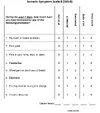
To be included in the trial, you have to score more than 10 on this scale - designed for "Somatic Symptom Disorder" - which is also the primary outcome measure:

1781372940336.webp

So the trial selects people who report being more bothered by symptoms and report more symptoms.

You also have to be open to mind-body interventions, and it's fine to be mildly or moderately depressed or anxious.

I think that will select a non-representative group of patients. And we'll be none the wiser.
 
Could you clarify why this is a problem?
Yes. People with more psychopathology will report being more bothered by symptoms that people with less psychopathology will find less bothersome. A bit like someone with depression describing an interaction at work as "horrific" whereas when they don't have depression, they might describe a similar interaction as "not ideal". So the average person with depression and long covid will score higher on this scale than the average person with long covid but not depression, and the person with depression will be more likely to make it into the trial because you had to score more than 10. I don't think I would have scored more than 10 for the first few years.

Then the brain retraining/"psychophysiologic symptom relief therapy" explicitly instructs people to be less bothered by their symptoms.

So you can get a positive result by recruiting more people who are particularly distressed by their symptoms, teaching them that they don't need to be distressed by them, and then asking them again how bothered they are by their symptoms. They may be just as symptomatic, but report not being as bothered by those symptoms.

And when you try to roll the intervention out to the wider long covid population, you'll have fewer people who are pathologically distressed by their symptoms, and more people for whom the intervention does nothing.
 
Yes. People with more psychopathology will report being more bothered by symptoms that people with less psychopathology will find less bothersome.
Thank you. If I understand correctly, I think you're saying specifically the word "bothered" changes it from being about symptom levels, to about how symptoms are perceived, which is more susceptible to bias unrelated to improvement. And that it'd be better to choose a more direct scale that is more like "are the symptoms present >3 days a week".

I was thinking you were moreso criticizing including the more severely affected in the trial, but I can see how this scale could be measuring something which can change even if symptoms don't change.
 
Back
Top Bottom