Official Title
Mind Body Intervention for Long COVID-19
Brief Summary
The goal of this study is to determine if a mind-body intervention can help people suffering from symptoms associated with Long COVID.The study is a randomized trial examining the effectiveness of a mind body intervention in reducing somatic symptoms from Long COVID in participants as compared to usual care and an active control (second mind body intervention).The investigators will secondarily investigate whether the intervention alleviates individual somatic complaints and improves daily functioning, relative to usual care and the active control
Enrollment
180
Inclusion Criteria
Primary Outcome
Secondary Outcomes
Primary Purpose
Treatment
Allocation
Randomized
Interventional Model
Parallel Assignment
Masking
Double (Participant, Outcomes Assessor)
Sponsor
Beth Israel Deaconess Medical Center
Principal Investigator
Michael Donnino, MD, Beth Israel Deaconess Medical Center
Study completion (Estimated)
2026-12
Registration
ClinicalTrials.gov: NCT06045338
----
This trial was discussed on the thread for the Wired Article: The Painful Truth About Long Covid.
Thread for previously completed pilot trial from this investigator: Mind Body Intervention for COVID-19 Long Haul Syndrome
Mind Body Intervention for Long COVID-19
Brief Summary
The goal of this study is to determine if a mind-body intervention can help people suffering from symptoms associated with Long COVID.The study is a randomized trial examining the effectiveness of a mind body intervention in reducing somatic symptoms from Long COVID in participants as compared to usual care and an active control (second mind body intervention).The investigators will secondarily investigate whether the intervention alleviates individual somatic complaints and improves daily functioning, relative to usual care and the active control
Enrollment
180
Inclusion Criteria
- Adult (≥ 18 years of age)
- Infection with Sars-COV2 (i.e., positive antibody, antigen, or PCR testing)
- Symptoms attributed only to COVID-19 and not to known comorbid disease (e.g., other infections, cancer, etc)
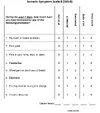
- A somatic symptom score ≥ 10 on the SSS-8 questionnaire with involvement of at least 3 domains
- Symptoms present at least 3 day a week for a minimum of 3 months
- Willingness to engage in a Mind-Body intervention
- Clear diagnosis of physical disease (e.g.lung fibrosis, myocarditis) not inclusive of non-specific findings such as mild arthritis
- Hospitalization in an intensive care unit for acute COVID-19 infections
- Age greater than 65 years
- Diagnosis of dementia or similar cognitive impairment
- Active addiction disorder (e.g.cocaine) that would interfere with study participation
- Major psychiatric comorbidity (e.g., schizophrenia).Mild to moderate anxiety and depression are not considered in this category
| Participant Group/Arm | Intervention/Treatment |
|---|---|
| Experimental: Mind Body Intervention #1 | Behavioral: Mind Body Intervention #1
|
| Active Comparator: Mind Body Intervention #2 | Behavioral: Mind Body Intervention #1
|
| No Intervention: Usual Care |
Primary Outcome
| Outcome Measure | Measure Description | Time Frame |
|---|---|---|
| Somatic Symptom Score-8 (SSS-8) | Survey questions pertain to pain, the gastrointestinal system, fatigue, dizziness, and cardiovascular complaints. Range of 0-32, with higher scores indicating higher levels of discomfort. | Baseline, 4 weeks, 8 weeks, 13 weeks |
Secondary Outcomes
| Outcome Measure | Measure Description | Time Frame |
|---|---|---|
| Short Form Brief Pain Inventory (BPI) | Used to gauge pain intensity, and pain interference with daily function over the duration of the study | Baseline, 4 weeks, 8 weeks, 13 weeks |
| Fatigue Severity Scale (FSS) | Consists of statements relating to a patient's general level of fatigue and fatigue with specific activities. Range of 7-63, with higher scores indicating a higher degree of fatigue. | Baseline, 4 weeks, 8 weeks, 13 weeks |
| The Multidimensional Dyspnea Profile (MDP) | A survey that assesses perceived physical aspects of dyspnea and associated emotional effects. Each of the rating scales within the MDP is designed to measure a separate construct, though each can be grouped between the two above mentioned domains. | Baseline, 4 weeks, 8 weeks, 13 weeks |
| Generalized Anxiety Disorder form 7 (GAD-7) | Self-report instrument assessing general anxiety over the last two weeks. Each of the 7 item is a statement concerning an anxiety trait, respondents then rate how often that statement is true. Responses range from 0 (not at all) to 3 (nearly every day). | Baseline and 13 weeks |
| Patient Reported Outcomes Measurement Information System survey for function disability (PROMIS) | a standardized assessment of health-related quality of life | Baseline, 4 weeks, 8 weeks, 13 weeks |
| End of study measurements | Participants' subjective experience of the program upon completion | 13 weeks |
| Pain Anxiety Symptom Score-20 (Pass-20) | Anxiety from pain determined from 20 item survey, with each item being scored from 1-5 in terms of frequency | Baseline, 4 weeks, 8 weeks, 13 weeks |
| Patient Reported Outcomes Measurement Information System Survey for Cognitive Function (PROMIS SF v2.0 cognitive function 8a) | Cognition assessment | Baseline, 4 weeks, 8 weeks, 13 weeks |
Primary Purpose
Treatment
Allocation
Randomized
Interventional Model
Parallel Assignment
Masking
Double (Participant, Outcomes Assessor)
Sponsor
Beth Israel Deaconess Medical Center
Principal Investigator
Michael Donnino, MD, Beth Israel Deaconess Medical Center
Study completion (Estimated)
2026-12
Registration
ClinicalTrials.gov: NCT06045338
----
This trial was discussed on the thread for the Wired Article: The Painful Truth About Long Covid.
Thread for previously completed pilot trial from this investigator: Mind Body Intervention for COVID-19 Long Haul Syndrome