Hannah Maude's speed talk on chromatin openness at the chr20 decodeME hit also sounded interesting (and mentioned T cells). I know @ME/CFS Science Blog did a similar-sounding analysis as well, though I'm too foggy at the moment to follow exactly what they've each done.
Thanks, sounds interesting although I didn't come across strong signals to T-cells in the chromatin data so am a bit skeptical about this line of thinking. Would like to get more detail about the graphs shown during the presentation.
Chris Ponting also presented a T-cell theory based on the BTN2A1 finding, so perhaps that explains the interest in T-cells in the chr20 region as well. If that's the case, however, I think the first step would be to demonstrate enrichment in T-cell gene categories, before interpreting ambiguous signals of individual loci in this way.
Interesting presentation during the PRIME symposium by Matthias Wielscher. He only talked about this briefly but it looks like his team did a n analysis of rare variants (so similar to the Astrazeneca data that highlighted BTN2A1) using All of US and the UKBiobank cohorts.
The All of us Cohort had a surprisingly large number (10.000 or 3% of total) of cases with a G93.3 code. But they did sensitivity analysis with additional requirement (such as CCC filering, no cancer diagnosis 2 years prior and overall health not excellent or very good).
I think these were the main results.
I looked up C2orf66 and its function is totally unknown but it looks like it's responsible for a small secreted protein with increased tissue expression in the HPA-axis. So perhaps it links to the CRH findings in the brain and the pituitary enrichment in the GEM meta-analysis. (The image below isn't from the presntation).
Interesting presentation during the PRIME symposium by Matthias Wielscher. He only talked about this briefly but it looks like his team did a n analysis of rare variants (so similar to the Astrazeneca data that highlighted BTN2A1) using All of US and the UKBiobank cohorts.
The All of us Cohort had a surprisingly large number (10.000 or 3% of total) of cases with a G93.3 code. But they did sensitivity analysis with additional requirement (such as CCC filering, no cancer diagnosis 2 years prior and overall health not excellent or very good).
I think these were the main results. View attachment 34771
I looked up C2orf66 and its function is totally unknown but it looks like it's responsible for a small secreted protein with increased tissue expression in the HPA-axis. So perhaps it links to the CRH findings in the brain and the pituitary enrichment in the GEM meta-analysis. (The image below isn't from the presntation). View attachment 34772
(Also was heartened by the back and forth during a later session discussing how ME/CFS research could be done better. One fellow answered we need *less* large cohort studies and more studies where we collect reams of data from small groups of patients, and I was grateful Audrey replied pointing out we have been doing that -- it's why we have a replication crisis.)
Yes, great to hear. And shout out to Chris Ponting for the followup after:
My wish is that we have more disagreement, like we had. [...] There is a politeness about the field, and we don't have enough time to have that. We want results, and we want results soon. And we want to do the best science. And so we do need a level of criticism and a bit more resilience to criticism in this field than I think we previously had.
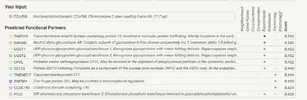
Looking at StringDB for predicted partners of C2orf66 we note TMED10 (Vesicular protein trafficking) UGGT1 (Found on PrecisionLife analysis as well), UGGT2. Recognition of glycoproteins with minor folding defects :
Here is the network
Most of the genes are related to Endoplasmic reticulum machinery. Some genes from DecodeME were found to be related to ER-golgi trafficking.
Disclaimer : The above association was found using AI
My wish is that we have more disagreement, like we had. [...] There is a politeness about the field, and we don't have enough time to have that. We want results, and we want results soon. And we want to do the best science. And so we do need a level of criticism and a bit more resilience to criticism in this field than I think we previously had.
Interesting presentation during the PRIME symposium by Matthias Wielscher. He only talked about this briefly but it looks like his team did a n analysis of rare variants (so similar to the Astrazeneca data that highlighted BTN2A1) using All of US and the UKBiobank cohorts.
The All of us Cohort had a surprisingly large number (10.000 or 3% of total) of cases with a G93.3 code. But they did sensitivity analysis with additional requirement (such as CCC filering, no cancer diagnosis 2 years prior and overall health not excellent or very good).
I think these were the main results. View attachment 34771
I looked up C2orf66 and its function is totally unknown but it looks like it's responsible for a small secreted protein with increased tissue expression in the HPA-axis. So perhaps it links to the CRH findings in the brain and the pituitary enrichment in the GEM meta-analysis. (The image below isn't from the presntation). View attachment 34772
Two different T cell genes, CD8B and TRBV13, were near the significance threshold, which is kind of interesting. Seems unlikely to be due to chance.
CD8B was one of the 259 candidate genes in the ME/CFS Precision Life study (Sardell 2026).
CD8B was also one of the top ranked genes in a whole-exome study on 77 ME/CFS patients, based on the common missense variant, 2:86842308:C:T (Arcos-Burgos 2025).
Not much going on in DecodeME around CD8, though:
I do wonder, as I've said before about similar topics, if this is showing that people with malformed immune cells are less able to control infections like flu or COVID, leading to a higher likelihood of getting ME/CFS, but not due to a direct involvement of T cells, apart from them being a defense against infections. Maybe it'd be good to reach out to the participants with this variant in the rare variant study and ask if they get sick more often or more severely than others.
I’ve extracted the audio from all the youtube videos for the symposium for easier listening.
If this would be useful to others I can make it available to everyone via a pcloud link to stream or download. (1) do people have a preference on format (currently m4a but I can convert to mp3 easily enough) and (2) do you think there’d be any objection to me sharing these @Andy ?
I do wonder, as I've said before about similar topics, if this is showing that people with malformed immune cells are less able to control infections like flu or COVID, leading to a higher likelihood of getting ME/CFS, but not due to a direct involvement of T cells, apart from them being a defense against infections.
Another angle I was thinking of after listening to Hanna Ollila’s talk was the cellular machinery for chopping up viral DNA. If a bit of this in certain cells decides to stay upregulated and/or even becomes more triggered or triggered over a normal threshold by normal metabolic byproducts that could be interesting. If this is happening in specific neural cell populations you can imagine the signalling pathways that would get triggered during more strenuous use of those cells.
So could the genetic signals here be pointing to one of the routes to this point where some people are over as much as under immune responsive?
I wouldn't have thought so as long as none of the actual content has been changed or edited unreasonably (which I don't think you would but felt it best to say it anyway).
I was very interested in your short hypothesis presentation on BTN2A1.
I wonder if you've seen these posts on the BTN gene thread where @jnmaciuch argues that the BTN2A1 isoform that came up in Astrazeneca is one that points away from gamma delta t cells, and what you think about that?
It suggests that BTN2A1 has different splicing and protein forms which might correspond to different compartments (potentially immune vs. brain). Give me one second, I'll see if I can sort out whether the AZ mutations give us a hint here--if they are in a part of the gene that gets spliced out of one isoform, that might tell us which one matters more for ME/CFS susceptibility.
View attachment 33788
Already been shared previously, but just for reference: the locations of the ME/CFS-associated mutations in BTN2A1
View attachment 33789
From the schizophrenia paper, the two identified isoforms. It is a bit tricky to compare the two because there seem to be multiple rearrangements. The AZ version is probably just the reference isoform (Q7KYR7-2 I believe). But what's telling is that 4/6 ME/CFS-associated mutations are in the B30.2/SPRY domain, which is not present in the Q7KYR7-6 isoform.
This is what the paper says
Unfortunately, I can't really get behind their interpretation here. This is complete hand waving for why either isoform should be preferentially expressed in either tissue. I don't understand why their tissue expression analysis didn't differentiate between the localization of the two different BTN2A1 mutations.
Sadly I am in the middle of grant-related things so can't spare the time right now to see if that answer can be found in some databases. If someone else wants to try their hand at figuring out organ-specific alternative splicing frequency please feel free to step in
View attachment 33985
Figures for the different BTN2A1 isoforms and their tissue-specific transcript expression, as promised. As a reminder, most of the ME/CFS-associated mutations fell in the PRY-SPRY domain, which is only present in 2/4 isoforms (the two on the left in the figure).
I forgot I can't upload a markdown document, but here's the code:
Code:
---
title: "Tissue-specific expression analysis of BTN isoforms"
output: html_document
date: "2026-08-29"
---

```{r setup, include=FALSE}
knitr::opts_chunk$set(echo = TRUE)

# Set working directory
workDir <- "~/Documents/coding"

# Load packages
library(jsonlite)
library(dplyr)
library(ggplot2)
```

BTN2A1 has several isoforms with different protein domains. Per the [AstraZeneca](https://azphewas.com/QVView/6319c068-fd59-46d8-85ee-82d82482eb14/BTN2A1/8e436248-c6c7-4c3c-9520-6a03495b72af/f5e4d803-b578-4371-9c76-b43baf74d772/db9a8d3d-b11a-4b5d-a129-4327844bcfb1/binary/EUR) rare mutation analysis, most ME/CFS-associated mutations were in the cytosolic PRY-SPRY domain.

Per [UniProt](https://www.uniprot.org/uniprotkb/Q7KYR7/entry), we know of 4 protein isoforms of BTN2A1. From the "Genome annotation databases" section, I manually pulled the associated transcript IDs (e.g. ENST00000312541.10) for all listed isoforms (only the ones matching BTN2A1 GENCODE ID ENSG00000112763.18, since ENSG00000292170.1 is not used in GTEx).

Clicking on the transcript ID link takes you to the Ensembl entry, where I found information on whether the isoform contained an SPRY domain via the "Transcript function" button. I compiled this information manually into a spreadsheet.

```{r}

# Load table for Uniprot transcripts and isoforms of BTN2A1
BTN_df <- read.csv(file.path(workDir,
                             "BTN2A1_isoform_table.csv"))
```

To test the hypothesis that certain protein isoforms with or without this protein domain had different expression levels in the cerebellum and/or immune cells, I pulled the median transcript expression values from the GTEx API using the call:

```{bash}
curl -X 'GET' \
  'https://gtexportal.org/api/v2/expression/medianTranscriptExpression?gencodeId=ENSG00000112763.17&datasetId=gtex_v10&tissueSiteDetailId=Adrenal_Gland&tissueSiteDetailId=Brain_Amygdala&tissueSiteDetailId=Brain_Anterior_cingulate_cortex_BA24&tissueSiteDetailId=Brain_Caudate_basal_ganglia&tissueSiteDetailId=Brain_Cerebellar_Hemisphere&tissueSiteDetailId=Brain_Cerebellum&tissueSiteDetailId=Brain_Cortex&tissueSiteDetailId=Brain_Frontal_Cortex_BA9&tissueSiteDetailId=Brain_Hippocampus&tissueSiteDetailId=Brain_Hypothalamus&tissueSiteDetailId=Brain_Nucleus_accumbens_basal_ganglia&tissueSiteDetailId=Brain_Putamen_basal_ganglia&tissueSiteDetailId=Brain_Spinal_cord_cervical_c-1&tissueSiteDetailId=Brain_Substantia_nigra&tissueSiteDetailId=Breast_Mammary_Tissue&tissueSiteDetailId=Cells_Cultured_fibroblasts&tissueSiteDetailId=Cells_EBV-transformed_lymphocytes&tissueSiteDetailId=Colon_Sigmoid&tissueSiteDetailId=Colon_Transverse&tissueSiteDetailId=Liver&tissueSiteDetailId=Lung&tissueSiteDetailId=Minor_Salivary_Gland&tissueSiteDetailId=Muscle_Skeletal&tissueSiteDetailId=Nerve_Tibial&tissueSiteDetailId=Pancreas&tissueSiteDetailId=Pituitary&tissueSiteDetailId=Skin_Not_Sun_Exposed_Suprapubic&tissueSiteDetailId=Skin_Sun_Exposed_Lower_leg&tissueSiteDetailId=Small_Intestine_Terminal_Ileum&tissueSiteDetailId=Spleen&tissueSiteDetailId=Stomach&tissueSiteDetailId=Thyroid&tissueSiteDetailId=Whole_Blood&tissueSiteDetailId=Adipose_Subcutaneous&tissueSiteDetailId=Adipose_Visceral_Omentum&tissueSiteDetailId=Artery_Aorta&tissueSiteDetailId=Artery_Coronary&tissueSiteDetailId=Artery_Tibial&tissueSiteDetailId=Bladder&tissueSiteDetailId=Cervix_Ectocervix&tissueSiteDetailId=Cervix_Endocervix&tissueSiteDetailId=Esophagus_Gastroesophageal_Junction&tissueSiteDetailId=Esophagus_Mucosa&tissueSiteDetailId=Esophagus_Muscularis&tissueSiteDetailId=Fallopian_Tube&tissueSiteDetailId=Heart_Atrial_Appendage&tissueSiteDetailId=Heart_Left_Ventricle&tissueSiteDetailId=Kidney_Cortex&tissueSiteDetailId=Kidney_Medulla&tissueSiteDetailId=Ovary&tissueSiteDetailId=Prostate&tissueSiteDetailId=Testis&tissueSiteDetailId=Uterus&tissueSiteDetailId=Vagina&page=0&itemsPerPage=100000' \
  -H 'accept: application/json'
```

```{r}

# Import transcript counts obtained from API call
counts <- fromJSON(file.path(workDir,
                             "response_1788031490143.json"))$data

```

Note that I am making an assumption that detection of the alternatively spliced transcript correlates to actual protein expression.

This call pulls all available transcript counts for the gene, so I subset to transcripts that had information in Uniprot:

```{r}

# Keep only counts for transcript IDs in table
counts <- inner_join(BTN_df,
                     counts,
                     by = "transcriptId")

```

And now I plot the results:

```{r}

# Some additional formatting for plotting:
counts <- counts %>%
  mutate(SPRY_domain = if_else(SPRY_domain, "Contains SPRY domain", "No SPRY domain"),
         SPRYId = paste(SPRY_domain, uniprotId, sep = " | "))

# Load color scheme for tissues (from https://github.com/broadinstitute/gtex-v8/blob/master/data/gtex_colors.txt)
color_df <- read.delim(file.path(workDir,
                               "gtex_colors.txt"))

# Create color scale vector
color_scale <- c(color_df$color_hex) %>% setNames(color_df$tissue_id)

# Plot
ggplot(counts,
       aes(y = tissueSiteDetailId,
           x = median)) +
  geom_col(aes(fill = tissueSiteDetailId)) +
  scale_fill_manual(values = color_scale) +
  facet_wrap(vars(SPRYId, transcriptId), nrow = 1) +
  theme_bw() +
  theme(axis.text.x = element_text(angle = 90, hjust = 1)) +
  guides(fill = "none")
```
I plotted all available organs, specifically paying attention to the cerebellum and immune cell "tissues" (Whole Blood, Spleen, EBV-transformed lymphoblasts, cultured fibroblasts). While the two SPRY-containing isoforms (Q7KYR7-2 and Q7KYR7-5) had highest levels in the cerebellum, each was roughly matched by at least one immune tissue (fibroblasts and spleen, respectively). High expression in the arterial tissues matching cerebellar expression was also notable.
Overall, there is not a strong and clear indication that the BTN2A1 isoforms containing regions with ME/CFS-associated mutations are much more strongly expressed in brain vs. immune cells. Though analysis is limited by lack of resolution on specific immune cell types.
(I've just quoted a few of these posts quickly, they might not all be the most relevant and I might have missed more important ones)
Also in that thread, @hotblack suggested Adrian Hayday as someone who might be good to get involved regarding the BTN hit. Perhaps someone on your team might be able to reach out to him?
A lot of interesting looking research. As well as gamma delta T cell and butyrophilin research and a chunk of covid stuff, there’s papers like this which looks at a mechanism where NMDAR antibodies in the brain cause microglia to destroy certain glutamate receptors, this gives rise to psychosis like behaviour in their model. It shows that clozapine reduces this, it modulates immune response via an unknown mechanism, reducing circulating autoantibodies so reducing microglial action. So the drugs antipsychotic effects may be partially immunomodulatory rather than simply due to its action on dopamine and serotonin receptors. Maybe the mechanisms aren’t directly relevant here (although microglia, glutamate, a dopamine modifying drug….) but they’re not averse to looking at interesting immune and brain things!
I wouldn't have thought so as long as none of the actual content has been changed or edited unreasonably (which I don't think you would but felt it best to say it anyway).
Good to confirm. They’re completely unmodified content wise. Editing sounds like hard work! And I know you’re not an official spokesperson (so if anyone were to have a problem it would be my responsibility not yours) but you’re the closest we have and tend to have a good insight into these things. So thank you!
Here you go everyone, all 18 audio files as m4a (which should play in most browsers but if anyone needs a different format let me know)
I do wonder, as I've said before about similar topics, if this is showing that people with malformed immune cells are less able to control infections like flu or COVID, leading to a higher likelihood of getting ME/CFS, but not due to a direct involvement of T cells, apart from them being a defense against infections. Maybe it'd be good to reach out to the participants with this variant in the rare variant study and ask if they get sick more often or more severely than others.
That’s really interesting. It might lend more credence to the idea that the relevant role of BTN2A1 mutations is actually the gdT cell connection, via inhibiting their activation during acute infection. Apparently influenza-infected macrophages upregulate the specific metabolite that causes BTN2A1/3A1 complex formation and gdT cell activation https://pubmed.ncbi.nlm.nih.gov/20483407/
And it seems like there’s some evidence of other viruses like EBV being able to infect macrophages, just with lower tropism than B cells. The upregulation of that metabolite that activates gdT cells was not strain-specific in influenza, so I think it would be interesting to check if it’s a universal macrophage response to being directly infected by a virus (and seems plausible, since otherwise being able to infect a macrophage directly would be a prime way for tons of viruses to evade immune clearance) ihttps://pmc.ncbi.nlm.nih.gov/articles/PMC3445936/
T cells would definitely be necessary to clear an infected macrophage, either through innate-like recognition via gdT cells or the macrophage managing to load viral proteins on MHCII and getting recognized by an abT cell. So CD8B and TRB mutations would fit in the same story as BTN2A1.
I wouldnt expect a link to CD8B in a GWAS even if the rare mutation association is real—the relevant hits in a GWAS are going to be for variants that upregulate or downregulate the gene expression in certain contexts. CD8B has to be paired with CD8A to be functional but CD8A can homodimerize by itself. So having a little more or less CD8B in a cell from a common variant might not matter all that much (it could be easily rate-limited or compensated by CD8A), but having nonfunctional CD8B might matter a lot since the heterodimer could still be exported to the cell surface as if it was functional.
That’s a really interesting hit given the tissue specificity. Per human protein atlas it’s highest by far in muscle, with brain expression highest in choroid plexus epithelium and everyone's favorite medium spiny neurons.
+1 for my pet theory on calcium flux + mtDNA release in muscles and neurons I guess! It would be really interesting to see if medium spiny neurons might have some differences in calcium handling compared to other neuron types.
This site uses cookies to help personalise content, tailor your experience and to keep you logged in if you register.
By continuing to use this site, you are consenting to our use of cookies.