The buspirone challenge test clearly distinguishes ME/CFS patients from healthy controls: why is it not being developed and deployed?

Impact of cortisol on buspirone stimulated prolactin release: a double-blind placebo-controlled study, 2001
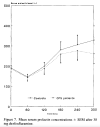
This study clearly demonstrates that the PRL response to buspirone is negatively correlated with the baseline cortisol level on the day of testing.
There's a paywall, but it looks like they found that lower cortisol at baseline produced a higher prolactin response. So, it's possible that the finding of higher prolactin response in CFS was partly the result of, on average, lower cortisol levels in ME/CFS that were a result of a quieter lifestyle.


There's a 2014 study that did not replicate the finding that people with depression have a lower prolactin response to a buspirone challenge than healthy controls.
However, recent studies of neuroendocrine responses to 5-HT1A receptor agonists in MDD have been inconsistent (Navinés et al., 2007, Savitz et al., 2009) and the postsynaptic 5-HT1Areceptor desensitization in depression has been questioned. The divergent findings may be partly related to methodological differences including sample sizes, selection criteria for illness chronicity, unmatched groups, sex, age, time of challenge, hormonal procedures, suicidality, pharmacotherapy, wash-out procedure, etc.
These results indicate no consistent changes in the hormonal response to the 5-HT1Aagonist buspirone in major depression. Taken into account the interpretation of the buspirone test the present study does not support the hypothesis of an altered functional activity with down-regulation of the postsynaptic 5-HT1A receptor and/or in the postsynaptic receptor signal transduction in the hypothalamus in the pathogenesis of MDD.


There are probably quite a number of ways that the various CFS studies could have been confounded e.g. time of day, time in menstrual cycle, medications.

I find it hard to believe that some of the characters involved in these studies would have left the idea on the table if a higher prolactin response was truly reliably found in CFS. Still, it would be good to know for sure. Thanks to @forestglip for contacting the researchers.
 
I found another, newer (2010) ME/CFS study on prolactin response, except they used intravenous tryptophan instead of buspirone. Prolactin response was increased only in CFS women, not CFS+fibromyalgia women, CFS men, or CFS+fibromyalgia men.

Sex Differences in Plasma Prolactin Response to Tryptophan in Chronic Fatigue Syndrome Patients With and Without Comorbid Fibromyalgia
Weaver, Shelley A.; Janal, Malvin N.; Aktan, Nadine; Ottenweller, John E.; Natelson, Benjamin H.
Background:
Some think chronic fatigue syndrome (CFS) and fibromyalgia (FM) are variants of the same illness process. This would imply that CFS patients with and without comorbid FM have similar biological underpinnings. To test this, we compared serotonergic-based responses, plasma prolactin (PRL), and self-reported measures of fatigue to intravenous infusion of tryptophan among patients with CFS alone, CFS + FM, and healthy controls.

Methods:
Men and women with CFS alone or CFS + FM and healthy subjects, none with current major depressive disorder (MDD), were given 120 mg of l-tryptophan per kg lean body mass intravenously (i.v.). Before and after tryptophan infusion, blood samples were collected, and plasma PRL, tryptophan, and kynurenine concentrations were determined.

Results:
Women with CFS alone, but not CFS + FM, showed upregulated plasma PRL responses compared with controls. There were no differences among groups of men. Plasma tryptophan and kynurenine concentrations did not differ among groups.

Conclusions:
These results indicate that women with CFS alone have upregulated serotonergic tone that is not seen in those with comorbid FM. The lack of effect in men suggests a mechanism that might explain, in part, the increased prevalence of CFS in women. The data support the interpretation that CFS in women is a different illness from FM.
Web | DOI | PMC | PDF | Journal of Women's Health | Open Access on PMC | 2010

1778903858048.png

They may have provided some evidence against altered drug metabolism as the underlying mechanism of this phenomenon:
Plasma tryptophan concentrations increased significantly over time following tryptophan infusion, moreso in men than in women. However, there were no differences as a function of diagnostic group or interactions of diagnosis with time. [...] Plasma kynurenine concentrations increased significantly in response to tryptophan infusion, moreso in men than in women. However, there were no differences as a function of diagnostic group or interactions of diagnosis with time.
Differences in PRL responses were not due to differences in the metabolism of infused tryptophan to kynurenine or plasma concentrations of total tryptophan achieved in this study.

---

They also say that a couple more CFS/fenfluramine studies did not find significantly increased prolactin responses:
Studies of mixed gender patients with CFS probed with fenfluramine yielded varying results, with one finding significant increases of PRL to the probe[14] and two others finding no difference from controls.[17,19]

And also no effect with a different drug:
Another study in a mixed gender group used the 5-HT2C receptor agonist M-chlorophenylpiperazine (mcpp) and found no evidence for upregulated serotonergic responding.[18] However, this probe also has antagonistic properties at 5-HT2A receptors as well as some affinity for α2 adrenoreceptors34 and, thus, is unclear as to its 5-HT-specific effects.

Here are the references from those two quotes (we already linked 14 previously):
  • 14.Cleare AJ. Bearn J. Allain T, et al. Contrasting neuroendocrine responses in depression and chronic fatigue syndrome. J Affective Disord. 1995;34:283–289. doi: 10.1016/0165-0327(95)00026-j. [DOI] [PubMed] [Google Scholar]

  • 17.Yatham LN. Morehouse RL. Chisholm BT, et al. Neuroendocrine assessment of serotonin (5-HT) function in chronic fatigue syndrome. Can J Psychiatry. 1995;40:93–96. [PubMed] [Google Scholar]
  • 18.Vassallo CM. Feldman E. Peto T, et al. Decreased tryptophan availability but normal postsynaptic 5-HT2c receptor sensitivity in chronic fatigue syndrome. Psychol Med. 2001;31:585–591. doi: 10.1017/s0033291701003580. [DOI] [PubMed] [Google Scholar]
  • 19.Bearn J. Allain T. Coskeran P, et al. Neuroendocrine responses to d-fenfluramine and insulin-induced hypoglycemia in chronic fatigue syndrome. Biol Psychiatry. 1995;37:245–252. doi: 10.1016/0006-3223(94)00121-I. [DOI] [PubMed] [Google Scholar]
 
I sent emails to 11 of the authors of the linked papers - the ones I could find an email address for. I asked if there is anything they can recollect about this line of research, such as why it was not pursued further.
I got three responses already. One author said they played a minor role in the study, so they aren't the right person to ask. Another author said they focused on a different field after this study, but they think it's a fascinating result.

The third said they did think it is reproducible, but did not pursue it further after changing research focus.

It seems there is no shortage of papers on the topic of buspirone effect on prolactin, whether on response in specific health conditions or trying to tease apart mechanisms: https://scholar.google.com/scholar?hl=en&as_sdt=0,5&q=prolactin+buspirone+challenge&btnG=
 
Last edited:
Skimming the studies everyone's collected so far, looks like it might matter if they are using buspirone vs d-fenfluramine as the challenge.

As covered here, the two with (d-)fenfluramine found no difference
They also say that a couple more CFS/fenfluramine studies did not find significantly increased prolactin responses

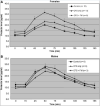
e.g. Here's a graph from one of those, [19] Neuroendocrine responses to d-fenfluramine and insulin-induced hypoglycemia in chronic fatigue syndrome
Screenshot 2026-05-15 at 9.35.06 PM.png

This made me look back at the one study of our original set that used d-fenfluramine (Cleare et al, 1995). They don't put error bars on their graph, instead they have a table with SEM values. (And as Hutan has pointed out, keep in mind the SEM will be smaller than standard deviation, making differences look more significant than they actually are.) Just eyeballing the CFS vs Controls rows the groups are not actually all that different compared to the buspirone studies:
Screenshot 2026-05-15 at 9.41.17 PM.png
(Yes this table says Cortisol. I am foggy but 90% sure they labelled their prolactin and cortisol tables backwards -- this is the table whose data matches the prolactin graph ME/CFS Science Blog posted earlier.)

Anyway, just a lot of words to say buspirone seems potentially more interesting than d-fenfluramine. I wonder, assuming buspirone really does have a significant effect and d-fenfluramine doesn't, if we can get any clue from that about what is happening here.
 
Last edited:
I wonder, assuming buspirone really does have a significant effect and d-fenfluramine doesn't, if we can get any clue from that about what is happening here.
I guess this could support Sharpe's theory that the gap between ME/CFS and controls is due to dopamine effects rather than serotonin.

Apparently buspirone blocks D2 dopamine receptors somewhat (i.e. attaches as an antagonist and prevents them working), and fenfluramine does not (according to section 3.1 of Sourbron, 2023).

And dopamine binding to D2 receptors inhibits prolactin, per wiki:
Pituitary prolactin secretion is regulated by endocrine neurons in the hypothalamus. The most important of these are the neurosecretory neurons of the [hypothalamus] that secrete dopamine to act on the D2 receptors of lactotrophs, causing inhibition of prolactin secretion.
So buspirone could be raising prolactin by stopping this dopamine inhibition of it.

I'm not sure what it would mean for all this if the prolactin rise is indeed higher in pwMECFS. You take the dopamine-breaks off the pituitary and for some reason ours releases way more prolactin? Maybe that would imply something about how much dopamine the hypothalamus is producing, or how dense the D2 receptors are in the pituitary, but I'm too foggy to think it through at the moment.
 
I find it hard to believe that some of the characters involved in these studies would have left the idea on the table if a higher prolactin response was truly reliably found in CFS. Still, it would be good to know for sure. Thanks to @forestglip for contacting the researchers.

It looks as if enthusiasm may have been dampened by fear of cardiac complications of fenfluramine, although this may not apply to buspirone. There may also have been a drop in interest in 5HT and depression etc. once some patents had run their course.

I would be interested to know what a sham test did in ME/CFS and controls. Or a test with eucalyptus oil or som such.
 
Skimming the studies everyone's collected so far, looks like it might matter if they are using buspirone vs d-fenfluramine as the challenge.

As covered here, the two with (d-)fenfluramine found no difference


e.g. Here's a graph from one of those, [19] Neuroendocrine responses to d-fenfluramine and insulin-induced hypoglycemia in chronic fatigue syndrome
View attachment 32363

This made me look back at the one study of our original set that used d-fenfluramine (Cleare et al, 1995). They don't put error bars on their graph, instead they have a table with SEM values. (And as Hutan has pointed out, keep in mind the SEM will be smaller than standard deviation, making differences look more significant than they actually are.) Just eyeballing the CFS vs Controls rows the groups are not actually all that different compared to the buspirone studies:
View attachment 32364
(Yes this table says Cortisol. I am foggy but 90% sure they labelled their prolactin and cortisol tables backwards -- this is the table whose data matches the prolactin graph ME/CFS Science Blog posted earlier.)

Anyway, just a lot of words to say buspirone seems potentially more interesting than d-fenfluramine. I wonder, assuming buspirone really does have a significant effect and d-fenfluramine doesn't, if we can get any clue from that about what is happening here.
Also it seems that in different conditions the dosage for buspirone is relevant as low dosage apparently activates the presynaptic 5-ht1A receptors whereas the higher dose activates the postsynaptic receptors. According to the discussion in the following paper which is on pediatric autism looking at buspirone and its impact not on autism itself but what the authors obviously think might be anxiety-related aspects and it talks about this low dose and impacts on certain restrictive etc behaviours (I don’t know enough about autism and its literature and different authors and biases to say anything other than that’s me citing their words on what they describe these as rather than believing that interpretation- I’m cautious given our experiences with distribution of observed or reported symptoms being assumed by some to be x rather than y)


Annoyingly on my phone there is no ability to select and therefore cut and paste quotes when reading a paper (or indeed I think probably anything including websites) - side note do other phones allow this? Obviously I can do this on laptop so it’s always a shock how this ability is completely missing on a phone
 
Last edited:
So this paper which is looking at (what turns out to be blunted) prolactin response to buspirone in post-stroke depression is talking about challenge studies usinv one acute dose of 30-90mg


Whereas the ‘low dose’ in the above one on pediatric autism is 2.5-4.5mg.

Obvious most of these challenge studies are comparing responses size to controls but as I’m finding a lot of papers where you can’t see the full paper it would be interesting to know approx dosage as I assume they’d all be in that zone that would be in what the above paper terms as ‘high dosage’

It seems buspirone is quite different to other drugs in what it targets and effects

And has been chosen for the challenge study which seems to have been developed to test sensitivity of the serotonin receptor in individual/different conditions I guess because of that prolactin being a measurable

So most who do this challenge test of that time might have that functionally-fixed curiosity as they go through different conditions (seeing which ones have under or over sensitive I’d guess in their mind ‘serotonin receptors’) because there was a certain time when serotonin was the big thing.

But whilst lots of drugs do lots of different things that relate to serotonin bispirone they thought was different being an agonist rather than eg reuotake inhibitor ? I guess the logic is one that ‘something is a measurable’ and that being able to do a one-off acute challenge test is ‘checking the machinery/delivery mechanism’ when you are looking at the range of different drugs that need to be used more ‘fir a period of time’ to produce their various serotonin-related impacts or trying to suggest a certain symptom in a certain condition is caused by x (eg getting less of or reacting to x less type thing)

Except when you get the odd limitations section of bit of it and Google round I’m getting things noting it also seems to have effects on dopamine and that dosage might be relating there plus there is mention of gaba.

So this interpretation lens has always been almost it seems that ‘reaction of prolactin = proxy for reactiveness of serotonin system’ which is harder to measure and you’d be guessing at the relevant location being spinal tap (but that would be either 5-ht or waste products of serotonin) but is that even measuring the ‘used/useful’ (and the difference between serotonin in that myth of ‘it’s the thing making a difference’ vs 5-ht being the drug you might take) given if you are flooding someone with something that’s one thing but I guess the holy grail is knowing ‘what the system with that actual condition actually does with that’ and I can see how the focus/reason for doing these trials was part of that idea of prolactin providing a proxy for that black box gap (which would mean in their mind a higher than expected prolactin increase = more serotonin in response to dosage of x), rather than starting with the prolactin increase and wondering why.

so I can hear the ‘must be more sensitive’ reaction feeling logical when someone is in that train of thought. And then I’m imagining all the stuff that I think was definitely around then (and still is written now in places) about pwme being generally more sensitive to drugs in general - which I don’t fully know the rationale behind (if it all drugs then would that have to be some super-absorption or is it generally certain types of drugs just not others talked about - I know anesthesia was a recent one mentioned) but includes ideas like starting with low doses etc.

Given what we hear about how there is this culture laypersons didn’t know about of negative trials not getting published and I’d guess the smaller the experiment the more likely it doesn’t get mentioned when the results are negative …I’m quite curious about this dosage thing because I can imagine if we took that same logic of someone assuming we are just sensitive then did they perhaps think it’s something about pwme ‘just needing a smaller dosage’.

I don’t know whether that’s 2+2=5 or not abd I don’t know whether wondering whether someone back then logically tried seeing if just giving Pwme a lower dosage meant less prolactin or whether any even assumed it could have just without that meant ‘just give pwme a lower dosage’. And not thought of implications beyond that?

The thing with the dopamine bit is just that question of whether there is an equivalent challenge test measuring prolactin that uses a drug that does a similar dopamine effect (but without the 5-ht) ?
 
Last edited:
I hadn't heard of Gilbert's syndrome, but Wikipedia says it's caused by a single gene. It doesn't look like anything is significant in the immediate vicinity of that gene, UGT1A1, in DecodeME.
Please help me understand : If DecodeME did not find UGT1A1 does this mean we should not be investigating this condition and whether it is related to ME/CFS? What if certain conditions (including hemochromatosis, HFE Gene - DecodeME) which negatively affect liver function set the stage for MECFS? cc @ChronicallyOverIt

1778923833507.png


and one more I found. This person has Gilbert's


https://www.s4me.info/threads/one-more-to-the-score.7206/#post-128859
 
It looks as if enthusiasm may have been dampened by fear of cardiac complications of fenfluramine, although this may not apply to buspirone. There may also have been a drop in interest in 5HT and depression etc. once some patents had run their course.

I would be interested to know what a sham test did in ME/CFS and controls. Or a test with eucalyptus oil or som such.
Do we have enough of a nascent research network to get that kind of test going? Across several threads, I'm getting the impression that you're seeing several things you'd like to see tested, which seems a major step forward from where we were a short while ago.
 
Interesting. I had elevated prolactin in 2018. Not sure what I was taking at the time anymore. I did try LDN at the time which someone mentioned here. Reacted poorly on it. Who knows this was the trigger?

Sometimes I can still feel symptoms of it when eating certain high histamine foods, but I don't really bother testing it.
 
Please help me understand : If DecodeME did not find UGT1A1 does this mean we should not be investigating this condition and whether it is related to ME/CFS?

I don't know, but those men were diagnosed using the Oxford criteria. They don't describe ME/CFS accurately, they're focused on chronic fatigue.

It's possible some folk with Gilbert's syndrome get disabling fatigue, which hasn't had enough attention as a component of the disease, but it doesn't necessarily mean they have Gilbert's and ME/CFS.

Even if they did, it could be a coincidence. If Gilbert's were related to ME/CFS, wouldn't there be more people reporting it?
 
I don't know, but those men were diagnosed using the Oxford criteria. They don't describe ME/CFS accurately, they're focused on chronic fatigue.

It's possible some folk with Gilbert's syndrome get disabling fatigue, which hasn't had enough attention as a component of the disease, but it doesn't necessarily mean they have Gilbert's and ME/CFS.

Even if they did, it could be a coincidence. If Gilbert's were related to ME/CFS, wouldn't there be more people reporting it?

Your concerns are valid. I simply believe that we cannot dismiss such conditions which are flagged as "harmless" -which may be far from the truth- as it impairs a key detoxification pathway -UGT1A1-of the liver, that easily.

My suggestion is to look at the bigger picture : Gilbert's + another metabolic bottleneck + another immune bottleneck at an individual basis may be driving something bigger.
 
Please help me understand : If DecodeME did not find UGT1A1 does this mean we should not be investigating this condition and whether it is related to ME/CFS?
Not necessarily. It's possible that ME/CFS is one of the possible outcomes of Gilbert's syndrome (again, I don't know much about this syndrome, so am not personally saying this is or is not the case). It just doesn't appear to make up a large enough portion of ME/CFS cases to where those variants are significant in DecodeME. It'd probably be better to focus specifically on Gilbert's syndrome patients to see if ME/CFS is overrepresented in that population.
 
It'd probably be better to focus specifically on Gilbert's syndrome patients to see if ME/CFS is overrepresented in that population.
I looked up some info about Gilbert's on a liver disease charity website, and it said some people can have disabling symptoms.

It wasn't very specific, but it might be one of those where it's difficult to make a clear separation—not only do we not know what the pathology is in ME/CFS, but severe presentation in the other disease is also under-researched.
 
Mybe off topic but: a growth hormone challenge test made me feel good, while an ACTH challenge test gave me a feeling of impending doom, deep discomfort, cold sweat, racing heart. It seems like this kind of response to the ACTH challenge shows abnormal sensitivity.

Google says this can happen in Cushing's syndrome or an ACTH-secreting tumor, which I don't have.
 
A response from one of the authors of the prolactin papers, copied with permission:
I pursued this line of investigation because of our observations that cortisol and prolactin responses to d-fenfluramine and 5-HT agonists were going in opposite directions in CFS and MDD. This fits in with clinical observations and patient experiences in that CFS is primarily experienced as fatigue whereas MDD is associated with overarousal. We finished a body of work that was difficult to progress with because CFS patients, who were not depressed (in which case it becomes an atypical depression) or who did not have other disorders (somatisation disorders frequently), were difficult to recruit. Also, the test was lengthy and research methods had moved on from monoamine neuroendocrine probes.

My sense from the responses I've received, and from my shallow reading of the literature, is that there was not some unpublished finding proving it wrong. Rather, I think it just wasn't really clear to the researchers how else to specifically explore this topic. Maybe there are newer drugs now that would allow for more targeted probing of the mechanism.
 
My sense from the responses I've received, and from my shallow reading of the literature, is that there was not some unpublished finding proving it wrong. Rather, I think it just wasn't really clear to the researchers how else to specifically explore this topic. Maybe there are newer drugs now that would allow for more targeted probing of the mechanism.

That sounds a reasonable conclusion. I suspect that the impetus was around exploring the role of monoamines and once the data had been gathered nobody was quite sure qhat question to ask next.

I can see a potential problem with spurious non-specific effects relating to the subject's and the investigator's expectations but these can reasonably easily be screened off. If the test is done by adding the buspirone to an IV set up earlier at a time not known precisely to anyone involved and there is a consistent pharmacodynamic profile for prolactin then it is robust. Sham tests might add some further reassurance.

To me this is almost exactly the sort of 'biomarker' that everyone has been saying they have been looking for for over a decade. Moreover, it would be a biomarker that looks very relevant to the direction other research is going.

And of course a new question now arises. What is the buspirone response in the various forms of 'Long Covid' ? If some of these are really ME/CFS that should show up.
 
or who did not have other disorders (somatisation disorders frequently), were difficult to recruit.
Well, I think it's probably no great shame this person isn't working in MECFS research anymore if they think many/most pwME have a somatisaion disorder.


My sense from the responses I've received, and from my shallow reading of the literature, is that there was not some unpublished finding proving it wrong. Rather, I think it just wasn't really clear to the researchers how else to specifically explore this topic. Maybe there are newer drugs now that would allow for more targeted probing of the mechanism.
That's exciting! Hopefully something exploring this avenue can get set up soon.
 
Back
Top Bottom