The buspirone challenge test clearly distinguishes ME/CFS patients from healthy controls: why is it not being developed and deployed?

Impact of cortisol on buspirone stimulated prolactin release: a double-blind placebo-controlled study, 2001
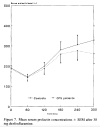
This study clearly demonstrates that the PRL response to buspirone is negatively correlated with the baseline cortisol level on the day of testing.
There's a paywall, but it looks like they found that lower cortisol at baseline produced a higher prolactin response. So, it's possible that the finding of higher prolactin response in CFS was partly the result of, on average, lower cortisol levels in ME/CFS that were a result of a quieter lifestyle.


There's a 2014 study that did not replicate the finding that people with depression have a lower prolactin response to a buspirone challenge than healthy controls.
However, recent studies of neuroendocrine responses to 5-HT1A receptor agonists in MDD have been inconsistent (Navinés et al., 2007, Savitz et al., 2009) and the postsynaptic 5-HT1Areceptor desensitization in depression has been questioned. The divergent findings may be partly related to methodological differences including sample sizes, selection criteria for illness chronicity, unmatched groups, sex, age, time of challenge, hormonal procedures, suicidality, pharmacotherapy, wash-out procedure, etc.
These results indicate no consistent changes in the hormonal response to the 5-HT1Aagonist buspirone in major depression. Taken into account the interpretation of the buspirone test the present study does not support the hypothesis of an altered functional activity with down-regulation of the postsynaptic 5-HT1A receptor and/or in the postsynaptic receptor signal transduction in the hypothalamus in the pathogenesis of MDD.


There are probably quite a number of ways that the various CFS studies could have been confounded e.g. time of day, time in menstrual cycle, medications.

I find it hard to believe that some of the characters involved in these studies would have left the idea on the table if a higher prolactin response was truly reliably found in CFS. Still, it would be good to know for sure. Thanks to @forestglip for contacting the researchers.
 
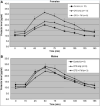
I found another, newer (2010) ME/CFS study on prolactin response, except they used intravenous tryptophan instead of buspirone. Prolactin response was increased only in CFS women, not CFS+fibromyalgia women, CFS men, or CFS+fibromyalgia men.

Sex Differences in Plasma Prolactin Response to Tryptophan in Chronic Fatigue Syndrome Patients With and Without Comorbid Fibromyalgia
Weaver, Shelley A.; Janal, Malvin N.; Aktan, Nadine; Ottenweller, John E.; Natelson, Benjamin H.
Background:
Some think chronic fatigue syndrome (CFS) and fibromyalgia (FM) are variants of the same illness process. This would imply that CFS patients with and without comorbid FM have similar biological underpinnings. To test this, we compared serotonergic-based responses, plasma prolactin (PRL), and self-reported measures of fatigue to intravenous infusion of tryptophan among patients with CFS alone, CFS + FM, and healthy controls.

Methods:
Men and women with CFS alone or CFS + FM and healthy subjects, none with current major depressive disorder (MDD), were given 120 mg of l-tryptophan per kg lean body mass intravenously (i.v.). Before and after tryptophan infusion, blood samples were collected, and plasma PRL, tryptophan, and kynurenine concentrations were determined.

Results:
Women with CFS alone, but not CFS + FM, showed upregulated plasma PRL responses compared with controls. There were no differences among groups of men. Plasma tryptophan and kynurenine concentrations did not differ among groups.

Conclusions:
These results indicate that women with CFS alone have upregulated serotonergic tone that is not seen in those with comorbid FM. The lack of effect in men suggests a mechanism that might explain, in part, the increased prevalence of CFS in women. The data support the interpretation that CFS in women is a different illness from FM.
Web | DOI | PMC | PDF | Journal of Women's Health | Open Access on PMC | 2010

1778903858048.png

They may have provided some evidence against altered drug metabolism as the underlying mechanism of this phenomenon:
Plasma tryptophan concentrations increased significantly over time following tryptophan infusion, moreso in men than in women. However, there were no differences as a function of diagnostic group or interactions of diagnosis with time. [...] Plasma kynurenine concentrations increased significantly in response to tryptophan infusion, moreso in men than in women. However, there were no differences as a function of diagnostic group or interactions of diagnosis with time.
Differences in PRL responses were not due to differences in the metabolism of infused tryptophan to kynurenine or plasma concentrations of total tryptophan achieved in this study.

---

They also say that a couple more CFS/fenfluramine studies did not find significantly increased prolactin responses:
Studies of mixed gender patients with CFS probed with fenfluramine yielded varying results, with one finding significant increases of PRL to the probe[14] and two others finding no difference from controls.[17,19]

And also no effect with a different drug:
Another study in a mixed gender group used the 5-HT2C receptor agonist M-chlorophenylpiperazine (mcpp) and found no evidence for upregulated serotonergic responding.[18] However, this probe also has antagonistic properties at 5-HT2A receptors as well as some affinity for α2 adrenoreceptors34 and, thus, is unclear as to its 5-HT-specific effects.

Here are the references from those two quotes (we already linked 14 previously):
  • 14.Cleare AJ. Bearn J. Allain T, et al. Contrasting neuroendocrine responses in depression and chronic fatigue syndrome. J Affective Disord. 1995;34:283–289. doi: 10.1016/0165-0327(95)00026-j. [DOI] [PubMed] [Google Scholar]

  • 17.Yatham LN. Morehouse RL. Chisholm BT, et al. Neuroendocrine assessment of serotonin (5-HT) function in chronic fatigue syndrome. Can J Psychiatry. 1995;40:93–96. [PubMed] [Google Scholar]
  • 18.Vassallo CM. Feldman E. Peto T, et al. Decreased tryptophan availability but normal postsynaptic 5-HT2c receptor sensitivity in chronic fatigue syndrome. Psychol Med. 2001;31:585–591. doi: 10.1017/s0033291701003580. [DOI] [PubMed] [Google Scholar]
  • 19.Bearn J. Allain T. Coskeran P, et al. Neuroendocrine responses to d-fenfluramine and insulin-induced hypoglycemia in chronic fatigue syndrome. Biol Psychiatry. 1995;37:245–252. doi: 10.1016/0006-3223(94)00121-I. [DOI] [PubMed] [Google Scholar]
 
I sent emails to 11 of the authors of the linked papers - the ones I could find an email address for. I asked if there is anything they can recollect about this line of research, such as why it was not pursued further.
I got three responses already. One author said they played a minor role in the study, so they aren't the right person to ask. Another author said they focused on a different field after this study, but they think it's a fascinating result.

The third, Dr. Ted Dinan, said he does think it is reproducible, but he did not pursue it further after changing university/focus. I see that he did author at least a few dozen papers on prolactin, many on response to drugs in different conditions: https://pubmed.ncbi.nlm.nih.gov/?term=tg+dinan+prolactin&sort=date

It seems there is no shortage of papers on the topic of buspirone effect on prolactin, whether on response in specific health conditions or trying to tease apart mechanisms: https://scholar.google.com/scholar?hl=en&as_sdt=0,5&q=prolactin+buspirone+challenge&btnG=
 
Back
Top Bottom