The genetic architecture of fibromyalgia across 2.5 million individuals, 2026, Kerrebijn et al

The issue is that while your definition of the term here is reasonable and fits with theories of ME/CFS we have been discussing, the concept of 'central sensitisation' is intrinsically bound up with BPS psychobabble about people misinterpreting normal sensations and having false illness beliefs.

It is for the BPS people but for some pain researchers at least (like Maria Fitzgerald) it is just what it says and very "biological".
 
"One particularly notable hit was rs2734833, an intronic variant in DRD2, a locus with pervasive psychiatric and sleep associations. DRD2 encodes the dopamine D2 receptor, which influences motivation and cognition and is the primary target of most antipsychotic drugs. In addition, DRD2 was one of the first loci discovered to modulate sleep duration. The variant lies ~150 kilobases downstream of NCAM1, the fourth-nearest gene, which encodes a cell surface receptor (also known as CD56) with both nervous and immune roles. In the nervous system, it regulates neural cell adhesion, neuronal migration, neurite outgrowth, axon guidance, and synaptic plasticity, and plays a role in memory. In the immune system, CD56 is the primary marker for natural killer (NK) cells and distinguishes their two main subtypes. It helps NK cells attach to target cells and trigger the release of cytotoxic granules that kill target cells."

I am not a scientist or medical professional, so most of this stuff goes way over my head, but I thought this seemed interesting. All the women in my family on my father's side, going back 3 generations, have had fibromyalgia diagnosed or had symptoms but before fibromyalgia was formally recognised. Several of the men on that side, in the last 3 generations have had bipolar. Would these findings suggest that the two conditions could possibly be genetically related? All have had severe insomnia.
 
Last edited by a moderator:
Another issue is that fibromyalgia is usually not about heightened pain sensitivity when there is peripheral input. It's about constant widespread pain even without any peripheral input. So rather than just have an increased response to pain stimuli when these arise, patients seem to have the pain switch constantly turned on.

So central sensitisation might not be the best term to describe this.

Central sensitisation isn't necessarily intended to describe the whole clinical picture but from what I have heard from people like Fitzgerald it includes things like touch or proprioception signals being routed to pain pathways. Since we have peripheral signals coming in the whole time just from posture this might explain pain without any apparently relevant peripheral input.

She talked about models where microglial activation persists and related that to cross-talk in inputs if I remember rightly.
 
Another issue is that fibromyalgia is usually not about heightened pain sensitivity when there is peripheral input. It's about constant widespread pain even without any peripheral input. So rather than just have an increased response to pain stimuli when these arise, patients seem to have the pain switch constantly turned on.

So central sensitisation might not be the best term to describe this.

There is also impairment of the descending pathway of pain modulation in FM that contributes to pain load.
 
Last edited:
Gpr52 links to schizophrenia as well

GPR52 Constitutively Activates Multiple G Proteins and Beta-Arrestin2: Insights for Orphan GPCR Signaling (Abstract ID: 167613)​

Jones Addiah-NicksonRyan E. MurphyJohn A. Allen
Top Transcription factor binding sites by QIAGEN in the GPR52 gene promoter:
  • AML1a
  • Bach1
  • Evi-1
  • FOXI1
  • FOXL1
  • HFH-3
  • HNF-3beta
  • POU2F1
  • POU2F1a
  • Sox5
 
Last edited:
More from the paper:


As the images I posted above show, there seem to be at least suggestive signals (p<5e-6) at these same two locations in DecodeME. So maybe GPR52 and HTT form an important pathway in ME/CFS as well.

Another drug target:
Since there are drugs targets suggested here including a repurposing opportunity, it seems like it's very important to figure out if these two genes do form an important pathway in MECFS. Are there any research groups that it might be of interest to? Tagging @James Cox just incase it interests you at all.

Is it possible to do what Paulo M did with the MECFS GWAS datasets but including this fibro GWAS? Would that give us more statistical power or would that make a big noisy data soup?
 
Last edited:
...and one also gene of special interest is SRD5A2 which is 5 Alpha reductase type 2 , a gene targeted by a medication called Finasteride, the medication i took which could be responsible for my MECFS
I just looked up the side effects of Finasteride and I wondered whether you were left with a permanent change in homeostasis with your prostate? I'm just interested because I was permanently affected by a medication, never returned to normal. I also have felt this made me susceptible to ME/CFS further down the line. Please, no need to answer if too private.

Also, if so, did it leave you with pain too?
 
I just looked up the side effects of Finasteride and I wondered whether you were left with a permanent change in homeostasis with your prostate? I'm just interested because I was permanently affected by a medication, never returned to normal. I also have felt this made me susceptible to ME/CFS further down the line. Please, no need to answer if too private.

Also, if so, did it leave you with pain too?
I’ve researched the PFS stuff quite a bit, it’s more than just prostate effects. It has black box warning for permanent effects.

What’s crazy is merck knew about this before it was on the black box:

The PFS network is investigating the theory of over expressed 5ar from epigentic changes:
 
Last edited:
I just looked up the side effects of Finasteride and I wondered whether you were left with a permanent change in homeostasis with your prostate? I'm just interested because I was permanently affected by a medication, never returned to normal. I also have felt this made me susceptible to ME/CFS further down the line. Please, no need to answer if too private.

Also, if so, did it leave you with pain too?

Hi @AliceLily Thank you for your questions. Would you like to share which medication was this ? Do you believe it is responsible for getting ME/CFS (Please PM me if you do not want to share publicly) ?

I do not have any issues with the prostate or any pain. My PSA is normal. I just received a message from someone who took finasteride and *slowly* got ME/CFS. This is exactly what happened to me. I ended up having ME/CFS within a couple of years after stopping the drug.

Regarding 5-alpha reductase (which finasteride inhibits) :

5alpha-reductase is a critical enzyme in the conversion of several steroids such as testosterone, progesterone, aldosterone and corticosterone in the brain. This enzyme converts testosterone to the most natural potent androgen DHT, and also it acts an important role in conversion of progesterone to dihhydroprogesterone (DHP). DHP is further converted to allopregnanolone (5alpha, 3alpha-tetrahydroprogesterone) by 3alpha-HSD [9,21]. Allopregnanolone is a modulator of gamma amino butyric acid type A receptor (GABA-A), and increases chloride conductance

The interesting thing is that everything started after I stopped the medication. As you see there is a direct association with GABA / Glutamate balancing (tagging also @paolo and @ME/CFS Science Blog just to be aware). This is why for me, I have no doubt that GABA / Glutamate are a big part of the puzzle. I just believe that they are not the only one responsible for the vicious cycle taking place in ME/CFS.
 

News Release 28-Jul-2026

Genetic risk factors of fibromyalgia identified in largest study of its kind​

Peer-Reviewed Publication
King's College London


FacebookXLinkedInWeChatBlueskyMessageWhatsAppEmail

EMBARGO: Tuesday 28 July 2026 at 10:00 (UK time), 28 July 2026 at 05:00 (US Eastern Time)

Peer-reviewed / Observational study / People

Genetic risk factors of fibromyalgia identified in largest study of its kind

New genetic risk factors have been identified for fibromyalgia syndrome.

The landmark study, which involved scientists at King’s College London, published in Nature Medicine, highlights how the nervous system plays an important role in the development of the disorder.

Fibromyalgia is characterised by widespread pain and tenderness, fatigue, and problems with sleep, memory and mood. Despite affecting about two per cent of the global population its biological causes have remained unclear. The results of this study are an important step towards resolving that uncertainty.

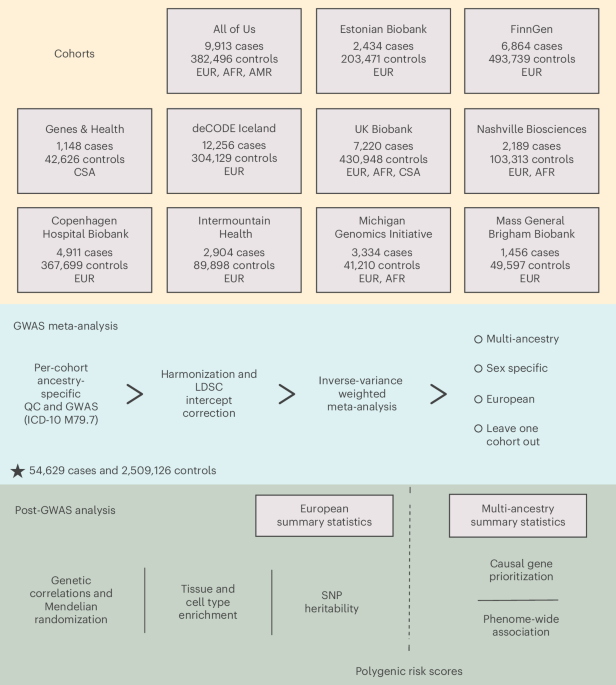
The team analysed genetic data from more than 2.5 million adults, of which 55 thousand had been diagnosed with fibromyalgia. The researchers scanned millions of genetic differences across the DNA of people with and without fibromyalgia to find changes that were more common in those with the condition. This enabled them to identify DNA sequence variants in 26 regions of the genome that affect the risk of developing fibromyalgia. Many of the genes implicated in these regions are involved in brain and nerve function.

Professor Frances Williams, co-senior author on the paper, and Professor of Genomic Epidemiology, King’s College London, played an important role in bringing together the data from 11 health research studies from the US, UK, Finland, Estonia, Denmark, and Iceland and 53 researchers across seven countries.

Professor Frances Williams said: "By studying the DNA of over 2 million individuals we can be confident that the findings are real and they suggest that fibromyalgia represents a problem in pain processing."

Dr. Michael Wainberg, an investigator at the Lunenfeld-Tanenbaum Research Institute and the University of Toronto and co-senior author on the paper, said: “This work changes how we think about fibromyalgia at a fundamental level. For decades, patients have been dismissed or told their pain is simply psychological. Our findings confirm the condition has a clear biological basis.”

While the findings do not yet provide a genetic test for diagnosing fibromyalgia or a new treatment for patients, they offer valuable insights into the underlying biology of the condition. This could help researchers develop better ways to identify, understand and treat fibromyalgia in future.

A surprising link to Huntington’s disease

Of the 26 genetic variants identified, the one most strongly linked to fibromyalgia risk was within the gene HTT. Different mutations in this gene cause Huntington’s disease, a severe, progressive and fatal neurodegenerative disorder. Another variant pointed to a receptor called GPR52 that regulates HTT levels. This receptor is already being investigated as a possible drug target in Huntington’s disease.

Professor Frances Williams helped to interpret how the genetic findings relate to the symptoms and conditions doctors commonly see in patients, with the study revealing substantial genetic overlap between fibromyalgia and a range of other conditions, including low back pain, irritable bowel syndrome, and post-traumatic stress disorder. The researchers think that shared biological mechanisms within the nervous system may make people susceptible to several of these conditions, explaining why they often appear together.

Professor Frances Williams, said: “We know that chronic pain syndromes cluster together in individuals and families and are genetically similar. Targeting the shared mechanisms underlying them could potentially benefit a whole cluster of disorders.”

Genetics are not the only determinant of whether someone develops fibromyalgia. The authors suspect that even people carrying many fibromyalgia genetic variants require other risk factors, such as a painful arthritic condition, to trigger fibromyalgia syndrome.

Dr. Nasa Sinnott-Armstrong, Assistant Professor at Fred Hutch Cancer Center and co-senior author on the paper, said: “Understanding how genes, environmental exposures, and life events jointly contribute to the risk of fibromyalgia syndrome is critical. Further research into triggers of fibromyalgia and corresponding changes in neural tissues will help understand what drives fibromyalgia and how to treat it.”

The study’s researchers have founded the Chronic Pain Genomics Consortium (https://paingenomics.org) to investigate other chronic pain syndromes, starting with pelvic pain. The consortium sees fibromyalgia as only the beginning of a broader exploration of the landscape of chronic pain conditions.

Professor Frances Williams said: "This study provides important new insights into why some people develop fibromyalgia syndrome and identifies biological pathways that could lead to new treatment approaches. One of these pathways is already the focus of drug trials for Huntington’s disease, raising the possibility that existing pharmaceutical research could eventually benefit people with fibromyalgia. The findings also help us better understand why fibromyalgia so often occurs alongside conditions such as anxiety and depression, bringing us closer to understanding the condition as a whole."


Notes to the editor:

The study was jointly led by Dr. Michael Wainberg, Dr. Nasa Sinnott-Armstrong at Fred Hutch Cancer Center and University of Washington in Seattle, and Dr. Hanna Ollila at the University of Helsinki in Finland and Massachusetts General Hospital in Boston.


Journal​

Nature Medicine

Method of Research​

Observational study

Subject of Research​

People

Article Title​

The genetic architecture of fibromyalgia across 2.5 million individuals

Article Publication Date​

28-Jul-2026
 
Of the 26 genetic variants identified, the one most strongly linked to fibromyalgia risk was within the gene HTT. Different mutations in this gene cause Huntington’s disease, a severe, progressive and fatal neurodegenerative disorder. Another variant pointed to a receptor called GPR52 that regulates HTT levels. This receptor is already being investigated as a possible drug target in Huntington’s disease.
Both also came up in DecodeME even though it used very different sampling compared to the ICD-codes used in this fibromyalgia GWAS. I hope the publication means, that they will share the summary data in the GWAS Catalog.
 
The genetic architecture of fibromyalgia across 2.5 million individuals

Kerrebijn, Isabel; Bjornsdottir, Gyda; Arbabi, Keon; Urpa, Lea; Haapaniemi, Hele; Thorleifsson, Gudmar; Stefansdottir, Lilja; Frangakis, Stephan; Valliere, Jesse; Kunorozva, Lovemore; Abner, Erik; Ji, Caleb; Kangur, Markus; Aagaard, Bitten; Bliddal, Henning; Brunak, Søren; Bruun, Mie T.; Didriksen, Maria; Erikstrup, Christian; Finer, Sarah; Geirsson, Arni J.; Gudbjartsson, Daniel F.; Hansen, Thomas F.; van Heel, David; Jonsdottir, Ingileif; Knight, Stacey; Knowlton, Kirk U.; Mikkelsen, Christina; Nadauld, Lincoln D.; Olafsdottir, Thorunn A.; Ostrowski, Sisse R.; Pedersen, Ole B. V.; Saevarsdottir, Saedis; Skuladottir, Astros T.; Sørensen, Erik; Stefansson, Hreinn; Sulem, Patrick; Sveinsson, Olafur A.; Thorlacius, Gudny E.; Thorsteinsdottir, Unnur; Ullum, Henrik; Vikingsson, Arnor; Werge, Thomas M.; Williams, Frances M. K.; van Heel, David; Saxena, Richa; Stefansson, Kari; Brummett, Chad M.; Glintborg, Bente; Clauw, Daniel J.; Thorgeirsson, Thorgeir E.; Williams, Frances M. K.; Sinnott-Armstrong, Nasa; Ollila, Hanna M.; Wainberg, Michael

Abstract
Fibromyalgia is a common and debilitating chronic pain syndrome of poorly understood etiology. Here we conduct a multi-ancestry genome-wide association study meta-analysis across 2,563,755 individuals (54,629 cases and 2,509,126 controls) from 11 cohorts, identifying 26 risk loci for fibromyalgia.

The strongest association was with a coding variant in HTT , the causal gene for Huntington’s disease. Gene prioritization implicated the HTT regulator GPR52 , as well as diverse genes with neural roles, including DCC , DRD2 / NCAM1 , MDGA2 and CELF4 . Fibromyalgia heritability was exclusively enriched within brain tissues and neural cell types.

Fibromyalgia showed strong, positive genetic correlation with a wide range of chronic pain, psychiatric and somatic disorders, including genetic correlations above 0.7 with low back pain, post-traumatic stress disorder and irritable bowel syndrome. Despite large sex differences in fibromyalgia prevalence, the genetic architecture of fibromyalgia was nearly identical between males and females.

This study provides robust genetic evidence defining fibromyalgia as a central nervous system disorder, thereby establishing a biological framework for its complex pathophysiology and extensive clinical comorbidities.

Web | DOI | PDF | Nature Medicine | Open Access
 
Last edited:
To me this is rather less dramatic than DecodeME in its implications. They say:

"This study provides robust genetic evidence defining fibromyalgia as a central nervous system disorder, thereby establishing a biological framework for its complex pathophysiology and extensive clinical comorbidities."

Well, yeah. But if you take a lot of people who seem to have more pain than expected from the bits that hurt then surely you would expect some gene variants affecting nerve pathways to weight things a bit.

I am not sure that this means that 'fibromyalgia is a nervous system disorder'. It may just mean that whatever reason you have to have pain if you have some of these gene variants you are more likely to end up diagnosed with FM by some doctors (others will diagnose up to 100x fewer).

It is all good data for comparisons but to me DecodeME did more than this. It took a rather well-defined syndrome that nobody could work out the mechanism for at all and provided some unexpected leads that confirmed that there was some common mechanism that had not previously been established.

It is interesting that the top hits here do not overlap much with DecodeME.
 
Of the 26 genetic variants identified, the one most strongly linked to fibromyalgia risk was within the gene HTT. Different mutations in this gene cause Huntington’s disease, a severe, progressive and fatal neurodegenerative disorder. Another variant pointed to a receptor called GPR52 that regulates HTT levels.
Both also came up in DecodeME even though it used very different sampling compared to the ICD-codes used in this fibromyalgia GWAS.
Interesting.
 
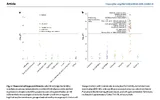
They also did tissue enrichment using GTEx and also found that only central nervous system had significant hits. The panel on the right is from the PanSci mouse Atlas which I hadn't heard of before. Perhaps something to try out with DecodeME as well.
1785243192561.webp
They write:
The strongest cell-type association was with neurons from the dentate gyrus (P = 1.3 × 10−6), a hippocampal region critical for contextualizing sensory experience, including pain.
 
The authors note similarity to DecodeME results:
In addition, risk loci overlapped with long COVID51 (BPTF) and myalgic encephalomyelitis/chronic fatigue syndrome52 (OLFM4, RABGAP1L/GPR52), two poorly characterized disorders with a hypothesized neural basis, albeit with different lead variants.
HTT and DCC also came up in DecodeME, although just below the significance threshold.
 
It took a rather well-defined syndrome that nobody could work out the mechanism for at all and provided some unexpected leads that confirmed that there was some common mechanism that had not previously been established.
Fibromyalgia seems like a rather less well-defined syndrome and I worry about misdiagnosis. It really seems to capture anyone with unexplained chronic (widespread) pain, and the crossover with anxiety and depression is perhaps more pronounced. There used to be a focus on tenderness and fascia too, but that seems to have disappeared.

I actually got a diagnosis of fibromyalgia before I was diagnosed with ME/CFS. I still get very distinct problems with tenderness and pain in my fascia and muscles, but I have not pursued that diagnosis given I was subsequently diagnosed with ME/CFS.
 
Last edited:
Back
Top Bottom