
You are using an out of date browser. It may not display this or other websites correctly.
You should upgrade or use an alternative browser.
You should upgrade or use an alternative browser.
United Kingdom: News from BACME - British Association of Clinicians in ME/CFS
- Thread starter Sly Saint
- Start date
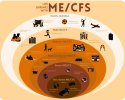
this.At least this settles they can't be trusted for anything, can't actually learn. No matter what, they will keep doing the same things, for their own purposes. They simply don't understand what the words mean, and it's become clear that illness is an experience that absolutely has to be experienced in order to be understood, as fully as it's almost always needed to actually play an instrument in order to be a musician. And the only exception would be conductors, and they usually are musicians anyway. Just knowing about sheet music doesn't make one a musician.
Obviously, though. It's possible to go from being wrong to getting it right, but not from a position of denial. There is no half-way between reality and denial of reality that works out in real life.
I think 3 years on the one thing that this new document and other behaviour certain 'players' have been up to confirms - and I really hope that people who need to see through them now because they are also the 'how dare you mention past behaviour, "we've changed"' gang of silencers who aren't up to much - that it is the people that were and now certainly are 'the problem'.
Turkeys don't vote for christmas in every situation, but what has been exhibited in the context of this and certain other bunches in bps is a level which I doubt has been allowed to carry on in many other contexts and relied on the sheer vulnerability me/cfs had, particularly those in the less privileged/supported situations (who get elbowed out of speaking for themselves and frankly few who are in the positions are happy to not believe the situation but assume and psychologise it as 'must have happened differently/been something you did or are different to me etc), due to the slurs and tropes that have provided power and suggested it 'isn't that bad'.
And I mention this because this coercive situation, ongoing, needs to be fixed before things can move forward given they've deluded themselves that someone who is losing their job, family, house, future, kids and is in front of an individual whose notes can remove this and indeed put question marks over their freedom or capacity as well - and is fresh to the illness and just needs any note to save their job and not lose them their job in the 'urgent and important' column above the 'will that harm me in a year's time' is not in a position to be giving experienced info on the condition and 'did this help'.
The problem is that they can't even if they look at it, but are blinded and actually can't see anything other than their beliefs instead of what actually is in front of their eyes when they see a patient or this.I feel like BACME need to see this.
SO when a BACME person sees a very ill person who apparently can't move or see light they 'see' this fictional picture they've had sold to them of what 'sensitisation' and 'deconditioning' can end up in. Someone milder not doing their usual sport as needing support with their fears over the sore legs after, before those fears 'get out of hand and take over them to lead to decrepidness from sitting on the sofa too much, but less than a great % of teenagers and adults who can might do with no ill-effects'
I don't think they go so far as to realise that even with very old people this takes the idea ad absurdium of 'some people just decided to lie down for some reason and become more hermit like until we have all of this to unpick because their body becomes so unused to life that it leads to this level of 'illness''
but once they are on that train then they are surrounded by other yes men and see all patients who don't improve as 'examples backing up their suspicions' and the whole thing gets out of hand.
It would genuinely, and I say this with interest for cognitive psychologists to do on priming etc (not as some 'pun or one-liner'), be interesting for things like this to be put in front of different individuals with different levels of brainwashing (I think for example teaching profession had a lot of behaviourism influences in training in certain areas in certain times on certain things) and ask them what they 'see'. It is incredibly powerful.

I still keep doing it. Every time I feel a tiny bit better, able to do a bit more, I keep overshooting and making myself worse even though I only ever slightly increase. And every time I draw back it stabilizes. It's maddening.In my minds eye I’m seeing a pie chart of how much of a document refers to “increase” of activity (say, 25%) vs how many pwME have “found” their established baseline (say, 10%) then increased beyond it by choice, without consequence (about 1%)
The greatest work for pwME is getting used to having ME and pacing, it takes years and years. The “increasing” by choice part is so very rare and unusual and it gets talked up so much in these documents. It creates a psychological pressure that you should be able to, also there is the tantalising unspoken temptation of (whisper it….)maybe getting back to normal?
There is no amount of us telling them these things that seems to matter. It's all wishcare, and they always judge themselves based on their intentions, while we keep judging them by the (completely lack of) results.

On their misperceptions of their intentions.and they always judge themselves based on their intentions,
Talk about a buggy software.
Therapists, heal thyselves!

Dolphin
Senior Member (Voting Rights)
BACME AGM 2026, Janauary 26, 18:00 BST
Go to,
https://bacme.info/event/2026-agm/
Doesn’t give much info.
Go to,
https://bacme.info/event/2026-agm/
Doesn’t give much info.

Sly Saint
Senior Member (Voting Rights)
As per usual the most annoying thing is it is members only.BACME AGM 2026, Janauary 26, 18:00 BST
Go to,
https://bacme.info/event/2026-agm/
Doesn’t give much info.
Any members of BACME here?

(I've not looked at the BACME constitution.)Joining BACME
Membership of BACME is open to UK-based healthcare professionals and researchers involved in the diagnosis and/or treatment of ME/CFS using clinically effective practice.
All members must agree to abide by our constitution: BACME Constitution
Membership fees are currently £35 per year (£15 for students/trainees)
Membership fees help to support the running of our website and the provision of educational events which are free for BACME members. By supporting the work of BACME you are also supporting the collective work of specialist clinicians and services and together we can promote the importance of specialist ME/CFS care and work towards expanding and improving NHS services.
If you are not an NHS professional or not based in the UK, please contact us at info@bacme.info before proceeding with membership application and provide details regarding your role supporting the delivery of care to people with ME/CFS.

Why Join BACME? - BACME
Join BACME as a member to become part of the network and help us address the issues of ME/CFS effectively together
 bacme.info

MrMagoo
Senior Member (Voting Rights)
Linked slightly to our discussions about the BACME guide to managing ME Oct 25
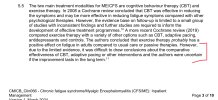
I was perusing my local ICB for something else and found a document which explains they don’t commission any inpatient beds for ME/CFS. Which we already knew; nowhere does. What I did find interesting is this reference to a 2019 Cochrane review of ME/CFStreatments and the comparison of exercise to other treatments like CBT and reference to “adaptive pacing”. Basically they couldn't say any of it worked. So even cochrane doesn’t cheerlead any of these “treatments”
I was perusing my local ICB for something else and found a document which explains they don’t commission any inpatient beds for ME/CFS. Which we already knew; nowhere does. What I did find interesting is this reference to a 2019 Cochrane review of ME/CFStreatments and the comparison of exercise to other treatments like CBT and reference to “adaptive pacing”. Basically they couldn't say any of it worked. So even cochrane doesn’t cheerlead any of these “treatments”
Attachments

hotblack
Senior Member (Voting Rights)
Is anyone aware of any of the ‘specialist teams’ delivery domiciliary care? Certainly the issue near me is they sre only commissioned for mild/moderate and do their reformed CBT/GET thing so nobody takes responsibility for us.There are no referral criteria to hospital and it is not unreasonable to infer that NICE are expecting the bulk of management to be driven by the specialist team, who would perform home visits when necessary, irrespective of severity. There is no specific suggestion within the guidance that patients with severe disease should be admitted to hospital.
They seem to acknowledge the problems of severe patients but don’t seem to have a clear plan on how to handle it other than leave it to these teams.
And the discussion of the ‘controversy’ and needing buy in from medical professionals is interesting. There seems to be a tacit acceptance of a problem or at least a disconnect there.
Very interesting. Thanks for sharing @MrMagoo
MrMagoo
Senior Member (Voting Rights)
I assume each ICB has a similar set of documents.Is anyone aware of any of the ‘specialist teams’ delivery domiciliary care? Certainly the issue near me is they sre only commissioned for mild/moderate and do their reformed CBT/GET thing so nobody takes responsibility for us.
They seem to acknowledge the problems of severe patients but don’t seem to have a clear plan on how to handle it other than leave it to these teams.
And the discussion of the ‘controversy’ and needing buy in from medical professionals is interesting. There seems to be a tacit acceptance of a problem or at least a disconnect there.
Very interesting. Thanks for sharing @MrMagoo
I was wondering whether this could be a way for some advocacy groups to push on certain ICBs where there are pwME in hospital currently (thinking of Karen in Hastings and Savannah in Lewisham)

Jonathan Edwards
Senior Member (Voting Rights)
I note the comment in the Cheshire policy:
Based on NICE guidance and other literature, there is no published evidence which would
support admission to hospital for management purely of ME/CFS.
This is factually wrong because it ignores the paper by Helen Baxter, Speight and Weir on the problem of managing very severe ME/CFS with malnutrition.
Based on NICE guidance and other literature, there is no published evidence which would
support admission to hospital for management purely of ME/CFS.
This is factually wrong because it ignores the paper by Helen Baxter, Speight and Weir on the problem of managing very severe ME/CFS with malnutrition.
Dolphin
Senior Member (Voting Rights)
ME/CFS Clinician Reflective Practice Networking Group - BACME
BACME would like to provide a safe space for clinicians to connect, reflect together on clinical challenges, share practical insights, and reduce professional isolation. Our goal for these sessions is […]
bacme.info
ME/CFS Clinician Reflective Practice Networking Group
February 23 @ 9:00 am - 10:00 amFREE
BACME would like to provide a safe space for clinicians to connect, reflect together on clinical challenges, share practical insights, and reduce professional isolation. Our goal for these sessions is not to provide patient-specific solutions or debate best practice, but to support one another and learn from shared experience using a reflective practice approach. Discussions should be consistent with the current NICE guidelines for ME/CFS, while recognising the complexity of real-world practice.
Sessions will be held every couple of months and via Zoom.
We’re looking forward to connecting with you and providing the opportunity to share reflections that support both your practice and wellbeing.

Andy
Senior Member (Voting rights)
And having to say this indicates that discussions will absolutely not be consistent with NICE guidelines, and most likely will be about how to get around the guideline. The day that BACME as an organisation ceases to exist can't come soon enough, they are a clear danger to members of our community.Discussions should be consistent with the current NICE guidelines for ME/CFS, while recognising the complexity of real-world practice.

JellyBabyKid
Senior Member (Voting Rights)
recognising the complexity of real-world practice.
Anyone else have questions....?
Is the complexity the real-world or patients seeking treatment and not rehab and goal setting?
JellyBabyKid
Senior Member (Voting Rights)
It doesn't say which NICE guidelines though; CG53 or NG206will absolutely not be consistent with NICE guidelines
Jonathan Edwards
Senior Member (Voting Rights)
BACME would like to provide a safe space for clinicians to connect
Is that safe from patients and from professors and colleagues who write letters?
To be fair if you are new to the area of imposing treatments that make people worse but your boss claims they cure , as does bacme, I can see why bacme want to get in first in ‘helping them with their cognitive dissonance’ lest they eg read the physiosforme stuff about how they came together etc and it rings bells.Anyone else have questions....?
Is the complexity the real-world or patients seeking treatment and not rehab and goal setting?
If only the videos were public we could play name-calling with horrible false labels bingo ?
To be fair it has made me think that maybe there is room for an alternative ‘safe space’ to be offered to those who find themselves in this situation - ie that isn’t bacmeIs that safe from patients and from professors and colleagues who write letters?
And might be genuinely new and working at a clinic wondering why it doesn’t work and why their boss doesn’t understand - which must be stressful if you are a moral and problem-solving in a scientific way type who signed up thinking they’d genuinely help people.

hibiscuswahine
Senior Member (Voting Rights)
I am not sure if I have seen this meme - so probably don't get your reference...All this talk of safe spaces, reducing isolation, supporting one another with reflective practice.
It reminds me of that meme…
BACME members only do this when they’re in extreme distress
But I wouldn't necessarily see this announcement as particularly noteworthy. Reflective practice is part of Medical practice. As a former consultant in psychiatry, I took part in regular peer review groups, it is a college requirement for the maintenance of vocational registration.
This zoom meeting sounds similar without the specific cases I would have presented in peer review.
Peer review is a small group of specialists who get together, usually monthly, and talk about a case that is troubling them in terms of diagnosis, treatment, relationship with client, carers, their families, government agencies etc. Our colleagues are usually very frank and often challenging especially if they suspect unprofessional behaviour is starting to occur and usually are a valuable resource of knowledge and experience. Along with regular meetings for case presentations and organisational meetings, it was part of a local professional support network.
I wouldn't begrudge this for any medical practitioner as difficult situations can arise and it is really useful to listen to how other practitioners worked through things. Can be vital for their mental health, especially when services are fragmented or they are in solo-practise, work rurally etc.
Here is a guide for what it is in the UK.
https://www.gmc-uk.org/education/st...r---guidance-for-doctors-and-medical-students
I am not a big fan of BACME from what I have read on here and their potential to influence doctors in other countries like mine.
Their jump on the bandwagon of "dysregulation" which seems to be the latest buzzword in popular psychology (along with cortisol) is very concerning. The fact they are using such terms shows how much they are still influenced by psychosomatic psychologists and psychiatrists. They are just hiding behind weasel words and a whole lot of waffle and if that is how they practise, it is no wonder things are so bad.
Maybe someone will bring the Edwards, Bull and Crawford open letter to their zoom meeting and if so - I really hope they start proper reflection. One can only hope. Sigh.
Last edited: