
You are using an out of date browser. It may not display this or other websites correctly.
You should upgrade or use an alternative browser.
You should upgrade or use an alternative browser.
United Kingdom News (including UK wide, England, NI and Wales - see separate thread for news from Scotland)
- Thread starter Sly Saint
- Start date

Chandelier
Senior Member (Voting Rights)
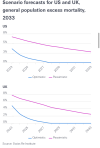
The post pandemic excess mortality rate estimates by Swiss Re until 2033 are also quite interesting:gosh

Swiss Re, the world’s largest reinsurer, is cautioning insurance companies that it continues to observe a persistent trend of excess deaths following COVID-19.
The PDF report can be downloaded from the website via direct link once a name and a properly formatted email address (e.g. a@b.com) has been provided.
AI Summary:
The future of excess mortality after COVID-19
Introduction
Four...

Chandelier
Senior Member (Voting Rights)
RCPCH Grand Round: Long Covid in Children and Young People - RCPCH Learning
This webinar intends to equip paediatric clinicians of all stages, GPs, and allied health professionals with up-to-date, evidence-based, and clinically actionable knowledge for the assessment, diagnosis, and management of Long Covid in children and young people.
learning.rcpch.ac.uk
A long Covid webinar was held at the Royal College of Paediatrics and Child Health back in February.
RCPCH Grand Round: Long Covid in Children and Young People
This webinar intends to equip paediatric clinicians of all stages, GPs, and allied health professionals with up-to-date, evidence-based, and clinically actionable knowledge for the assessment, diagnosis, and management of Long Covid in children and young people.
Speakers
- Dr Rae Duncan
- Dr Emma Weisblatt
- Dr Terry Segal
- Ms Kirsty Stanley
- Ms Jo Bond-Kendall
- Dr Elmudathir Abdelrahran
Presentation slides
Dr Emma Weisblatt: How to assess neurocovid in clinic: and what to make of it all
Dr Emma Weisblatt: What is long covid in the CNS?
Dr Terry Segal and Ms Jo Bond-Kendall: Long COVID/Post COVID syndrome in children and young people \ Assessment and management for paediatricians
Ms Kirsty Stanley: Long Covid Kids – Learning from Lived Experience: Working in Partnership with Children and Families A
Dr Elmudathir Abdelrahman: The Covid-Kids Study Overview
Cardiologist Rae Duncan mentioned the webinar in passing on Twitter:
Yes. A few of us have just delivered this year the first Royal College endorsed teaching and training webinar for doctors about long covid in children and young people.
We are now writing a textbook for Physicians about long Covid.
We are trying to get long covid & other PAIS recognised in mainstream medicine.
Doctors have never been taught about this.
There are no medical guidelines.
There are est 400M suffering from long COVID globally. And relatively few post acute infection specialists and we know many patients are struggling to access effective medical care & many doctors want to help but don’t know where to start because none of us have training guidelines.
None of us were taught about ME/CFS, PAIS, long COVID in med school (at least in UK), we are trying to change this.
The more doctors that understand LC or other different PAIS, the easier it will be for patients to access care from a doctor that understands their condition.
We need to work closely with our biomedical scientists and researchers too.
Ultimately we are creating this Society [ISLC–PAIS, S4ME thread] to try & help improve things
More specifics from Dr. Duncan about the upcoming book:
Given I am writing the cardiac chapter I assure you I will be doing my best to offer thorough evidenced based and individualised patient appropriate assessments.
Emma Weisblatt, a psychiatrist who was also part of the webinar, will write a chapter about neuropsychatry:
Emma Weisblatt
And I’m writing the neuropsychiatry chapter and can promise I will be doing the same for cognitive and psychiatric symptoms. Happy to answer any questions publicly or by DM.
Last edited:

Dolphin
Senior Member (Voting Rights)
On Tuesday 28 July, WAMES met with the Cabinet Minister for Health and
Care, Mabon ap Gwynfor MS, alongside representatives from Action for ME,
SMEDC and Long Covid Support.
Go to,
https://www.wames.org.uk/meeting-with-health-minister-me-lc-services-in-wales/
Care, Mabon ap Gwynfor MS, alongside representatives from Action for ME,
SMEDC and Long Covid Support.
Go to,
https://www.wames.org.uk/meeting-with-health-minister-me-lc-services-in-wales/

From the Wames link
Those seem like pretty good things to ask for. What do our Welsh members think about this?
Each organisation presented one of four proposals aimed at addressing the serious and ongoing gaps in care for people living with ME and Long Covid in Wales.
1. Bring together a National Expert Working Group of health care professionals and people with lived experience to co-produce an All-Wales Strategy and Delivery Plan for ME and Long Covid to ensure equity of service and compliance with NICE guidance across all ages and all severity levels. [WAMES]
2. Appoint an All-Wales Clinical Lead / Medical Consultant for ME and Long Covid to coordinate care across health boards, reduce regional variation, support complex cases, guide training, lead and direct the development of treatment for ME and Long Covid, and keep Wales in step with emerging research evidence. [SMEDC]
3. Develop a Welsh Government-led ME/CFS and Long Covid Research Strategy by 2027 to accelerate research through Wales’ Life Sciences sector. The strategy would bring together expertise from across the Welsh research and health communities, set clear national priorities, and support the translation of emerging findings from DecodeME, LOCOME and Sequence ME & Long Covid into effective diagnostics and treatments in collaboration with leading research groups in the UK and internationally. [AfME]
4. Consider long-term sequelae in any future pandemic planning or preventive strategies starting with an urgent review of Infection Prevention Control (IPC) guidance in healthcare. [Long COVID Support]
Those seem like pretty good things to ask for. What do our Welsh members think about this?
Chandelier
Senior Member (Voting Rights)
From r/cfs:
This could be her website:
Journalist looking into private doctors/influencers scamming MCAS/ME/Long Covid patients
Hi everyone!
My name’s Isobel and I’m a freelance journalist.
My younger sister suffers severely from MCAS and ME, which is how I began looking into this story.
I’m interested in the private doctors who claim to provide treatment for MCAS, ME and Long Covid, and have since scammed people out of money, or left them without access to the medication they prescribed.
I’m also interested in social media figures with limited/no qualifications who claim to offer recovery plans or treatments.
It seems there are a lot of grifters who have sprung up due to a lack of assistance from the NHS, as well as incredibly long waiting lists. If you have any experience of this, and are based in the UK, please message me on here or send an email to [isobel.knight.4@gmail.com]
This could be her website:
Chandelier
Senior Member (Voting Rights)

Petition: Take urgent action so those with Severe Myalgic Encephalomyelitis in Wales are no longer left without vital medical care
Service provision for people with Myalgic Encephalomyelitis (ME) remains inconsistent across Wales. In particular, major concerns persist regarding access for those with the severe form of the condition, leaving some families facing life-impacting decisions, without medical guidance. Sufferers...
 petitions.senedd.wales
Sarah Boothby on Bluesky says:
Please sign and share.
You do not have to be resident in Wales to show your support.
Petition text:
Petition
Service provision for people with Myalgic Encephalomyelitis (ME) remains inconsistent across Wales.
In particular, major concerns persist regarding access for those with the severe form of the condition, leaving some families facing life-impacting decisions, without medical guidance.
Sufferers are confined to dark rooms, require 24/7 care, some unable to speak, feed themselves, tolerate light or sound, or even sit up.
Proposed actions will ensure people with Severe ME can safely access evidence-informed medical care and improve their chances of recovery.
We urge the government to implement both immediate and long-term support for those in desperate need.
Actions co-produced by: Severe ME Difrifol Cymru (SMEDC), Welsh Association of ME and CFS Support (WAMES), Action for ME (AfME), Long Covid Support (LC Support).
1. Create a National Expert Group of health care professionals and people with lived experience to coproduce an All-Wales Strategy and Delivery Plan for ME and Long Covid, ensuring equity of service and compliance with NICE guidance (NG206 ME/CFS), across all ages and all severity levels.
2. Appoint an All-Wales Clinical Lead(s) / Medical Consultant(s) for ME and Long Covid to coordinate care across health boards, reduce regional variation, support complex cases, guide training and treatment, keeping Wales in step with emerging research.
3. Develop an ME/CFS and Long COVID Research Strategy to accelerate research in Wales through the Life Sciences Sector / Life Sciences Hub by 2027.
4. Consider long-term sequelae in future pandemic planning/ preventive strategies, reviewing Infection Prevention Control (IPC) guidance.

NelliePledge
Senior Member (Voting Rights)
Signed
Chandelier
Senior Member (Voting Rights)
Beautiful reel on Instagram for severe ME day.
No account required:
No account required:
August 8th is Severe ME Awareness Day in recognition and remembrance of so many enduring the debilitating and relentless reality of living with this condition.
Lizzy, who left a message for Trooper’s Hill in Bristol, has written and recorded a piece for today.
“It was somewhere close…almost within reach, if it wasn't for Severe ME.”
Thank you for your words.
This project holds many of their messages - messages for the places they love but are now absent from.
We remain determined to amplify their unheard voices.
Video description:
A video of various clips: sun through tree leaves, clouds moving over a blue sky, grass swaying in the wind with views of a city behind.
Lizzy’s words are subtitled over these images in white and black to contrast images.
Last edited:

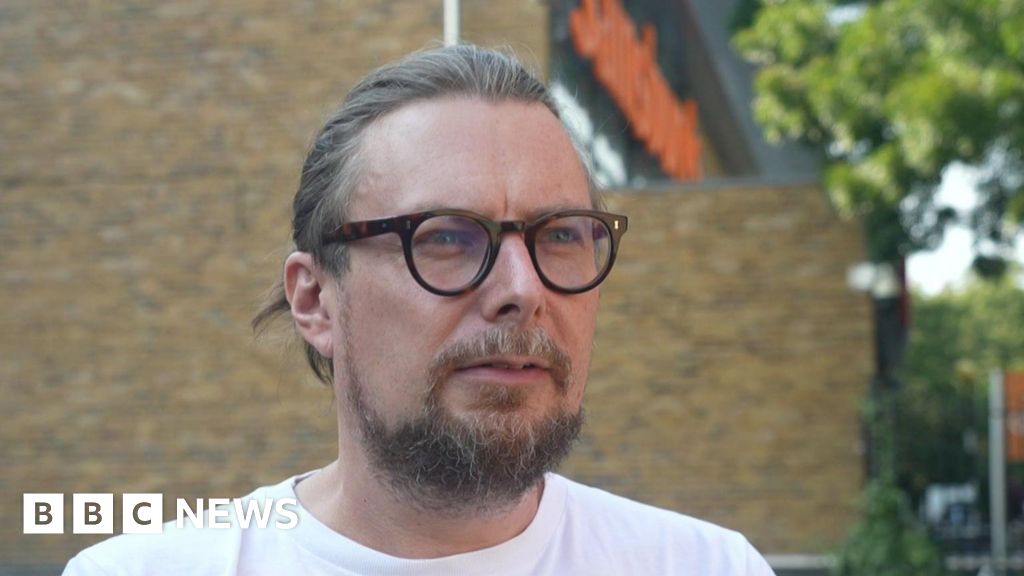
Off-topic on its own, but very relevant for what it says about how health care too often works on much lower standards than usual. A UK grocery chain implemented an AI surveillance system, which turns out to have a 0.02% error rate, and ended up evicting a shopper.
 www.bbc.com
Being evicted from a grocery store is a minor inconvenience, minuscule to the point of being insignificant compared to the loss of functioning we experience. 0.02% error rate is about 100x lower than the intentional error rate sought in chronic illness, affecting about 25x less people to a much smaller degree. It was paused quickly after being reported. Meanwhile we can barely keep people in charge of those things from nodding off to sleep after 15 seconds of explaining how tens of millions of people have essentially no quality of life and are excluded from almost everything, and they face zero pressure to do anything about it at all, other than making things even worse.
It's just so out of proportion it feels like a parody. It sets the state of thing as wishing our health care to be at least as good as the corporate standards for shoplifting surveillance and how they want to avoid bad publicity from excluding honest shoppers by mistake. We're not even at 1% of that standard. Such a standard is impossibly out of reach right now, it might as well be the list of privileges a monarch enjoys.
Sainsbury's branch pauses AI cameras use after shopper ejected
Matt Arnold says he was asked to leave the store after being wrongly flagged as a shoplifter.
www.bbc.com
Being evicted from a grocery store is a minor inconvenience, minuscule to the point of being insignificant compared to the loss of functioning we experience. 0.02% error rate is about 100x lower than the intentional error rate sought in chronic illness, affecting about 25x less people to a much smaller degree. It was paused quickly after being reported. Meanwhile we can barely keep people in charge of those things from nodding off to sleep after 15 seconds of explaining how tens of millions of people have essentially no quality of life and are excluded from almost everything, and they face zero pressure to do anything about it at all, other than making things even worse.
It's just so out of proportion it feels like a parody. It sets the state of thing as wishing our health care to be at least as good as the corporate standards for shoplifting surveillance and how they want to avoid bad publicity from excluding honest shoppers by mistake. We're not even at 1% of that standard. Such a standard is impossibly out of reach right now, it might as well be the list of privileges a monarch enjoys.
That is a powerful illustration @rvallee. I guess Sainsburys cares what the public thinks about them. Their reputation matters to them, because it affects profit.
Presumably,
1. medical systems do not care what people with ME/CFS think about them, and either
2a. medical systems don't think that the general public cares about people with ME/CFS and/or
2b. medical systems don't care what the public in general thinks about medical systems
Presumably,
1. medical systems do not care what people with ME/CFS think about them, and either
2a. medical systems don't think that the general public cares about people with ME/CFS and/or
2b. medical systems don't care what the public in general thinks about medical systems
Last edited:
BrightCandle
Senior Member (Voting Rights)
All 3 are clearly true. There is no competition for the NHS to care about of any size and that most people could afford so they have a customer base they will get regardless of the harm they inflict.1. medical systems do not care what people with ME/CFS think about them, and either
2a. medical systems don't think that the general public cares about people with ME/CFS and/or
2b. medical systems don't care what the public in general thinks about medical systems
Chandelier
Senior Member (Voting Rights)

'Utterly exhausted' - Yorkshire Long Covid sufferer’s message to new Prime Minister
A Yorkshire man who says his life has been “devastated” by Long Covid has urged new Prime Minister Andy Burnham to do more to help people living with the condition.
 www.yorkshirepost.co.uk
'Utterly exhausted just by being alive' - Yorkshire Long Covid sufferer’s message to new Prime Minister
A Yorkshire man who says his life has been “devastated” by Long Covid has urged new Prime Minister Andy Burnham to do more to help people living with the condition.
Father-of-two Darren Parkinson, 50, said he contracted coronavirus in 2021 and now struggles to leave his home as a result of Long Covid.
He said Long Covid cost him his 20-year job as a learning disability nurse for the NHS – and it also forced him to stand down as a Green Party councillor on Shipley Town Council.
Mr Parkinson, of Shipley, said: “I don’t want me, and other people living with Long Covid, to be forgotten.
“My message to the new Prime Minister and his Government is really clear – do more to support people living with Long Covid, and invest more money for research to hopefully find a cure for this horrendous condition.”
Mr Parkinson explained what his life has been like over the last five years.
“My body feels like it has been poisoned,” he said.
“It’s a constant feeling of being really ill and exhausted – from the moment I get up to the moment I go to bed. I feel utterly exhausted just by being alive.
“It means the main thing I need to do during the day is rest – I spend most of the day lying on my bed or sofa, or sitting down somewhere.
“It’s had a devastating impact on my life – everything I used to enjoy doing, I can no longer do.”
A Government spokesperson said: “Darren’s story highlights the very real impact Long Covid continues to have on people and their families, and we are committed to ensuring those suffering with the condition get the support they need.
“Long Covid services, commissioned by local NHS organisations, should be offered to support people, and we are funding research into this condition to improve diagnosis, support and unlock new treatments.
“Where local services are not available, patients with Long Covid symptoms should visit their GP, who can then refer them to alternative services based on clinical need.”
This is the Mark Faghy who contributed to the PRIME PEM workshop and acknowledged that to be able to have rehab you have to know the mechanism and hence what you are dealing with and arguing that more research needed ......Professor Mark Faghy is helping a MSc student recruiting participants.
Bluesky post:
Survey landing page:
It may reflect the fact that many have closed .Yes, thinking ahead to a likely outcome, they might find '50% of respondents did not complete their course of rehabilitation', but, so what? did the online recruitment method result in a higher percentage of people who didn't finish their course? Or a lower percentage? The result is pretty meaningless and easily dismissed.
The student could instead carefully follow a number of people sequentially admitted to a Long Covid clinic, asking about their experience and outcomes. That would actually tell us something useful.
Every single government fails equally at this, even if differently, or at least distinctly, but the total lack of oversight and accountability in some areas of health care remain completely bizarre. This is no way to make casual decisions about anything, let alone run systems that millions depend on. There is not a single mechanism to redress from massive systemic failure, it just doesn't exist.A Government spokesperson said: “Darren’s story highlights the very real impact Long Covid continues to have on people and their families, and we are committed to ensuring those suffering with the condition get the support they need.
“Long Covid services, commissioned by local NHS organisations, should be offered to support people, and we are funding research into this condition to improve diagnosis, support and unlock new treatments.
“Where local services are not available, patients with Long Covid symptoms should visit their GP, who can then refer them to alternative services based on clinical need.”
In a sense this is the 'oversight' giving thumbs up when someone points out that it's a total disaster, offering the disaster itself. Not more of it, just the plain disaster as it has long failed. There may not be arsonists in charge of the fire department here, but damn do they love to watch some things burn and making sure they burn so thoroughly that nothing can be identified.
Chandelier
Senior Member (Voting Rights)
Good stuff by Dr. Amir Khan:
I'm getting increasingly uncomfortable about the way we are talking about people living with disabilities, whether it's ADHD, autism, mental illness, chronic illness, physical disability or people who cannot work in the way society expects them to.
There seems to be a growing narrative that somehow they are the problem, like there's too many diagnoses or too many people claiming support or too much money is being spent on them.
Full transcript:Let's have sensible conversations about benefits and diagnosis and health care.
Yes, of course, but don't turn people living with disabilities into scapegoats and don't fall for the idea that somebody else having support somehow means there's less dignity available for you.
Instagram | Imginn (alternative, no account required)Heem, I'm just going to have another rant because I'm getting increasingly uncomfortable about the way we are talking about people living with disabilities, whether it's ADHD, autism, mental illness, chronic illness, physical disability or people who cannot work in the way society expects them to.
There seems to be a growing narrative that somehow they are the problem, like there's too many diagnoses or too many people claiming support or too much money is being spent on them.
And I think we need to be really careful about where that language takes us.
Because when times are difficult, one of the oldest tricks in the book is to find a group of people and say, there, that's them.
That's the problem. That's where the problem lies.
And suddenly we're fighting amongst ourselves instead of asking much bigger questions about poverty, housing, health care, social care, wages, and why so many people are struggling in the first place.
I just want to remind you that people living with disabilities are not other people.
They are our friends. They're our colleagues. They're our parents, our children, our patients.
They're us. Disability can enter any family, any life at any age.
An accident, a stroke, cancer, long-term illness, a child born with additional needs, ageing, or simply finally getting a diagnosis for something you've lived with your entire life.
And we shouldn't ask, why are we doing so much for people living with disabilities?
What we should be asking is, what kind of society do we want waiting for us if one day we become disabled ourselves?
Listen, man, I just need to say it.
Disabled people or people living with disabilities are showing the rest of us what a genuinely inclusive society would look like.
One where buildings, workplaces, health care, and communities adapt to human beings rather than demanding every human fits into one narrow definition of norm.
So, man, let's just challenge it.
Let's have sensible conversations about benefits and diagnosis and health care.
Yes, of course, but don't turn people living with disabilities into scapegoats and don't fall for the idea that somebody else having support somehow means there's less dignity available for you.
Just saying it, man.
Chandelier
Senior Member (Voting Rights)
Congrats to James Frith MP, newly appointed as the Minister for Health Innovation, with responsibility for ME.
I’ve written to him on ME emphasising that given the numbers, and the length and extent of suffering, ME represents a significant burden at personal level, to society and to our economy.
I’ve written to him on ME emphasising that given the numbers, and the length and extent of suffering, ME represents a significant burden at personal level, to society and to our economy.
We are all paying for failure over successive governments to acknowledge the needs of all those affected by ME.
It’s time for a fresh start, with investment to address their needs, to enable them to lead healthier lives and make the contributions to our country that they have dreamt of for so long.
As a start I’ve identified 5 areas, for initial confidence boosting:
1. Getting better numbers
2. Understanding the economic cost
3. Research to develop diagnostics and treatment
4. Changing detrimental attitudes, knowledge and practice
5. Providing a national specialist service for very severe ME
The letter can be found here.

Jonathan Edwards
Senior Member (Voting Rights)
As a start I’ve identified 5 areas, for initial confidence boosting:1. Getting better numbers2. Understanding the economic cost3. Research to develop diagnostics and treatment4. Changing detrimental attitudes, knowledge and practice5. Providing a national specialist service for very severe ME
I would change the order.
1. Providing a national specialist service for very severe ME
2. Research to develop diagnostics and treatment.
3...
The attitudes will only be changed by the research.
Economic cost is not the issue. Raising it just gets the rehab people excited.
Forget numbers, we know the numbers as precisely as i meaningful. Stop wasting money on fluff.
How can anyone not put the need for severe at the top of the list. Why won't people focus?
NelliePledge
Senior Member (Voting Rights)
Spot on no excuse for not putting people at such risk no1I would change the order.
1. Providing a national specialist service for very severe ME
2. Research to develop diagnostics and treatment.
3...
The attitudes will only be changed by the research.
Economic cost is not the issue. Raising it just gets the rehab people excited.
Forget numbers, we know the numbers as precisely as i meaningful. Stop wasting money on fluff.
How can anyone not put the need for severe at the top of the list. Why won't people focus?