United Kingdom News (including UK wide, England, NI and Wales - see separate thread for news from Scotland)


Not sure if we've taken a look at the resources they're going to be sharing other than the module - there are podcasts & webinars.
The webinars are LONG. Around an hour each. I can’t see them being watched by many. Patients, doctors or policy people.

Good to see them trying to get the word out on the conference trail though. Would be even better if they printed out and shared our fact sheets too! They could be a good entry point for people as they’re quite concise compared to the podcasts and videos. Worth trying any contacts people here have to see if they would?

These offer healthcare professionals knowledge and information that can increase their confidence in diagnosing and managing the symptoms of ME.
I understand the wording and am being picky to make a point, but I’d like LESS confidence from healthcare professionals. More humility and acceptance of what they don’t know or understand would be a great place to start from IMHO.
 
I understand the wording and am being picky to make a point, but I’d like LESS confidence from healthcare professionals. More humility and acceptance of what they don’t know or understand would be a great place to start from IMHO.
This. Admitting ignorance and uncertainty is the starting point of wisdom and competence.

It is quite disturbing how quickly some seem to think they can gain a genuine understanding and competence in this field, based on so little understanding, on non-existent therapeutic options, and so much persistent failure.
 

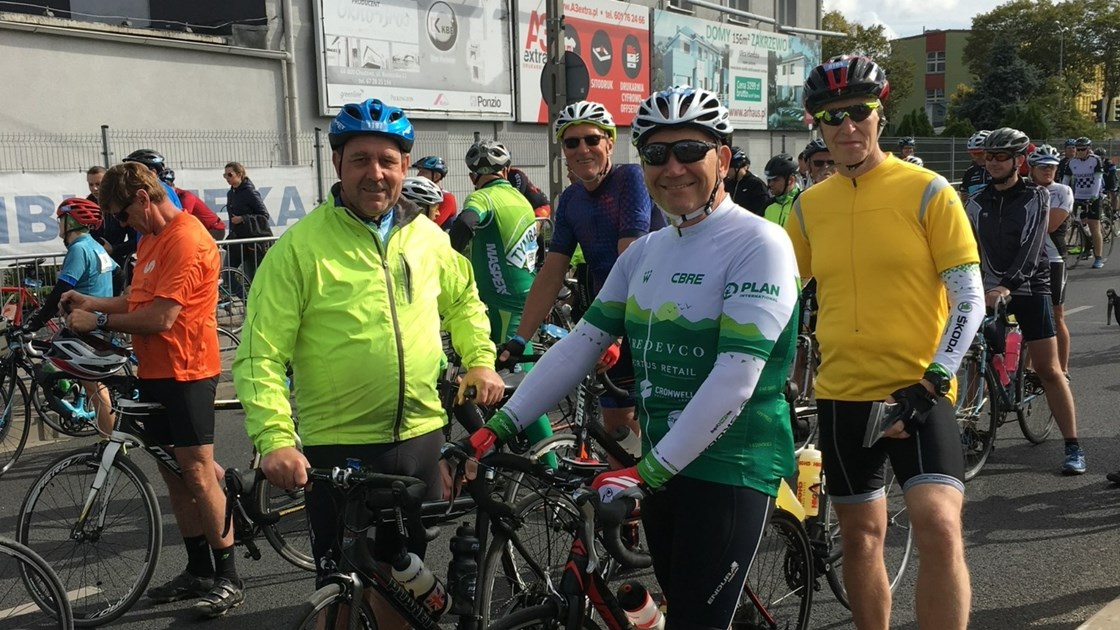
Starting tomorrow, a father with a son with very severe ME rides 450km from Lands End to Bristol.


Charlies ride from Lands End to Bristol for M.E.​


Charles Sleep is raising money for Action for M.E.​
£3,329 raised of £3,500​


Story​

My son Tomos has very severe ME. After years of deterioration he became bedbound in Christmas 2023, and he has been in bed since then. He needs help with all his daily needs. There are thousands of people in the UK suffering from severe ME. Although people can get better, for those with severe ME it is a long and slow road to recovery. These people desperately need effective research and ultimately treatments for ME.

So starting on 21st September myself and my mate Jonathon Steer are cycling 450KM from Lands End to Bristol to raise money for Action for ME, a UK charity who have been instrumental in bringing about important research towards understanding and developing effective treatments for ME. Why are you not cycling from Lands End to John O'Groats I hear you say? I could say because we are old and knackered, but no, all good things come to those who wait! This is the first leg of an epic journey. Our other co-conspirator, Jan Chmiel has unfortunately had a serious parting with his bike at speed, so can't join us for this leg of our journey: get well soon Jan.

Action for ME say "Our mission is improve the lives of all people affected by ME. Better meeting their needs today, while taking action to secure change for tomorrow. We provide practical day to day support, holistic healthcare services as well as fund breakthrough research and campaign for change. Help us work towards a future where everyone with ME receives the understanding, equity and care they deserve"

Funds raised by this appeal go directly to the charity, Action for ME
 

Excellent 240-word letter to what appears to be an UK based online magazine:


Long Covid research needs a more critical eye​

A reader questions whether research into Long Covid treatments is being presented responsibly, warning that weak evidence could raise false hopes or cause harm​
​
Dear Editor​
​
I was disappointed to read “Finding ways to help recovery from long Covid” by Victoria Cairns because it focused mainly on one research paper of dubious quality without considering wider issues.​
​
In discussing the vagus nerve theory and related purported treatments without referring to the many other biological mechanisms implicated in Long Covid or the limitations of research, Cairns risks exposing patients to, at best, misplaced hope and, at worst, harm.​
​


Recent photo at the NHS. Over 6 years into #COVID, and we still have “wash your hands” under “AIRBORNE PRECAUTIONS.”​
​
We are failing hard to communicate one of the most basic lessons of this pandemic: Airborne means spread through the AIR. Clean air is infection control.​
​
​
[Text on poster]:​
AIRBORNE PRECAUTIONS​
STOP​
Please wash your hands before entering the training rooms.​
Thank you.​
​
​


It's clear that the services for people with ME/CFS in York are pretty terrible, with the NICE Guideline seemingly having had little effect. It's hard to understand why the MEA is not doing more to make things better. Instead, it seems to be using scarce donor funds to prop up the rehabilitation industry and clinics.
 

Warnings of “catastrophic” impact on medical researchers as some rates fall below 5 per cent

There was a sharp drop in grants awarded by the Medical Research Council in its last round of applicant-led funding, with success rates in some areas below 5 per cent, analysis by Research Professional News has found.

Researchers have described the numbers at the MRC as “catastrophic” and raised concerns over lasting impacts on the UK’s medical research community.

Earlier this year, RPN revealed that the MRC was expecting to award significantly fewer grantsthan usual through funding calls that closed in September 2025. At the time, the research council had paused its applicant-led opportunities while it overhauled its grant schemes.

Analysis of data published in September 2026 by the MRC confirms that only 26 grants were awarded across the council’s four subject-specific funding boards after the boards met in spring this year. The average number of grants awarded in previous rounds taking place in 2024 and 2025 was 47.
 

MEVW webinar 5: Swansea Bay UHB, 2 Oct 2026​

Discover how NHS Wales supports people with ME/CFS: self-management webinars​

Swansea Bay Health Board’s Adferiad Service will be talking about how their service can support people with ME/CFS to self-manage.

2 October 2026

12:30–13:30

With Swansea Bay’s Golau Adferiad Adult & CYP Service


Register online here​

and the link will be sent to you once registration is complete and again an hour before the event begins. Registration closes 9am Fri 2 Oct.

Eng-MEVW-webinar-Oct-2026-560x700.jpg

This is the 5th in a series of lunchtime webinars shining a light on what support people with ME/CFS can expect from NHS Wales.

Each session features an in‑depth presentation from an NHS service team, followed by a Q&A. You’ll be able to submit questions before, during, and after the session, and the team will answer as many as possible during the hour.
 
Welsh petition, 7615 of 10'000 signatures collected.

Petition​

Closing all but 60 of our GP led community hospital beds in Powys, which has no general hospital or hospice, is not the way to provide care. Rural healthcare needs a radical rethink, not cuts.

I call on the Senedd and the Health Minister to instigate a full inquiry and debate on rural healthcare provision and delivery and to ensure that there is no change in the number of beds, services, or hospitals in Powys before this is undertaken.
We always need to plan for the future in health and social care. Prevention is better than a cure and we all want care closer to home, to live independently in our own homes and to get emergency and general hospital care when we need it.
 

Support for unpaid carers​

Share your experiences for a Parliamentary debate​

Deadline: midday, Wednesday 14 October​


On 15 October, Alison Bennett MP will lead a debate in Parliament on support for unpaid carers.​
To inform the debate, she would like to hear about carers' experiences and insights...​
​
She is particularly interested in hearing from anyone who is an unpaid carer or who knows someone who is.​
During the debate, she may quote your contribution directly.​
​


Last edited:

“Coped, but only just”: what the UK Covid-19 Inquiry’s findings mean for NHS Wales​

Published 08/10/2026 | Reading Time 8 minutes

The UK Covid-19 Inquiry concludes that healthcare systems across the UK “coped, but only just”. Its Module 3 report on the impact of the Covid-19 pandemic on the healthcare systems of the UK finds that longstanding shortages in staff, beds and infrastructure left NHS services with little capacity to absorb the pandemic. The report attributes the continued operation of services largely to the exceptional efforts of healthcare workers, often at significant personal cost. This article examines the report’s main findings, what they mean for Wales and how the Welsh Government has responded.

Professional goodwill is not an emergency plan​

The report opens by concluding that “the UK entered the Covid-19 pandemic ill-prepared and with its healthcare systems in a parlous state, with severe workforce shortages, an ageing hospital estate, low numbers of hospital beds and high bed occupancy rates.” Baroness Hallett, Chair of the Inquiry, describes the NHS as being “on the brink of collapse” and says that it “only coped thanks to the almost superhuman efforts of healthcare workers and all the staff who support them”. The report makes ten recommendations, and its main findings and proposed improvements are summarised below:
 
From Bluesky:


Thanks to Minister Frith for a progress update on the Final Delivery Plan on ME. Good that in collaboration w/ ‘stakeholders’ important documents have been written. But there is far to go before systemic failings across government are addressed. I’m consulting before responding. Initial thoughts…/​
​
1. We need action to translate the availability of these documents into meaningful change.​
​
2. So disappointed at continuing lack of clarity over the exploration of a national specialist service for v severe ME.​
​
3. Hard to see that mere ‘capacity building’ will significantly progress research.​


OCR of 3-page letter:
Dear Tessa,

As you will know, it is now over a year since the publication of the myalgic encephalomyelitis/chronic fatigue syndrome (ME/CFS) final delivery plan.

Therefore, I would like to provide you with an update on some of the work that has taken place since the plan's publication, including successes and some of the challenges we have faced in our implementation to date.

A version of this update will also be shared with key patient groups and clinicians who have been involved in the plan's delivery. I am extremely grateful for the continued support, participation and critical engagement from both members of the APPG and our wider group of valued stakeholders, and look forward to further collaboration as we continue to support people with ME/CFS and their loved ones together.

The plan focuses on three main areas: boosting research, improving attitudes and education, and bettering the lives of people with this debilitating condition.

Research
We have made significant progress on the research actions in the plan, against a backdrop of £8.19 million funding for research into ME/CFS through the National Institute for Health and Care Research (NIHR) and Medical Research Council (MRC) between April 2020 and March 2026.

In September 2025, the Department hosted a roundtable with the research community and people with lived experience, which resulted in a commitment to host a research showcase event to discuss recent evidence, particularly from the DecodeME study.

This showcase event for post- acute infection conditions research, including ME/CFS and long Covid, was hosted on 6 November 2025. The event included speakers from a range of disciplines, including researchers, clinicians, people with lived experience, and ME/CFS charities, and was attended by researchers, government officials, and NIHR and MRC representatives.

Presentations covered patient priorities for future research, immune mechanisms and post-viral conditions, early findings from the DecodeME study, and support available from MRC and NIHR to develop future research proposals. The NIHR and MRC are working together to build research capacity.

The MRC has awarded £845,000 to researchers at the University of Edinburgh towards PRIME, a new partnership award that aims to build infrastructure to enable ME/CFS biomedical research. The NIHR Research Support Service (RSS) is providing support for applications for ME/CFS research funding. The RSS has supported the development of over twenty research applications for funding from NIHR and other research councils since the final delivery plan was published.

This support has included advice on research methodology and how best to engage patients and the public. The RSS, together with the MRC, is planning a national ME/CFS and long Covid research capacity building workshop in late 2026 or early 2027. This will include advice on writing grant applications and building research capacity in this field.

On top of this, the NIHR has funded the £1.4m HERITAGE research project through the NIHR Health and Social Care Delivery Research (HSDR) programme. HERITAGE will examine the overlap between ME/CFS and long Covid to explore the effectiveness of different healthcare models for both conditions. More information on the HERITAGE study can be found here: https://fundingawards.nihr.ac.uk/award/NIHR174857.

The NIHR has also funded two projects to investigate the feasibility of a new clinical trial that tests multiple interventions for the treatment of post-acute infection syndromes, including long Covid and ME/CFS. We have also gone beyond the actions in the Final Delivery Plan, investing £4.75m in SequenceME, which will create the first high-resolution genetic map for ME/CFS.
This builds on the Government's previous support for DecodeME


Attitudes and education
We have made good progress on actions looking to improve attitudes and education towards people with ME/CFS. NHS England has developed a four-module e-learning programme on ME/CFS, three modules of which have universal access, while the fourth is for clinicians and healthcare professionals only. Module 1 is an introduction to ME/CFS, module 2 relates to primary care, and module 3 addresses severe ME/CFS, including very severe.

Module 4 includes more detail on severe and very severe ME/CFS for clinicians only. The modules have, at the last count in June, been accessed by over 650 people from a range of backgrounds, including healthcare professionals, carers, and people with lived experience. We are working with the Royal College of Physicians and the Medical Schools Council to further promote awareness of the programme.

The modules have all received high ratings, with the overall programme having recently been nominated for a Learning Technologies Award, and DHSC and NHS England continue to monitor feedback to ensure that this e-learning continues to be relevant, compliant with National Institute for Health and Care Excellence (NICE) guidance, and detailed. It is thanks to feedback received from stakeholders that we developed a public- facing module on severe ME/CFS, which had previously only been accessible by clinicians.

I trust this provides you with assurances over our ongoing responsiveness to stakeholder feedback, something I am keen to embed in our work moving forward. One aspect of the plan's delivery I am particularly encouraged by is the genuine collaboration and support being provided by patient groups, such as on the development of a Language Matters guide.

This work is being led by Forward ME with support from the Department. This guide is now with NHS England, and we are hopeful that it will be published in due course. I am grateful for the time, effort and insights provided by our stakeholders, which will be essential if we are to meaningfully shift the dial on attitudes towards people with ME/CFS. We have additionally been working towards an awareness initiative, which is intended to improve awareness among relevant sectors about ME/CFS as a condition, common symptoms, and how to engage with people with this condition.

This will complement the Language Matters guide, and officials are exploring how to develop a meaningful and impactful initiative. Finally, the British Psychological Society (BPS) has concluded recruitment for volunteers to help develop good practice guidelines. There are 15 BPS members supporting the development of the guidelines, alongside two experts from ME/CFS charities, representing a range of specialisms.

A survey of people with ME/CFS, receiving over 800 responses, has now closed and results are being analysed. It is hoped that the survey results will highlight the multiple ways psychologists can support people with ME/CFS, including building trust, supporting adaptations to care, and helping process trauma.

Two focus group sessions have also been undertaken. Drafting of the guidelines is now underway, and genuine co-production has remained a key priority.

Living with ME/CFS
Another example of the collaboration which is coming to define the plan's implementation is on the development of a template service specification.

The Department, working closely with experts from NHS England, has developed a template service specification for mild, moderate and severe ME/CFS. We have engaged extensively with the representatives from ME/CFS organisations, clinicians, and people with lived experience to ensure that this work will meet the needs of the community. The development of this template has also included engaging with specialists on children and young people's health, to help shape the direction of travel for pathways through the healthcare system.

The template is intended to further support healthcare commissioners and providers to understand the needs of people with ME/CFS, and how to commission appropriate, NICE- aligned services. Following consultation with the services sub-group, the scope of the template was expanded from only mild and moderate ME/CFS to also include severe ME/CFS, again demonstrating our commitment to listen and act as we progress the actions in the plan.

Once completed, the template will be disseminated to integrated care boards. One area of work where there remains significant interest is the delivery plan's action to explore whether a specialised service for very severe ME/CFS should be commissioned. Any recommendation to Ministers will need to be informed by appropriate clinical, commissioning and operational advice, and by the future arrangements for commissioning following NHS England transformation.

Ultimately, the decision to commission a specialised service rests with the Secretary of State for Health and Social Care and the question of whether a specialised service should be prescribed for very severe ME/CFS remains under active consideration. We are keen to work collaboratively with patient groups and utilise their insight and expertise. Should there be opportunities for patient groups to support in either evidence-gathering or service design, we will communicate this directly with the ME/CFS Stakeholder Engagement Group.

I would once again like to express my sincere thanks to all those who have supported the final delivery plan, whether this is through directly working with the Department or through the opportunities for challenge and conversation afforded to us across both Houses.


Yours sincerely,

james

JAMES FRITH MP

PARLIAMENTARY UNDER-SECRETARY OF STATE

FOR HEALTH INNOVATION
 
I'm not sure these people understand that it doesn't matter what they do if it makes no difference. Everything they do makes no difference, and therefore does not matter. They can point at their own asses for eternity as evidence that things are happening, it's completely ineffectual garbage that makes zero positive difference.

But of course that's the point. They don't want to do anything, so they don't, and no one can make them. Boo these people, they suck at their job.
 
Back
Top Bottom