The genetic architecture of fibromyalgia across 2.5 million individuals, 2026, Kerrebijn et al

Applying the human brain atlas analysis by Duncan et al. 2025 to this fibromyalgia GWAS I got the following results:

1785266261064.webp
I expected similar results to ME/CFS because several genes (RABGAP1L, HTT, DCC, OLFM4) come up in both GWAS, but the pattern in this cell type is quite different. Instead of Medium spiny neurons, CGE interneurons and Midbrain-derived inhibitory neurons are the top hits.

Details
Hope somebody can double-check because it's possible I made a mistake.

I've used the European-only meta-analysis as that is easier to match to a reference LD panel (the authors also used the European only data for their cell and tissue enrichment analysis). I've downloaded it from the GWAS Catalog (GCST90838603) here: https://www.ebi.ac.uk/gwas/studies/GCST90838603

It's in GRCh38 format so I tried to lift it over using rtracklayer in R with had a match rate of 99.4%. First tried using rsID and dbSNP155 but that resulted in only 77% matches (but broadly similar results). I've used the n_eff they provide, otherwise the analysis pipeline is the same as before in the Duncan et al. 2025 paper with a MAGMA window of 35,10.
 
Is there btw a list of RS and risk alleles for ME/CFS as
Now published:

The genetic architecture of fibromyalgia across 2.5 million individuals

Kerrebijn, Isabel; Bjornsdottir, Gyda; Arbabi, Keon; Urpa, Lea; Haapaniemi, Hele; Thorleifsson, Gudmar; Stefansdottir, Lilja; Frangakis, Stephan; Valliere, Jesse; Kunorozva, Lovemore; Abner, Erik; Ji, Caleb; Kangur, Markus; Aagaard, Bitten; Bliddal, Henning; Brunak, Søren; Bruun, Mie T.; Didriksen, Maria; Erikstrup, Christian; Finer, Sarah; Geirsson, Arni J.; Gudbjartsson, Daniel F.; Hansen, Thomas F.; van Heel, David; Jonsdottir, Ingileif; Knight, Stacey; Knowlton, Kirk U.; Mikkelsen, Christina; Nadauld, Lincoln D.; Olafsdottir, Thorunn A.; Ostrowski, Sisse R.; Pedersen, Ole B. V.; Saevarsdottir, Saedis; Skuladottir, Astros T.; Sørensen, Erik; Stefansson, Hreinn; Sulem, Patrick; Sveinsson, Olafur A.; Thorlacius, Gudny E.; Thorsteinsdottir, Unnur; Ullum, Henrik; Vikingsson, Arnor; Werge, Thomas M.; Williams, Frances M. K.; van Heel, David; Saxena, Richa; Stefansson, Kari; Brummett, Chad M.; Glintborg, Bente; Clauw, Daniel J.; Thorgeirsson, Thorgeir E.; Williams, Frances M. K.; Sinnott-Armstrong, Nasa; Ollila, Hanna M.; Wainberg, Michael

Abstract
Fibromyalgia is a common and debilitating chronic pain syndrome of poorly understood etiology. Here we conduct a multi-ancestry genome-wide association study meta-analysis across 2,563,755 individuals (54,629 cases and 2,509,126 controls) from 11 cohorts, identifying 26 risk loci for fibromyalgia.

The strongest association was with a coding variant in HTT , the causal gene for Huntington’s disease. Gene prioritization implicated the HTT regulator GPR52 , as well as diverse genes with neural roles, including DCC , DRD2 / NCAM1 , MDGA2 and CELF4 . Fibromyalgia heritability was exclusively enriched within brain tissues and neural cell types.

Fibromyalgia showed strong, positive genetic correlation with a wide range of chronic pain, psychiatric and somatic disorders, including genetic correlations above 0.7 with low back pain, post-traumatic stress disorder and irritable bowel syndrome. Despite large sex differences in fibromyalgia prevalence, the genetic architecture of fibromyalgia was nearly identical between males and females.

This study provides robust genetic evidence defining fibromyalgia as a central nervous system disorder, thereby establishing a biological framework for its complex pathophysiology and extensive clinical comorbidities.

Web | DOI | PDF | Nature Medicine | Open Access
Is there a similar list of rs and risk alleles in a neat form for CFS/ME?
 
Another press release:


NEWS RELEASE 28-JUL-2026

Largest-ever genetic study of fibromyalgia points to a neurological origin of the disorder and opens the door to new treatments​

Peer-Reviewed Publication
LUNENFELD-TANENBAUM RESEARCH INSTITUTE


FacebookXLinkedInWeChatBlueskyMessageWhatsAppEmail

Image of Dr. Michael Wainberg and PhD candidate, Isabel Kerrebijn.
IMAGE:

DR. MICHAEL WAINBERG AND PHD CANDIDATE, ISABEL KERREBIJN, SPEARHEADED THE INTERNATIONAL STUDY REVEALING GENETIC DETERMINANTS OF FIBROMYALGIA.


view more


CREDIT: SINAI HEALTH

In a landmark study published in Nature Medicine, an international team of researchers has identified new genetic risk factors associated with fibromyalgia syndrome. The syndrome is characterized by widespread pain and tenderness, fatigue, and problems with sleep, memory and mood. Despite affecting about two per cent of the global population, its existence has been debated, largely because its biological causes have remained unclear. The results of this study are an important step towards resolving that uncertainty.

The team analyzed genetic data from more than 2.5 million adults, of which 55 thousand were fibromyalgia patients. They identified DNA sequence variants in 26 regions of the genome that affect the risk of developing fibromyalgia. Many of the genes implicated in these regions are involved in brain and nerve function.

The results provide the strongest evidence yet that fibromyalgia is primarily a nervous system disorder rather than an autoimmune disease, as has long been debated.

“This work changes how we think about fibromyalgia at a fundamental level,” said Dr. Michael Wainberg, an investigator at the Lunenfeld-Tanenbaum Research Institute, part of Sinai Health, and the University of Toronto and co-senior author on the paper. “For decades, patients have been dismissed or told their pain is simply psychological. Our findings confirm the condition has a clear biological basis.”

Bringing together data from 11 health research studies from the US, UK, Finland, Estonia, Denmark, and Iceland and 53 researchers across 7 countries, the study was jointly led by Dr. Wainberg, Dr. Nasa Sinnott-Armstrong at Fred Hutch Cancer Center and University of Washington in Seattle, and Dr. Hanna Ollila at the University of Helsinki in Finland and Massachusetts General Hospital in Boston.

A surprising link to Huntington’s disease​

Of the 26 genetic variants identified, the one most strongly linked to fibromyalgia risk was within the gene HTT. Other mutations in this gene cause Huntington’s disease, a severe, progressive and fatal neurodegenerative disorder. Another variant pointed to a receptor called GPR52 that regulates HTT levels. This receptor is already being investigated as a possible drug target in Huntington’s disease.

By integrating their findings with a massive dataset of 20 million cells from various tissues, the researchers found further evidence for a neurological origin of fibromyalgia. Genes near fibromyalgia genetic risk factors were more active in nervous system cells than in other types of cells, which sets fibromyalgia apart from classical autoimmune conditions.

The study also revealed substantial genetic overlap between fibromyalgia and a range of other conditions, including low back pain, irritable bowel syndrome, and post-traumatic stress disorder. The researchers think that shared biological mechanisms within the nervous system may make people susceptible to several of these conditions, explaining why they often appear together. “We know that chronic pain syndromes cluster together in individuals and families and are genetically similar,” said Dr. Frances Williams, a rheumatologist at TwinsUK, King’s College London and co-author on the study. “Targeting the shared mechanisms underlying them could potentially benefit a whole cluster of disorders.”

Even so, the study found that genetics is not the main determinant of whether someone develops fibromyalgia. The authors suspect that even people carrying many fibromyalgia genetic variants likely require another risk factor, such as a painful arthritic condition, to trigger fibromyalgia syndrome. “Understanding how genes, environmental exposures, and life events jointly contribute to risk of fibromyalgia syndrome is critical,” said Dr. Sinnott-Armstrong. “Further research into triggers of fibromyalgia and corresponding changes to neural tissues will help understand what drives fibromyalgia and how to treat it.”

Despite fibromyalgia being diagnosed roughly three times more often in women than in men, the researchers did not find any genetic differences in risk between the sexes. This suggests that the higher prevalence in women could be driven by non-genetic factors, such as hormonal or environmental, or differences in pain sensitivity and diagnostic patterns.

The findings do not mean that fibromyalgia can now be diagnosed with a genetic test, nor do they immediately lead to a new treatment. However, they provide important new starting points for understanding the biology of fibromyalgia that will help guide future research into better diagnosis and treatment.

The study’s researchers have founded the Chronic Pain Genomics Consortium (https://paingenomics.org) to investigate other chronic pain syndromes, starting with pelvic pain. The consortium sees fibromyalgia as only the beginning of a broader exploration of the landscape of chronic pain conditions.

About Sinai Health
Sinai Health is a leading academic health sciences centre dedicated to discovering and delivering life-changing care. By integrating compassionate clinical care, world-class research and education, Sinai Health improves health for people in hospital, community and home. Its research engine, the Lunenfeld-Tanenbaum Research Institute, ranks among the world’s leading biomedical research institutes, advancing discoveries that shape the future of human health. With internationally recognized strengths in rehabilitation and complex continuing care, surgery and oncology, urgent and critical care, and women’s and infants’ health, Sinai Health advances new treatments and models of care that improve outcomes across the health system. Sinai Health is fully affiliated with the University of Toronto. sinaihealth.ca

Media Contact:
Jayda Ayriss
jayriss@lunenfeld.ca

Fred Hutchinson Cancer Center
Fred Hutch Cancer Center unites individualized care and advanced research to provide the latest cancer treatment options while accelerating discoveries that prevent, treat and cure cancer and infectious diseases worldwide.
Based in Seattle, Fred Hutch is an independent, nonprofit organization and the only National Cancer Institute-designated cancer center in Washington. We have earned a global reputation for our track record of discoveries in cancer, infectious disease and basic research, including important advances in bone marrow transplantation, immunotherapy, HIV/AIDS prevention and COVID-19 vaccines. Fred Hutch operates eight clinical care sites that provide medical oncology, infusion, radiation, proton therapy and related services. Fred Hutch also serves as UW Medicine’s cancer program.

Media Contact:
Kat Wynn
kwynn@fredhutch.org

Institute for Molecular Medicine Finland (FIMM)
FIMM is an international research institute at the Helsinki Institute of Life Science (HiLIFE), University of Helsinki. FIMM advances precision health through groundbreaking research in human genomics, disease mechanisms, and data-driven medicine, with the goal of predicting, preventing, and treating disease more effectively. By combining unique Finnish population scale genomic and health data resources, cutting-edge technologies, and multidisciplinary expertise spanning biosciences, medicine, and data sciences, FIMM translates scientific discoveries into clinical practice and novel therapies that improve individual health outcomes. As a member of the Nordic EMBL Partnership for Molecular Medicine and the EU-LIFE alliance, FIMM is part of a leading European life science research community.

JOURNAL​

Nature Medicine

DOI​

10.1038/s41591-026-04492-6

METHOD OF RESEARCH​

Data/statistical analysis

SUBJECT OF RESEARCH​

People

ARTICLE TITLE​

The genetic architecture of fibromyalgia across 2.5 million individuals

ARTICLE PUBLICATION DATE​

28-Jul-2026
 
Fibromyalgia seems like a rather less well-defined syndrome and I worry about misdiagnosis. It really seems to capture anyone with unexplained chronic (widespread) pain, and the crossover with anxiety and depression is perhaps more pronounced. There used to be a focus on tenderness and fascia too, but that seems to have disappeared.
What exact difference does it make? Should it be more or less fascinating that even if something is defined less stringently, both in recruitment and criteria, you still get a genetic signal? It has been roughly argued that DecodeME gives added justification to ME/CFS as concept because a unique genetic signal has been found, can the same not be more or less said here? Based on what data and analysis would one deduce that the results here are more likely to be an artefact of multiple other conditions or multiple conditions than for DecodeME?

(Note: I think such cohorts will probably pick up many different reasons why people might be suffering from pain but what conclusions can one make based on the anaylsis, especially in comparison to ME/CFS and DecodeME?)
 
Should it be more or less fascinating that even if something is defined less stringently, both in recruitment and criteria, you still get a genetic signal?

I think the worry is that cohort selection is more open to confounding factors relating to diagnostic ascertainment. The initial Biobank based ME/CFS GWAS analysis and proteomics showed some signs that was a problem although perhaps not as big as might have been feared.
 
Perhaps others can double-check but I calculated the genetic correlation with DecodeME and the European-only GWAS of fibromyalgia from this study using LDSC and I got a value of rg = 0.757. That's quite high and similar to the rg = 0.751 between DecodeME and self-reported irritable bowel syndrome in the UK Biobank.

So that confirms share features in the pathology of these conditions. I think it also confirms that the DecodeME results aren't due to some selection bias and reflect for example geographic or social differences. The fibromyalgia and IBS cases were selected very differently so selection bias wouldn't explain the high correlation.

EDIT: there are also a couple of education and intelligene related items in the UK biobank data, and they all showed much lower correlations with DecodeME.
1786478556663.webp
 
Last edited:
Perhaps others can double-check but I calculated the genetic correlation with DecodeME and the European-only GWAS of fibromyalgia from this study using LDSC and I got a value of rg = 0.757. That's quite high and similar to the rg = 0.751 between DecodeME and self-reported irritable bowel syndrome in the UK Biobank.
Reported IBS and fibromyalgia as comorbidity in this DecodeME paper:
irritable bowel syndrome (IBS; 41.3%;n=7,052), [...] fibromyalgia (29.5%;n=5,043)
So that confirms share[d] features in the pathology of these conditions.
Is it really any stronger evidence than just the high co-occurrence of these diagnoses? I would expect a significant correlation based on the 30% overlap in diagnosis, independent of any deeper shared biology.
How much different would the correlation be if ME/CFS-patients with those comorbidities were excluded from the comparison? (Mostly a rhetorical question without access to the full data).
 
Another press release:


NEWS RELEASE 28-JUL-2026

Largest-ever genetic study of fibromyalgia points to a neurological origin of the disorder and opens the door to new treatments​

Peer-Reviewed Publication
LUNENFELD-TANENBAUM RESEARCH INSTITUTE


FacebookXLinkedInWeChatBlueskyMessageWhatsAppEmail

Image of Dr. Michael Wainberg and PhD candidate, Isabel Kerrebijn.
IMAGE:

DR. MICHAEL WAINBERG AND PHD CANDIDATE, ISABEL KERREBIJN, SPEARHEADED THE INTERNATIONAL STUDY REVEALING GENETIC DETERMINANTS OF FIBROMYALGIA.


view more


CREDIT: SINAI HEALTH

In a landmark study published in Nature Medicine, an international team of researchers has identified new genetic risk factors associated with fibromyalgia syndrome. The syndrome is characterized by widespread pain and tenderness, fatigue, and problems with sleep, memory and mood. Despite affecting about two per cent of the global population, its existence has been debated, largely because its biological causes have remained unclear. The results of this study are an important step towards resolving that uncertainty.

The team analyzed genetic data from more than 2.5 million adults, of which 55 thousand were fibromyalgia patients. They identified DNA sequence variants in 26 regions of the genome that affect the risk of developing fibromyalgia. Many of the genes implicated in these regions are involved in brain and nerve function.

The results provide the strongest evidence yet that fibromyalgia is primarily a nervous system disorder rather than an autoimmune disease, as has long been debated.

“This work changes how we think about fibromyalgia at a fundamental level,” said Dr. Michael Wainberg, an investigator at the Lunenfeld-Tanenbaum Research Institute, part of Sinai Health, and the University of Toronto and co-senior author on the paper. “For decades, patients have been dismissed or told their pain is simply psychological. Our findings confirm the condition has a clear biological basis.”

Bringing together data from 11 health research studies from the US, UK, Finland, Estonia, Denmark, and Iceland and 53 researchers across 7 countries, the study was jointly led by Dr. Wainberg, Dr. Nasa Sinnott-Armstrong at Fred Hutch Cancer Center and University of Washington in Seattle, and Dr. Hanna Ollila at the University of Helsinki in Finland and Massachusetts General Hospital in Boston.

A surprising link to Huntington’s disease​

Of the 26 genetic variants identified, the one most strongly linked to fibromyalgia risk was within the gene HTT. Other mutations in this gene cause Huntington’s disease, a severe, progressive and fatal neurodegenerative disorder. Another variant pointed to a receptor called GPR52 that regulates HTT levels. This receptor is already being investigated as a possible drug target in Huntington’s disease.

By integrating their findings with a massive dataset of 20 million cells from various tissues, the researchers found further evidence for a neurological origin of fibromyalgia. Genes near fibromyalgia genetic risk factors were more active in nervous system cells than in other types of cells, which sets fibromyalgia apart from classical autoimmune conditions.

The study also revealed substantial genetic overlap between fibromyalgia and a range of other conditions, including low back pain, irritable bowel syndrome, and post-traumatic stress disorder. The researchers think that shared biological mechanisms within the nervous system may make people susceptible to several of these conditions, explaining why they often appear together. “We know that chronic pain syndromes cluster together in individuals and families and are genetically similar,” said Dr. Frances Williams, a rheumatologist at TwinsUK, King’s College London and co-author on the study. “Targeting the shared mechanisms underlying them could potentially benefit a whole cluster of disorders.”

Even so, the study found that genetics is not the main determinant of whether someone develops fibromyalgia. The authors suspect that even people carrying many fibromyalgia genetic variants likely require another risk factor, such as a painful arthritic condition, to trigger fibromyalgia syndrome. “Understanding how genes, environmental exposures, and life events jointly contribute to risk of fibromyalgia syndrome is critical,” said Dr. Sinnott-Armstrong. “Further research into triggers of fibromyalgia and corresponding changes to neural tissues will help understand what drives fibromyalgia and how to treat it.”

Despite fibromyalgia being diagnosed roughly three times more often in women than in men, the researchers did not find any genetic differences in risk between the sexes. This suggests that the higher prevalence in women could be driven by non-genetic factors, such as hormonal or environmental, or differences in pain sensitivity and diagnostic patterns.

The findings do not mean that fibromyalgia can now be diagnosed with a genetic test, nor do they immediately lead to a new treatment. However, they provide important new starting points for understanding the biology of fibromyalgia that will help guide future research into better diagnosis and treatment.

The study’s researchers have founded the Chronic Pain Genomics Consortium (https://paingenomics.org) to investigate other chronic pain syndromes, starting with pelvic pain. The consortium sees fibromyalgia as only the beginning of a broader exploration of the landscape of chronic pain conditions.

About Sinai Health
Sinai Health is a leading academic health sciences centre dedicated to discovering and delivering life-changing care. By integrating compassionate clinical care, world-class research and education, Sinai Health improves health for people in hospital, community and home. Its research engine, the Lunenfeld-Tanenbaum Research Institute, ranks among the world’s leading biomedical research institutes, advancing discoveries that shape the future of human health. With internationally recognized strengths in rehabilitation and complex continuing care, surgery and oncology, urgent and critical care, and women’s and infants’ health, Sinai Health advances new treatments and models of care that improve outcomes across the health system. Sinai Health is fully affiliated with the University of Toronto. sinaihealth.ca

Media Contact:
Jayda Ayriss
jayriss@lunenfeld.ca

Fred Hutchinson Cancer Center
Fred Hutch Cancer Center unites individualized care and advanced research to provide the latest cancer treatment options while accelerating discoveries that prevent, treat and cure cancer and infectious diseases worldwide.
Based in Seattle, Fred Hutch is an independent, nonprofit organization and the only National Cancer Institute-designated cancer center in Washington. We have earned a global reputation for our track record of discoveries in cancer, infectious disease and basic research, including important advances in bone marrow transplantation, immunotherapy, HIV/AIDS prevention and COVID-19 vaccines. Fred Hutch operates eight clinical care sites that provide medical oncology, infusion, radiation, proton therapy and related services. Fred Hutch also serves as UW Medicine’s cancer program.

Media Contact:
Kat Wynn
kwynn@fredhutch.org

Institute for Molecular Medicine Finland (FIMM)
FIMM is an international research institute at the Helsinki Institute of Life Science (HiLIFE), University of Helsinki. FIMM advances precision health through groundbreaking research in human genomics, disease mechanisms, and data-driven medicine, with the goal of predicting, preventing, and treating disease more effectively. By combining unique Finnish population scale genomic and health data resources, cutting-edge technologies, and multidisciplinary expertise spanning biosciences, medicine, and data sciences, FIMM translates scientific discoveries into clinical practice and novel therapies that improve individual health outcomes. As a member of the Nordic EMBL Partnership for Molecular Medicine and the EU-LIFE alliance, FIMM is part of a leading European life science research community.

JOURNAL​

Nature Medicine

DOI​

10.1038/s41591-026-04492-6

METHOD OF RESEARCH​

Data/statistical analysis

SUBJECT OF RESEARCH​

People

ARTICLE TITLE​

The genetic architecture of fibromyalgia across 2.5 million individuals

ARTICLE PUBLICATION DATE​

28-Jul-2026
I would like to know how this would integrate with the findings of five types of FM reviewed by Cort Johnson and , given the proposed likelihood of another condition being involved whether that condition is frequently immunological and subtle (e.g. post sarcoidosis).. Also interesting questions as to overlap with JEdwards proposed CFS/ME mechanisms and how much FM is really SFN. Determining the latter matter might well remove some FMers "with another condition" from FM, but if that condition is SFN, then the question arises s to whence the SFN, which might require the doctors to revisit an original diagnosis and try to set that condition right, though it may be easier to give an FM diagnosis...........That said the FM diagnosis might be helpful if some help can be given.
 
How much different would the correlation be if ME/CFS-patients with those comorbidities were excluded from the comparison? (Mostly a rhetorical question without access to the full data).
The DecodeME team could test this, would be an analysis worth doing. I'm not an expert but think an rg of 0.75 is quite big and probably not fully explained by the 30% of ME/CFS cases that also had fibromyalgia.
 
Perhaps others can double-check but I calculated the genetic correlation with DecodeME and the European-only GWAS of fibromyalgia from this study using LDSC and I got a value of rg = 0.757. That's quite high and similar to the rg = 0.751 between DecodeME and self-reported irritable bowel syndrome in the UK Biobank.

So that confirms share features in the pathology of these conditions.
The DecodeME team could test this, would be an analysis worth doing. I'm not an expert but think an rg of 0.75 is quite big and probably not fully explained by the 30% of ME/CFS cases that also had fibromyalgia.
Very interesting @ME/CFS Science Blog.

For what it's worth, I saw a rheumatologist the other day, who saw fibromyalgia, migraine, IBS and "chronic fatigue" as all being central sensitisation and thus often appearing together. The way he described central sensitisation was akin to what we talk about here - neural signalling gone awry.

Any chance you can check migraine?
 
Any chance you can check migraine?
This was available from BigaGWAS, a big database of traits that automatically checks correlations with lots of traits from UK biobank and other sources.
1786563399314.webp

I also checked the latest migraine GWAS, which I think is Hautakangas et al. 2022. The 23andMe data isn't available, but those from the UK Biobank, european-ancestry are available (https://www.ebi.ac.uk/gwas/studies/GCST90671940). I got an rg of 0.224 with DecodeME.

There's a bit of a problem with these analyses, though, in that the controls overlap (both from the UK Biobank).
 
Is it really any stronger evidence than just the high co-occurrence of these diagnoses? I would expect a significant correlation based on the 30% overlap in diagnosis, independent of any deeper shared biology.
I have no intuition about these numbers, so this is just a passing thought, but maybe the high genetic correlation is more interesting viewed in terms of IBS? That is, a much smaller fraction of people with IBS have full blown ME/CFS, so maybe it's interesting that the IBS genes still seem pretty related to ME/CFS?

(From what I'm reading rg is symmetric in terms of both traits.)
 
Perhaps others can double-check but I calculated the genetic correlation with DecodeME and the European-only GWAS of fibromyalgia from this study using LDSC and I got a value of rg = 0.757

To double check, I added fibromyalgia to my genetic correlation study here. I got rg=0.773 between DecodeME and fibromyalgia, which seems close enough to be explained by small preprocessing differences.
 
I did an attempt at doing a colocalization analysis between this fibromyalgia GWAS and DecodeME.

Took significant hits from both GWAS and then checked if the other had a similar signal. This is done using the coloc package in R which assumes only 1 causal SNP. The downside is that this often won't be the case, but the upside is that we don't need to use LD panels to account for the correlation among SNPs.

Here are the main results.

H0 means no signal in either
H1 means signal in DME but no fibro
H2 means signal in fibro but not DME
H3 means a signal in both but not the same
H4 means a signal in both and the same

chromposnsnpsPP.H0PP.H1PP.H2PP.H3PP.H4
4322868330196.20E-113.51E-100.001012530.004734910.99425256
1010291334022291.58E-063.27E-050.007372870.151718580.84087424
117384615218061.48E-060.001160934.46E-040.34976350.64862762
175218300624847.24E-050.411774771.01E-050.056791330.53135141
204891438729608.14E-070.605828261.36E-070.10075990.29341089
42540721630770.018922060.001435440.727216370.054969620.1974565
185320904834963.01E-061.60E-040.015062450.80112390.18365047
135334179825429.89E-063.47E-040.024185810.848821110.12663608
176799828427448.31E-048.12E-050.802035070.078275490.1187772
413998200125215.49E-061.31E-060.737109860.176056130.0868272
72386582532620.013086020.001511210.848515060.097949820.03893789
146907736528163.83E-043.19E-050.908076890.075732790.01577561
214350025622610.027655090.003054770.86145190.095142790.01269544
69798442620060.003067220.761600528.99E-040.223173670.01125975
182353509620465.31E-044.98E-050.90600030.084912460.00850667
35017980113323.15E-059.60E-060.760397660.231980490.00758076
116282345722450.001046479.85E-050.906099180.085270540.00748533
155486672436520.002128420.925764611.49E-040.064964160.00699344
144679233026486.34E-045.93E-050.907439730.08490050.00696654
23169760326276.92E-044.72E-050.929164360.063305850.00679046
62623917626835.83E-040.941249033.24E-050.052402540.00573335

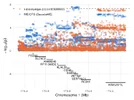
The most interesting result is that the fibro signal around the HTT gene, colocalizes with DecodeME's signal there that just didn't reach statistical significance. The plot looks like this.
1788464236884-webp.34091


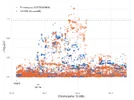
The other high H4 signal was found above CNNM2 although there are lots of genes in this region.
1788464354016.webp

Then there's the DecodeME hit above DARS2, which is also close to RABGAP1L. There was some ambiguity here whether the pattern is the same in both GWAS or not. To me it looks like there could be multiple signals, some agreeing while others don't.

1788464411596.webp

I therefore tried another approach by first fine-mapping the signals using SUSIE and then using coloc to see if the suspected causal SNPs match. This allows for multiple causal SNPs and thus multiple signals but the difficulty is that you need to LD panel to estimate which SNPs are causal. Using the 1000 genomes European LD panel, I found strong agreement with H4 near 100% while using the UK biobank LD panel found strong disagreement with H3 near 100%. The analysis is quite complex and I could have made mistakes, so let's just say I didn't manage to get a clear result here.

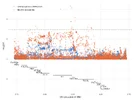
A bit of a surprise is that the signal above DCC didn't colocalize with a H3 near 80%. I tried the more complex analyses with LD panels but here it failed to find a credible set for DecodeME, so this analysis didn't really help. There is always some mismatch between the external LD panels used and the actual data which might explain why it could identify the causal SNPs for DecodeME here.

1788465160311.webp

Then the last region I looked at is above OLFM4 which has a H3 near 85%. Visually, the DecodeME signal looks to be a bit more to the left, closer to PCDH8. Using the LD panels I got conflicting results again (strongly pointing to H4 with the UK biobank panel, and strongly pointing to H3 with the 1000 Genomes LD).


1788464913642.webp

The results for H0, H1, and H2 may simply reflect a lack of power in one of the GWAS so wouldn't put too much weight on them. For the analyses above I think, it's possible that LD mismatch might have prevented the analyses from showing that these are similar signals. It seems like quite a coincidence that fibro and ME/CFS show these hits at almost the same places. So my guess is that many will be the same signal, even if coloc analysis isn't able to demonstrate this.
 

Attachments

  • 1788464236884.webp
    1788464236884.webp
    111.9 KB · Views: 80
Back
Top Bottom