Genetics: Chromosome 17 CA10

For me, the touch hypersensitivity (allodynia) plays a dance with myofacial pain and is greatly increased by over exertion and then it is definitely extremely painful to the extent it is torturous and follows the PEM pattern.

I have always been struck when reading people's descriptions on this forum at the diverse hypersensitivities that are expressed by members.
 
I previously did that colocalization testing using the tool on Open GWAS, and it showed that the ME/CFS CA10 locus colocalizes with a few methQTLs (variants which cause differential methylation at a particular place on the genome):
TraitData typeGeneTissueCis/TransP-value
ME/CFS2.11e-9
CA10 Whole blood cg04881814 methQTLMethylationCA10Whole bloodcis0.00e+0
CA10 Whole blood cg07398767 methQTLMethylationCA10Whole bloodcis4.19e-14
CA10 Whole blood cg08605326 methQTLMethylationCA10Whole bloodcis4.10e-19
CA10 Whole blood cg20552747 methQTLMethylationCA10Whole bloodcis1.87e-15

I think the methQTL data is from the GoDMC project. I searched for the lead ME/CFS CA10 SNP on there, and it showed that it is associated with three of the four methylation sites above: https://mqtldb.godmc.org.uk/search?query=rs34626694

Here's the data from that search:
rsida1a2namecpgbeta_a1sesamplesizepvalcistransclumpedhetisqdirection
rs34626694TCchr17:50260366:SNPcg04881814-0.29668060.0089328272227.10E-2421090.5------+----+------------?--------++-
rs34626694TCchr17:50260366:SNPcg086053260.07158970.0092083268787.58E-151030.7++++++-++++++++++++++?+-?-+++++-++++
rs34626694TCchr17:50260366:SNPcg073987670.04967530.0091582272225.82E-081015.2-+++-+++-++++-++--++++++?--+++++++--

So the first of these, cg04881814, is extremely significant compared to the others, with p=7.1e-242. The beta is negative for the T allele (the ME/CFS risk allele). The direction column shows the direction of methylation for each of the cohorts that were tested in this database, and it shows negative for almost all of them. I think this means there is a strong association between the T allele and demethylation at this site.

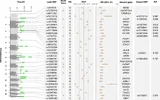
Here is that methylation site, cg04881814, on UCSC Genome Browser. It's the one furthest to the right, and it overlaps the enhancer EH38E3231215 near the start of CA10.

1778810128991.png

The genome browser links to this website for that enhancer: https://screen.wenglab.org/GRCh38/ccre/EH38E3231215

I don't know what else to do with this information, or how to interpret what's on that enhancer page.
 
The screening questionnaire asked

"In the last 6 months, have you been over-sensitive or intolerant to any of the following things often, repeatedly, or constantly? Please mark any that apply. If none apply, leave all the boxes blank.
Alcohol
Chemicals
Food
Light
Medicine
Noise
Smells
Touch
Other things"

and the secondary questionnaire, which only a sub-set of participants completed, asked if "Sensitivities/intolerances" would "get worse or develop" when experiencing PEM.
Also to add that both questionnaires asked about pain in a number of ways.
 
I miss there heat intolerance, or was it in the cathegory "other things"?
Heat and/or cold intolerance could be indicated under the broad 'other things'. The screening questionnaire also had a question that, in part, asked

In the last 6 months, have you had any of the symptoms below often, repeatedly, or constantly? Please mark any that apply. If none apply, leave all the boxes blank.

Finding it hard to cope with being in very hot or cold places
 
It seems that we may have missed a trick by ignoring the buspirone challenge test (there is an old thread on it) which might provide further evidence for disturbance of sensory pathways impacting on hypothalamus.
Thread here:
 
I previously did that colocalization testing using the tool on Open GWAS, and it showed that the ME/CFS CA10 locus colocalizes with a few methQTLs (variants which cause differential methylation at a particular place on the genome):


I think the methQTL data is from the GoDMC project. I searched for the lead ME/CFS CA10 SNP on there, and it showed that it is associated with three of the four methylation sites above: https://mqtldb.godmc.org.uk/search?query=rs34626694

Here's the data from that search:


So the first of these, cg04881814, is extremely significant compared to the others, with p=7.1e-242. The beta is negative for the T allele (the ME/CFS risk allele). The direction column shows the direction of methylation for each of the cohorts that were tested in this database, and it shows negative for almost all of them. I think this means there is a strong association between the T allele and demethylation at this site.

Here is that methylation site, cg04881814, on UCSC Genome Browser. It's the one furthest to the right, and it overlaps the enhancer EH38E3231215 near the start of CA10.

View attachment 32335

The genome browser links to this website for that enhancer: https://screen.wenglab.org/GRCh38/ccre/EH38E3231215

I don't know what else to do with this information, or how to interpret what's on that enhancer page.
Nice work again!!!
 
It’s all been happen hasn’t it! And welcome to the forum @James Cox great to have you here! I think we’re all looking forward to seeing what any research you’re involved in shows up.

The only tissue expression stuff I’ve looked at so far has been very broad using GTEx data and looking at patterns of differential expression or co-expression in the PrecisionLife and DecodeMe gene sets.

So for CA10 I guess that would mean the two sub-clusters (along with SHISA6 UNC13C CACNA1E LRRC7) from the DecodeME gene set

IMG_4147.jpeg

Cluster 1 (CA10 with SHISA6 UNC13C CACNA1E)
Brain - Cerebellar Hemisphere
Brain - Cerebellum

Cluster 2: (CA10 with UNC13C CACNA1E LRRC7)
Brain - Anterior cingulate cortex (BA24)
Brain - Cortex
Brain - Frontal Cortex (BA9)
Brain - Amygdala

But I guess this is probably telling you what you already know about expression?

I’ve just found out about the data sets with more specific tissues so will see if there’s anything interesting from prodding around there. Thank you for all the links!

What @forestglip, @ME/CFS Science Blog and @jnmaciuch has covered seems most promising.
 
Last edited:
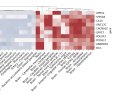
First bash at working with the brain tissue specific data and the DecodeME geneset is here

Using the same pipeline I did before but with different preprocessing step from that used with GTEx to get the tissue expression data. I can't be sure that my pre-processing of this data (code assistance from Claude) or my interpretation of what's there is right although it seems to be giving vaguely sensible results.

This is a heatmap of normalised, relative expression of each gene across different tissues/cells, so where the genes are likely oc-expressed

IMG_4148.jpeg

CA10 again clusters with SHISA6 and UNC13C and to a degree with CACNA1E and LRRC7 but less clearly or maybe in a different area? I guess the change in resolution is changing the picture a little.

While CA10 itself seems more differentially expressed in areas like upper rhombic lip, midbrain-derived inhibitory, oligodendrocyte precursor cell, lower rhombic lip, cerebellar inhibitory the cluster it forms with other genes is more characterised by areas like hippocampal dentate gyrus, medium spiny neuron, hippocampal ca4, amygdala excitatory, eccentric medium spiny neuron
I guess that’s where our new friend the spiny neuron comes in!

Maybe something interesting in there, maybe it’s not telling us anything new, but tread carefully with my untrustworthy data and sketchy interpretations :)

Notes and caveats: This is looking at the 34 cluster types but I’ve also run things through the 260 more specific clusters, although haven’t even started to get my head around that data. The tsv data seems to be normalised counts per million rather than normalised transcripts per million and there’s some other things in the data I’m not really sure about. I’m using the tsv files from https://www.proteinatlas.org/humanproteome/single+cell/single+nuclei+brain/data while @paolo used the pre-processed scRNAseq datasets for the FUMA Cell Type module, but they’re unavailable atm as FUMA is undergoing maintenance. There’s some raw data available and linked from their github https://github.com/linnarsson-lab/adult-human-brain but it’s HUGE, I think my Pi would crumble under the load, 30+GB h5ad files
 
Last edited:
The AstraZeneca rare variant PheWAS shows which traits are significant for rare mutations in CA10: https://azphewas.com/geneView/6319c068-fd59-46d8-85ee-82d82482eb14/CA10/glr/binary

Hypertension is the most significant trait. Epilepsy is second most significant if including African ancestry results.

Other traits near the top for significance:
Edit: Ancestry is European unless otherwise specified.
 
Last edited:
Oh, I forgot to look at continuous traits in the AZ PheWAS results as well. These are the two most significant traits, more significant than any of the binary traits (similar arm tissue fat percentage traits were combined into one):
  • Decreased arms tissue fat percentage [Ashkenazi Jewish ancestry]
  • Increased precision-weighted mean ATT (arterial transit time) in the left Frontal Lobe in voxels with >70% grey matter partial volume
Interestingly, both of the above appear to be based on only a single person having a protein truncating variant, but I guess the effect size was large enough to make it very significant.

Other continuous traits near the top for significance:
  • Decreased level of oestradiol
  • Increased level of the protein DHB14
  • Volume of grey matter in Vermis VIIIb Cerebellum
    • Seems to be consistent with decreased cerebellar volume in cases of downregulation of the similar protein CA8: Kaya 2011, Richmond 2019 [Edit: Actually, this seems to be increased volume in those with the variants. Not sure how that fits with previous results.]
  • Increased level of the protein LEO1
  • Increased mean L1 in fornix cres+stria terminalis (left) on FA (fractional anisotropy) skeleton (from dMRI data) [South Asian ancestry]

Ancestry is European if not otherwise specified.

Edit: I thought it was worth mentioning rare variants in CA10 also fairly significantly associated with decreased level of GDF15 as well (p=4.17e-5).
 
Last edited:
Thinking some more about brain regions to look at, rather than focusing on where CA10 is relatively highly expressed, maybe looking at where other genes are too may be worthwhile? For that, best look at the whole heatmap for DecodeME and squint a bit
Or the one with 260 areas
I’ll try and do the same with PrecsionLife geneset when up to it. I may also need to update the genes now their paper has been published and also I think I saw the recent interest in a different Butyrophilin gene for DecodeME, was it BTN2A1?
 
Last edited:
Back
Top Bottom