ME/CFS Science Blog
Senior Member (Voting Rights)
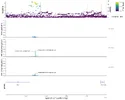
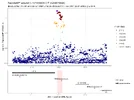
I did the same analysis as for the chr20 region. Finemapping with Susie gave a credible set with 64 SNPs that is hard to reduce to a smaller number: the probability is spread out across these SNPs. CA10 is the only protein-coding gene nearby but a lncRNA called ENSG00000310017 falls inside our SNP region but this isn't where the highest probability lies.
The Encode chromatin data from SCREEN includes 10 regulatory elements with at least one of the 64 SNPs from our ME/CFS credible set. And these 10 are mostly exclusively open in brain tissue with top hits for the cerebellar cortex and spinal cord (although caveat: there were only a limited number of samples in these categories compared to cortex or other tissue). I’ve tried to group them into my own-made categories in the plot below. On the left you see the 10 cCREs (candidate cis-regulatory elements) with the SNPs that fall inside them. Higher z-values means more regulatory activity.

I also looked at the Li 2023 brain atlas which differentiates per cell type in the brain. The ME/CFS SNPs were mostly open in glutamergic Intratelencephalic (cortical layer 2 to 6) cell types.

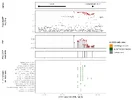
Here’s another plot that puts a lot of info together.
The Encode chromatin data from SCREEN includes 10 regulatory elements with at least one of the 64 SNPs from our ME/CFS credible set. And these 10 are mostly exclusively open in brain tissue with top hits for the cerebellar cortex and spinal cord (although caveat: there were only a limited number of samples in these categories compared to cortex or other tissue). I’ve tried to group them into my own-made categories in the plot below. On the left you see the 10 cCREs (candidate cis-regulatory elements) with the SNPs that fall inside them. Higher z-values means more regulatory activity.
I also looked at the Li 2023 brain atlas which differentiates per cell type in the brain. The ME/CFS SNPs were mostly open in glutamergic Intratelencephalic (cortical layer 2 to 6) cell types.
Here’s another plot that puts a lot of info together.